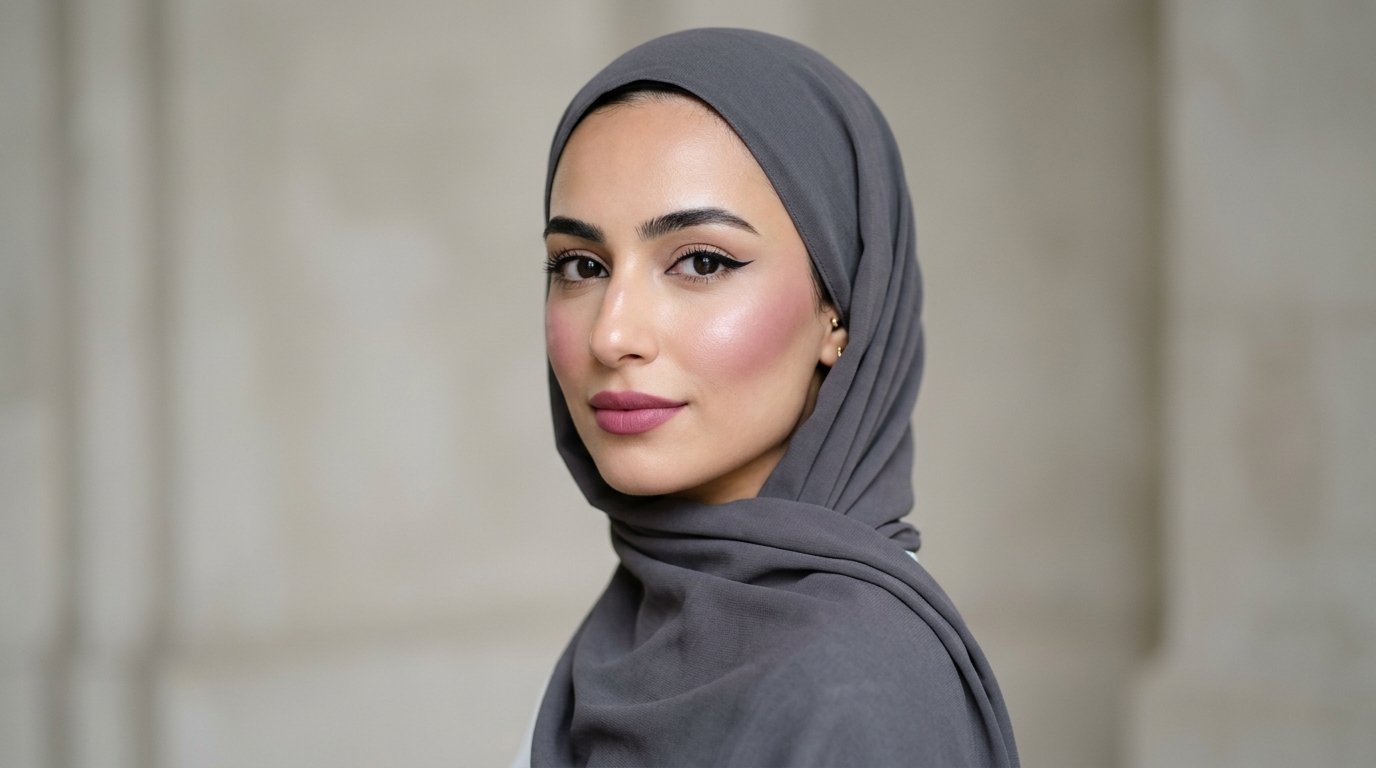
Half of Fall 2026’s Beauty Trends Are About Hair — Here’s What’s Left, and Why the Rest Behaves Differently in Hijab
Open any fall 2026 beauty round-up and count how much of it you can actually use.
The side part is back. Undone partings. The French twist. Eighties side-swept volume. Long bangs. By the time you have scrolled past the hair, you are a third of the way down a very long article and you have not been given a single thing to buy or do.
Then the makeup section arrives, and it was written for a face framed by hair — which changes almost everything about how these looks land when your face is framed by fabric instead.
Here is the whole season, sorted.
Quick answer: Fall 2026’s makeup trends centre on three ideas — statement eyes, soft-focus skin, and cool-toned nostalgic colour. For hijab and modest dressers, the shifts that matter are blush placed lower to avoid the scarf line, transfer-resistant base formulas, and eye definition dialled down slightly because fabric amplifies contrast.
The Three Trends Driving Fall 2026 Makeup
Rather than a list of twelve looks, the season sorts cleanly into three directions. Industry trade coverage identifies the dominant fall/winter 2026 cosmetics trends as cool-toned nostalgia, statement eyes, and a soft-focus complexion.
Makeup artist Susana Niño of Glow by Susie described the mood to Happi as an era of expressive sophistication — closer to a modern nineties supermodel or quiet luxury than anything gothic, with colour, shimmer and texture returning after several seasons of clean-and-natural. Her summary of the season is the useful part: “Makeup still feels wearable—but it’s intentionally artistic.”
That framing matters for modest dressers more than it might sound. Expressive-but-controlled is exactly the register that works when your outfit is doing its talking through volume, texture and coverage rather than skin.
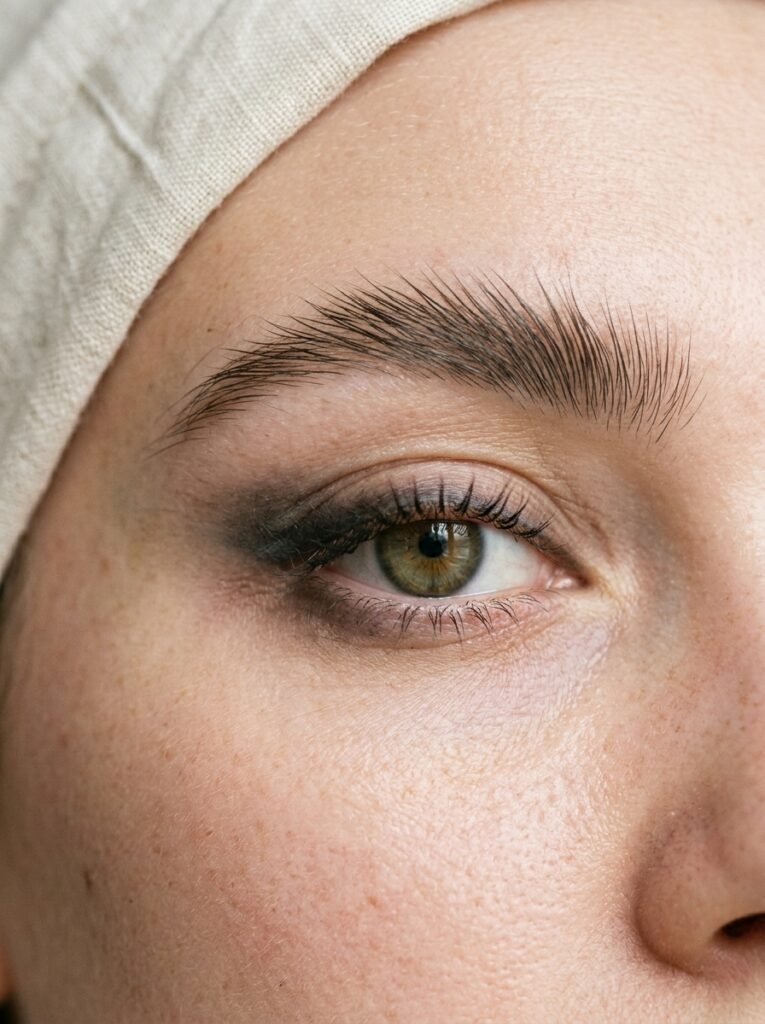
Statement Eyes — Powerful, But Dial It Down About 20%
This is the season’s loudest story, and it arrived in several distinct forms.
At New York Fashion Week, under-eye liner emerged as a defining look. At Rachel Scott’s debut for Proenza Schouler, models wore liner under one eye only — deliberately unbalanced. At Pamella Roland it was thick and bold, with dramatic lashes and dark smoky shadow. At ASHLYN, liner wrapped the entire eye as the only makeup on an otherwise bare face.
In Paris, Pat McGrath went to the eighties with sultry winged-out jewel-toned shadow paired with statement red lips, while Acne Studios showed smudged green wings against minimal base makeup. At Harris Reed, Charlotte Tilbury’s Sofia Tilbury created a graphic liner look built for structure and strength, balanced against fresh skin and softly enhanced lips.
Runway data from Trendalytics also flagged the smudged “tired girl” liner and indie-sleaze smokey shadow as major season shapes, alongside the return of pastel shadow.
The hijab adjustment. Hair absorbs visual weight. A heavy smoky eye under loose hair sits inside a soft, textured frame that softens it. Under a scarf, the frame is a clean unbroken line of fabric — usually a solid colour — and every contrast on the face reads harder against it.
Practically: whatever intensity looks right in the mirror before you put your hijab on will read stronger once it is on. Build the eye, then put the scarf on, then look again. Most people find they want to blend the outer edge down by a noticeable degree.
The under-eye liner trend needs particular care. With no hair falling near the cheekbone, weight placed below the eye pulls the whole face downward. If you want to try it, keep it smudged and short — the ASHLYN approach of liner as the only statement, on an otherwise clean face, translates far better than the heavy Pamella Roland version.
Graphic liner along the top lash line, on the other hand, is the single best trend of the season for covered faces. It works with the horizontal line of the scarf edge rather than against it.
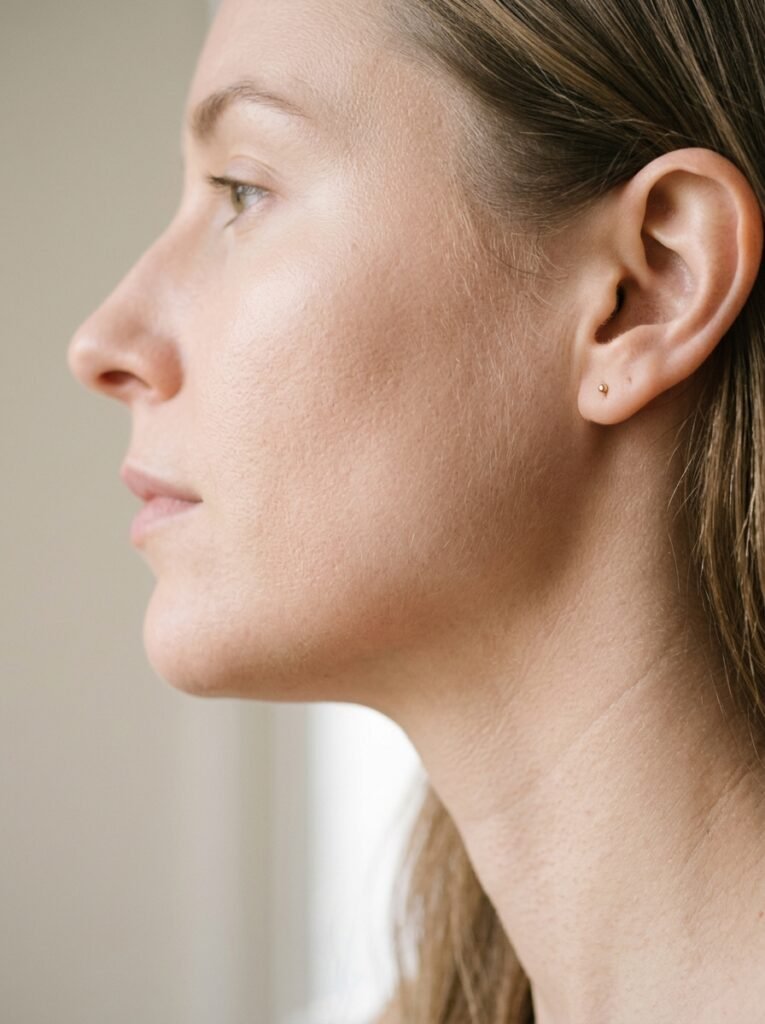
Soft-Focus Skin — and the Transfer Problem Nobody Writes About
Clean, minimal skin was a defining trend across the season, appearing at Christian Dior and TWP, with fresh soft skin and minimal makeup as the base. Paris pushed it further into velvet skin — a blurred, soft-matte finish. At Tom Ford, global makeup artist Lucy Bridge built a velvet lip using the Runway Lip Stylo Matte in shades from nude to blood red, then contrasted it with reflective sheen on the eyes.
The hijab adjustment. This is the trend with a genuine practical obstacle, and it is the reason most modest dressers quietly give up on base makeup.
A soft-matte blurred finish is achieved with product sitting on the surface of the skin. Fabric moves against your jaw and hairline all day. The result is foundation on the inside edge of every light-coloured scarf you own.
Three things fix most of it:
Skip base entirely along the covered perimeter. Foundation on the forehead above the scarf line and along the jaw under the fabric does nothing visible and causes all the transfer. Concentrate product on the visible oval of the face and blend outward to nothing.
Set the contact zones, not the whole face. A light dusting of translucent powder specifically along the jaw, chin and the strip of forehead nearest the fabric locks the edges. Leave the centre of the face unpowdered so you keep the soft-focus quality the trend is actually about.
Choose your scarf fabric by your makeup, occasionally. Silk and satin show transfer immediately; jersey and textured cotton hide it. On days you want full base makeup.
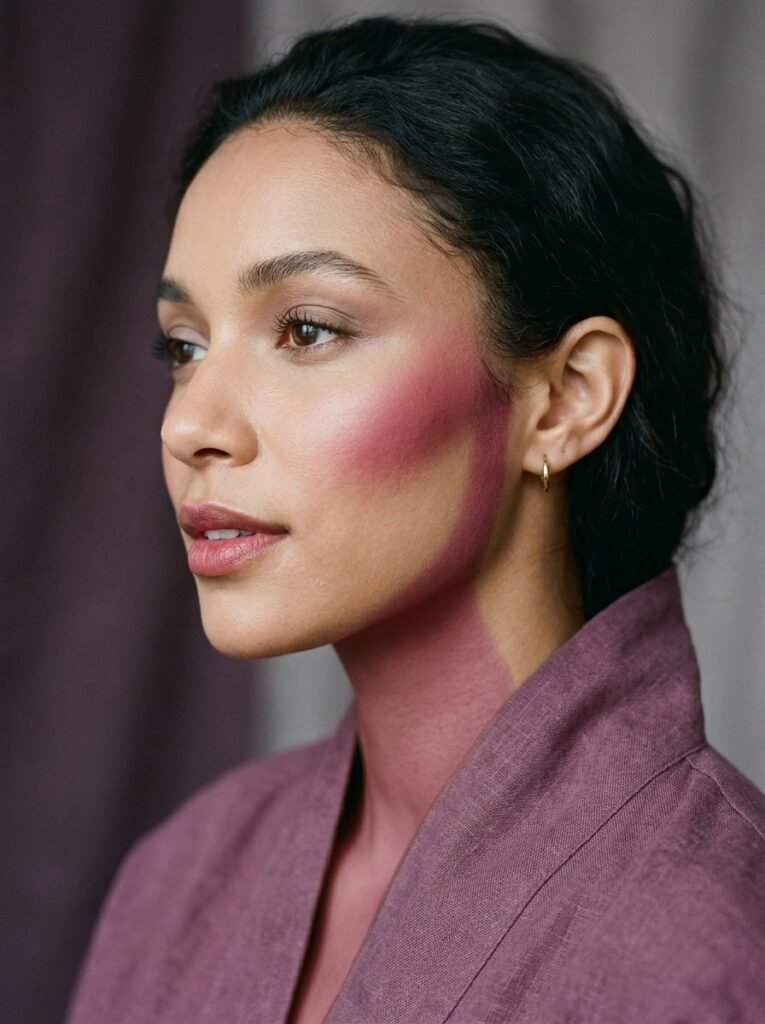
Blush Is the Trend That Needs Real Rethinking
Berry blush and blush draping earned a central place this season, drawing focus to the cheeks and lips. Missoni’s autumn/winter look was defined by cold-girl blush with brushed brows. Vogue Scandinavia described the season’s flush as frost-bitten. Draping this season is applied high, sweeping up toward the temples for a sculpting effect.
The hijab adjustment. Draping to the temples is the one instruction in every fall beauty guide that simply cannot be followed as written. The temple is where the fabric sits. Blush swept up there either disappears under the scarf or ends up on it.
The fix is to rotate the drape rather than shorten it. Instead of sweeping upward and outward toward the temple, sweep upward and backward along the top of the cheekbone, stopping where the fabric begins. You keep the lift and the sculpted effect; you lose nothing but the two centimetres nobody can see anyway.
Cool berry and plum tones do something else useful here: they sit in the same colour family as most autumn scarf palettes, so the face and the fabric read as one intentional scheme rather than two competing ones.
Cool-Toned Nostalgia — a Colour-Temperature Question, Not a Shade One
The third pillar is the season’s colour direction, and this is where covered dressers have an advantage most beauty writing never notices.
If your hair is visible, your makeup temperature is anchored to your hair colour. If it is covered, your makeup temperature is anchored to your scarf colour — which you choose fresh every morning.
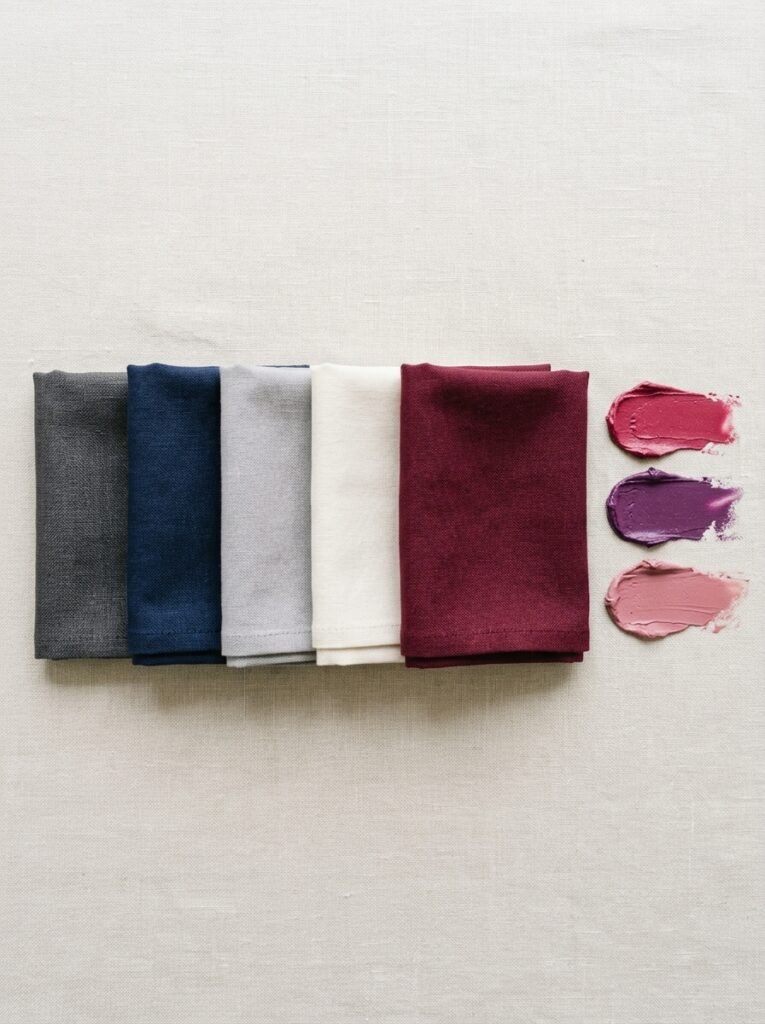
That means the cool-toned nostalgia trend is genuinely easy for you to wear. Pair cool berry, plum, mauve and grey-toned shadows with the cool side of your scarf collection: charcoal, navy, dove grey, cool cream, burgundy. Save your warm makeup for camel, chocolate, rust and olive days.
The season also brought punchy eyeshadow pigments and a full spectrum of brow shapes, and brows deserve one specific note. With no fringe and no hairline softening the top of the face, brows carry substantially more of your expression than they do on an uncovered face. The brushed-up brow seen at Missoni is the safest interpretation — it adds height and softness without the hard drawn edge that looks severe under a fabric frame.
Lips: The Easiest Win of the Season
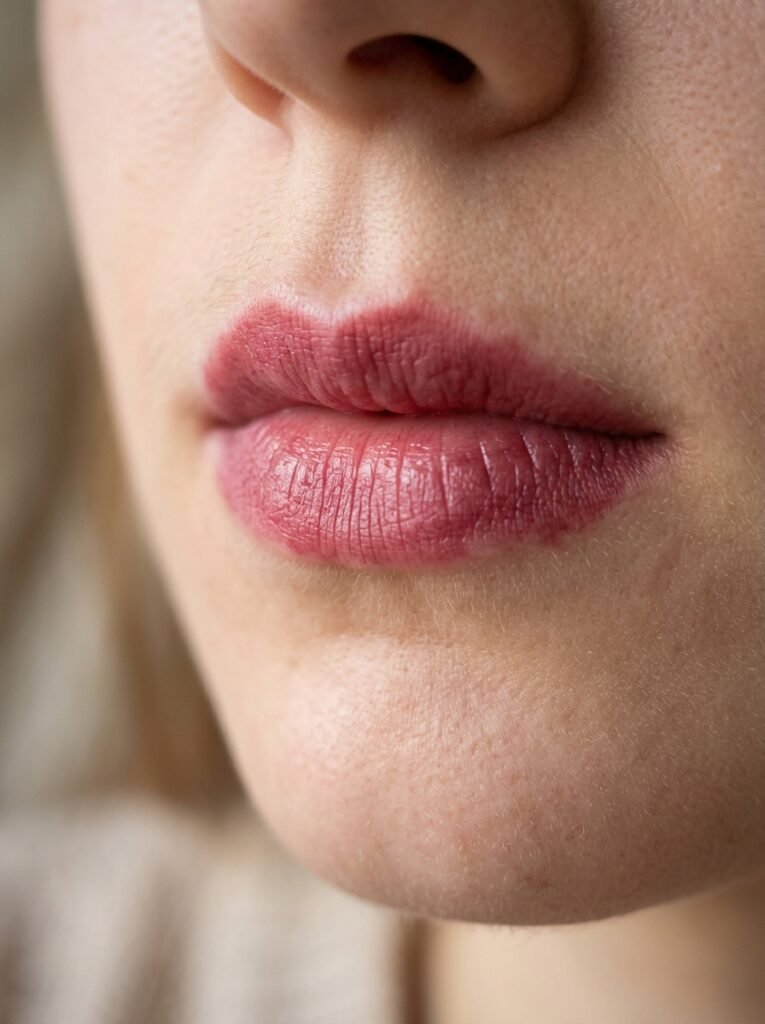
Unevenly distributed lip product became a trend on the New York runways, with Dick Page at Collina Strada using silver to pick out only the curve of the cupid’s bow. Elle noted smudgy, just-smooched lips at Boy London and Altuzarra as a move away from the hyper-controlled minimalism of recent seasons. Vogue Scandinavia called out metallic tin-man lips among the looks worth trying.
Blurred, imperfect, blotted lip colour is close to ideal for modest dressing. It gives you real colour without the precision-drawn edge that reads formal, and — critically — a blotted stain transfers far less onto fabric than a creamy full-coverage lipstick does. Apply, blot on tissue, press on a second thin layer, blot again. That is the whole technique.
What to Actually Buy, in Order of Usefulness
If you are building the season on a budget, the order matters more than the total.
- A dark liner you can smudge. It delivers the season’s biggest trend and works in three intensities depending on how hard you press.
- A cool berry cream blush. Cream over powder — powder along the scarf line transfers more.
- Translucent setting powder, small brush. For the perimeter only.
- A blottable lip in a berry or brick tone. One product, three finishes depending on how much you blot.
- A clear brow gel. The brushed-up brow needs nothing else.
Skip, for now: pastel shadow (technically on-trend, but hard to wear against most autumn scarf palettes), and anything marketed as high-shine for the cheekbones — highlighter directly under a fabric edge picks up every fibre
Key Takeaways
- Fall 2026 makeup runs on three ideas: statement eyes, soft-focus skin, and cool-toned nostalgic colour.
- Roughly half of the season’s published trends are hair-based and simply do not apply to covered dressers.
- Build eye makeup, then put your scarf on, then reassess — fabric amplifies contrast.
- Graphic top-line liner works with the scarf edge; heavy under-eye liner drags the face down.
- Skip base makeup along the covered perimeter and set only the fabric-contact zones.
- Rotate blush draping backward along the cheekbone instead of up toward the temples.
- Anchor your makeup temperature to your scarf colour, not your hair colour.
FAQ
What are the main fall 2026 makeup trends?
Cool-toned nostalgic colour, statement eyes — including graphic liner, smudged liner and jewel-toned shadow — and a soft-focus, blurred complexion, alongside berry blush and blotted, imperfect lip colour.
How do I stop foundation transferring onto my hijab?
Leave the covered perimeter of your face bare, blending base outward to nothing before the fabric line, then set only the jaw, chin and forehead edge with translucent powder. Textured fabrics hide transfer better than silk or satin.
Where should I put blush if I wear hijab?
Sweep it upward and backward along the top of the cheekbone, stopping at the fabric line, instead of draping up toward the temples as most fall 2026 guides instruct — the temple sits under the scarf.