At-home IPL Devices: Do They Work And What They Cost
The costliest error in this category is not picking a mediocre brand. It is buying any handset at all without first checking whether your own hair and skin can physically respond to the technology and then walking away in week three, when the mirror still shows nothing.
Both errors are entirely preventable. Neither tends to appear on the packaging.
Quick answer: At home IPL devices fire broad-spectrum light at the pigment inside your hair, which is the to converting it to heat that damages the follicle and slows regrowth. They do produce genuine, visible reduction but only where dark hair meets lighter skin, only across two to three months of disciplined use, and only if you keep treating afterwards.
Key Takeaways
- What you are buying is reduction, not removal. Hair comes back finer, sparser and slower, and it comes back at all if you stop entirely.
- Contrast decides everything. The light needs dark hair against paler skin. Pale hair gives it nothing to aim at; deeply pigmented skin gives it too much.
- Home handsets are deliberately weaker than clinic equipment. That is a safety design choice, and it is why you need many more sessions than a clinic would book you.
- Budget roughly US$100–$600 for a device depending on tier, against something in the low thousands for a full professional course in most markets — with both figures swinging widely by country.
- If your skin sits at the deeper end of the pigment range, the honest answer is that this category is not built for you. Better options exist, and they are covered below..
Establish whether you are a candidate before you look at a single product
This is the gate, and skipping it is how money gets wasted.
Intense pulsed light does one thing: it hunts pigment. The flash is absorbed by melanin, converts to heat, and that heat damages the structures that grow the hair. The light has no way of distinguishing melanin sitting inside a hair shaft from melanin sitting in the skin surrounding it.
Every rule that follows comes out of that single limitation.
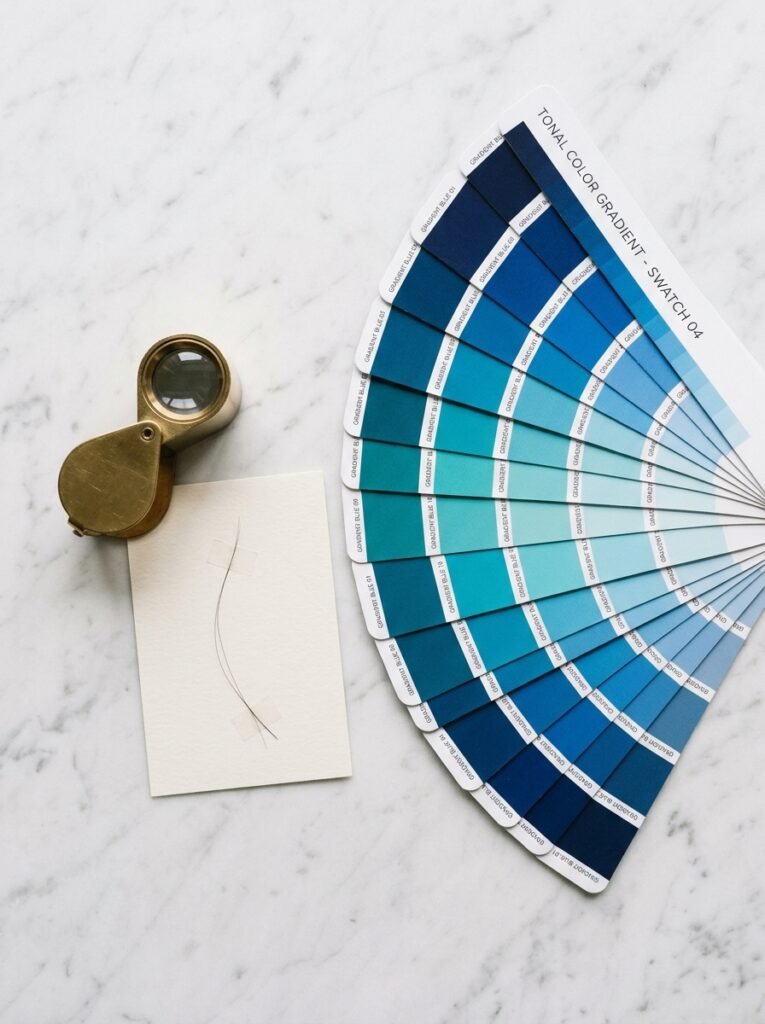
Hair colour comes first. Dark brown and black hair carry plenty of melanin and respond well. Blonde, grey, white and most red hair carry very little, so the pulse passes through without depositing meaningful energy. No brand, price point or intensity setting solves this. Coarse dark hair on the underarm or bikini line is the ideal target; fine light down on the upper arm is close to a waste of flashes.
Skin tone comes second. Fair to medium skin lets the light travel past the surface and concentrate where it should. As skin pigment deepens, more of the flash is absorbed on the way in — which reduces effectiveness and raises the risk of burns, blistering and lasting pigment change. Post-inflammatory darkening is particularly stubborn in richly pigmented skin, and it can take many months to fade.
Manufacturers publish a suitability chart for exactly this reason. Read it before buying, not after. If your tone sits at or near the bottom of that chart, treat the chart as a stop sign rather than a challenge.
A tan counts as a change of skin tone. Recent sun exposure temporarily raises surface melanin and recreates the same absorption problem. Let it fade fully before starting, and stay out of strong sun for the duration.
If your skin is deeper and you still want light-based treatment, the technology should change rather than the brand. Longer-wavelength clinical lasers penetrate past surface pigment far more selectively than broad-spectrum light, and a qualified practitioner can treat tones that no consumer handset should attempt. For unpigmented hair of any colour, electrolysis is the only method that reliably works, since it destroys the follicle electrically rather than optically.
Before you move on: look at your hair in daylight and compare your forearm against the suitability chart of whichever device you are considering. If the answer is “very light hair” or “the deepest rows of the chart,” stop here. You have just saved yourself a few hundred dollars and a few months of frustration.
Understand what at home IPL devices actually do to a follicle
Grasping the mechanism is what stops you abandoning the course too early.
Each flash heats the pigmented hair shaft, and that heat travels down to the base of the follicle, damaging the blood supply and the cluster of cells responsible for producing new growth. Damage that structure often enough and the follicle either stops producing or produces something thinner and weaker.
The complication is timing. A follicle can only be damaged while it is actively growing, and your follicles are never all in that phase simultaneously — at any moment, a substantial share are dormant and effectively invisible to the light. That is the entire reason one session achieves nothing and a dozen achieve a great deal.

Consumer handsets are also intentionally underpowered relative to clinic equipment. Regulators and manufacturers both accept that untrained users make mistakes, so the energy per flash is capped at a level where an error is uncomfortable rather than injurious. Lower energy means less risk, and correspondingly more sessions to arrive at the same place.
Two expectations are worth resetting now. First, this is long-term reduction rather than permanent removal a distinction marketing language tends to blur with phrases like “permanent hair reduction,” which is technically accurate and easily misread. Second, hormonally driven hair, particularly on the face, jaw and neck, can regenerate regardless of how well the treatment went, because the underlying hormonal signal keeps recruiting new follicles.
Set a timeline you can realistically hold
Here is the schedule the technology actually requires, and what each phase looks like from the inside.

The standard course, phase by phase:
- Weeks 1–8 or 1–12 — one to two sessions per week, depending on what your device specifies. Follow the manufacturer’s interval rather than your own instincts.
- Weeks 2–4 — the shedding phase. Treated hairs push out of the skin over several days and look exactly like fresh regrowth. They are not.
- Weeks 5–9 — patchiness. Different follicles wake from dormancy at different times, so you get smooth stretches beside stubborn ones. This is normal and self-correcting.
- Weeks 10–12 — the first honest checkpoint. Judge against a dated photograph, never against memory, which is unreliable and pessimistic.
- Month 4 onward — maintenance only. Most people settle into one pass every four to eight weeks per area.
The maintenance step is not an upsell. Studies that follow users past the initial course consistently find that people who continue occasional sessions hold their result for a year or longer, while people who stop entirely drift back toward baseline over several months. The device does not fail at that point. The hair cycle simply resumes.
Work out what at home IPL devices really cost — every line, not just the sticker
The purchase price is the smallest component of this sum.
Approximate global device bands:
| Tier | Typical price | What the money buys |
|---|---|---|
| Entry | $80–$180 | Manual intensity selection, small flash window, frequently a capped flash allowance |
| Mid | $180–$350 | Automatic tone sensing, faster flash rate, precision head for face and bikini |
| Premium | $350–$600 | Cordless operation, contact cooling, multiple zone attachments, effectively unlimited flashes |
Currency matters here. The same handset routinely costs noticeably more in markets with high import duty or small distribution volumes, and noticeably less during seasonal sales. Check the manufacturer’s own regional store before assuming a review’s price applies to you.

The costs that never appear in the headline figure:
- Flashes. A full-body course consumes a few thousand flashes in total. Devices advertising several hundred thousand flashes will outlast the treatment by years, but capped budget models can force a replacement cartridge or a replacement device, which is where a cheap handset quietly becomes an expensive one.
- Razors. You shave immediately before every single session, for the entire course. Blades add up.
- Sunscreen and sun discipline on treated areas — a genuine expense in sunny climates, and non-negotiable.
- Time. Two sessions a week for two to three months is the real currency, and it is the reason most abandoned handsets end up in a drawer.
The comparison that settles the decision. Professional laser hair removal is priced per area per session in essentially every market, and virtually everyone needs a course of six or more sessions per area. Even in lower-cost markets, that course typically runs into the high hundreds of dollars equivalent for a couple of areas in high-cost cities it comfortably reaches the low thousands. Set against that, a mid-tier handset used across four body areas for three years costs single-digit dollars per month.
The trade is straightforward and worth stating plainly: the clinic gives you a stronger, faster, more complete result under supervision, and charges accordingly. The handset gives you a slower, milder result on your own schedule at a fraction of the price, with no appointments and no travel which matters enormously if you live somewhere with few qualified clinics.
There is a third option most buyers overlook. Running a short professional course for the heavy lifting, then maintaining it at home with a handset, often produces the best cost-to-result ratio in the entire category.
Compare devices on the four specifications that change outcomes
Ignore colour options and flash-count marketing. Four things genuinely matter.
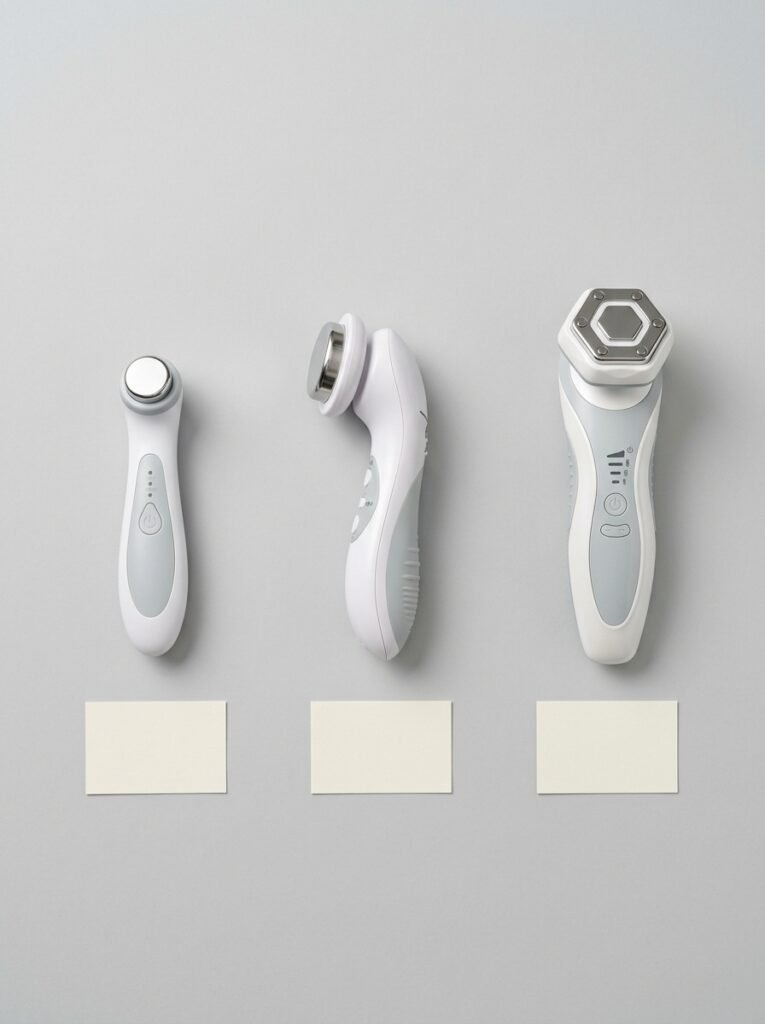
1. Automatic skin-tone sensing. The most valuable safety feature available, because it removes human judgement from the intensity decision. A sensor reads the tone under the treatment head, sets a safe energy level, and refuses to fire on skin too dark to treat safely. Manual-only devices ask you to match your arm to a printed chart under bathroom lighting, which is exactly where errors happen.
2. Flash window size and flash rate. These decide whether both lower legs take five minutes or forty. That, in turn, decides whether you finish the course so treat speed as an adherence feature rather than a luxury.
3. Contact cooling. Chilled treatment heads make sensitive zones like the bikini line and upper lip tolerable. The absence of cooling is the single most common comfort complaint against otherwise capable devices, and discomfort is a leading reason courses get abandoned.
4. Regulatory clearance and warranty. Look for the appropriate mark for your region the conformity marking used across Europe and the UK, the relevant national medical-device registration in your market, or clearance from the US regulator on models sold there. Clearance applies to a specific model, not a brand name, and it is the cheapest quality signal available to you. A meaningful warranty and locally available support matter just as much if you are buying from an international seller.
Corded versus cordless is a preference rather than a performance question. Cordless handsets are easier around the back and legs; corded handsets deliver consistent power and usually cost less for equivalent results.
Before you move on: shortlist two models, then verify the sensor, the flash allowance and the regional certification on the manufacturer’s own site retailer listings are frequently outdated or copied from another market.
Patch test, then run the first session properly
The first session is where injuries happen, and it takes fifteen minutes to do correctly.
Shave the area first. Do not wax, pluck, thread or epilate beforehand the light needs an intact pigmented root to travel toward, and removing it makes the flash pointless. Clean the skin and dry it completely. Strip off lotion, oil, deodorant, makeup and sunscreen, and apply skincare only after treating, never before.
Patch test a small area in every zone you plan to treat, at the lowest setting, and wait a full day. Zones behave differently, so an untroubled underarm tells you nothing about your shin or your upper lip.
Postpone if anything on this list applies: active eczema or psoriasis in the treatment area, open wounds, sunburn, infection, recent chemical peels, or a fresh tan. Tattoos, moles, dark freckles and permanent makeup are absolute no-go zones — cover them or work around them, because concentrated pigment attracts concentrated heat. Manufacturers generally advise against use during pregnancy and breastfeeding, not because harm has been demonstrated but because hormonally reactive skin behaves unpredictably. Several common medications, including some antibiotics and retinoids, increase light sensitivity; if you take anything long term, raise it with your doctor or pharmacist before starting.
Build intensity gradually across sessions rather than starting at maximum. Never treat the same patch twice in one sitting, and keep the flash away from the eyes and eyebrows entirely.
Protect the result once you have it
The course builds your result. Three habits are what keep it.

Shave between sessions — never wax or pluck. Removing the root removes the target and wastes the next flash. Shaving leaves the follicle intact and ready.
Manage sun exposure on treated skin. Use sunscreen, cover up in strong light, and skip treatment in the days after significant exposure. Sun is the most common route from a good result to a bad reaction, and it matters more the closer you live to the equator.
Keep the maintenance passes. One session per area every four to eight weeks preserves what the initial course achieved. Skipping maintenance for a season is the single most common way people conclude, wrongly, that their device stopped working.
Before you move on: set a recurring reminder now, while you are motivated. It costs ten minutes and protects everything the first three months bought.
Printable checklist
☐ Hair is dark brown or black — not blonde, grey, white or light red
☐ Skin tone falls within the device’s published suitability chart
☐ No active tan, and none planned during the course
☐ No eczema, psoriasis, wounds, infection or recent peels in the treatment area
☐ Pregnancy, breastfeeding and light-sensitising medication ruled out
☐ Model carries the correct certification for my country, with a usable warranty
☐ Flash allowance covers a full course, or is effectively unlimited
☐ Cost per month calculated and compared to one local clinic session
☐ Dated baseline photographs taken of every area
☐ Full course of weekly or twice-weekly sessions blocked in the calendar
☐ Patch test completed 24 hours ahead, in every zone
☐ Razor stocked; lotion, deodorant and sunscreen removed before each session
☐ Tattoos, moles and permanent makeup identified and marked to avoid
☐ Maintenance reminder set for every four to eight weeks
What to do next
- Today: assess your hair colour in daylight and place your skin tone against the suitability chart of the device you are considering. For a meaningful share of readers, that alone closes the question.
- Before buying: run the cost-per-month sum from Step 4 and compare it against one clinic session for your priority area, at local prices.
- At purchase: confirm certification, flash allowance and warranty coverage for your specific model in your own country, on the manufacturer’s site.
- Day one: photograph every area you intend to treat, in the same light, with the date visible.
- Week one: patch test each zone, wait a day, then begin the course — and judge nothing before week ten.
- If your hair is pale or your skin sits at the deep end of the chart: skip this category entirely and book a consultation about clinical laser options or electrolysis instead.
One honest limitation on all of the above. Individual results vary far more than marketing admits, driven by hormones, genetics, medication and the specific body area. Treat the strong outcomes you read about as an achievable ceiling rather than a promise, and give the schedule its full three months before drawing any conclusion.
FAQ
Are results from an at-home IPL device permanent?
Not in the strict sense. The realistic outcome is long-term reduction — sparser, finer, slower-growing hair — held in place by occasional maintenance sessions. Stop treating entirely and coverage drifts back over months. Electrolysis remains the only technique that destroys a follicle outright.
Can I use one on my face?
Only on the lower face, and only if your model is specifically cleared for it. Chin, jaw and upper lip are generally acceptable; anything near the eyes or eyebrows is not, at any setting. Facial hair also responds less predictably than body hair because hormonal signalling keeps recruiting new follicles regardless of treatment.
Does IPL work on grey, red or blonde hair?
No, and no device will change that. Those hair types carry too little pigment for the light to heat effectively, so the energy passes through without damaging the follicle. Electrolysis is the appropriate route for unpigmented hair