Prescription Glasses Online: Cost And Accuracy Compared
Online eyewear has made it easier to compare frames and prices, but a low starting price does not tell you whether a pair will fit or suit your prescription. Recent research finds that results depend on more than the prescription printed on the order: measurements, lens positioning, frame comfort, and after-sale support matter too.
Prescription glasses online can cost less than some in-person options, especially for standard single-vision lenses. Accuracy depends on the prescription and measurements supplied, while fit and adjustment are harder to assess remotely. Compare the complete checkout price, return terms, and support before deciding.
Prescription Glasses Online: What You Are Comparing
When you buy glasses online, you usually select a frame, upload or enter a prescription, provide measurements such as pupillary distance (PD), and choose lens materials or coatings. A retailer then makes the glasses and ships them to you. A local optician can help you choose a frame, check how it sits on your face, take measurements, and adjust the finished pair.
That difference matters because lens accuracy and wearing comfort are related but separate questions. A lens can match the written prescription and still feel wrong if the frame slides, the optical centres do not line up well with your eyes, or a progressive lens sits at the wrong height. Conversely, a comfortable frame does not guarantee that its lenses were made accurately.
A 2016 UK study compared 154 online pairs with 155 pairs from optometry practices. Its participants preferred practice-dispensed glasses, and more online pairs were judged unacceptable, often because of fit or appearance. Yet the study found a similar proportion of online and practice pairs failed the tested lens-prescription tolerances. It is an informative comparison, but it involved a limited sample and should not be treated as a pass-or-fail verdict on every current seller.
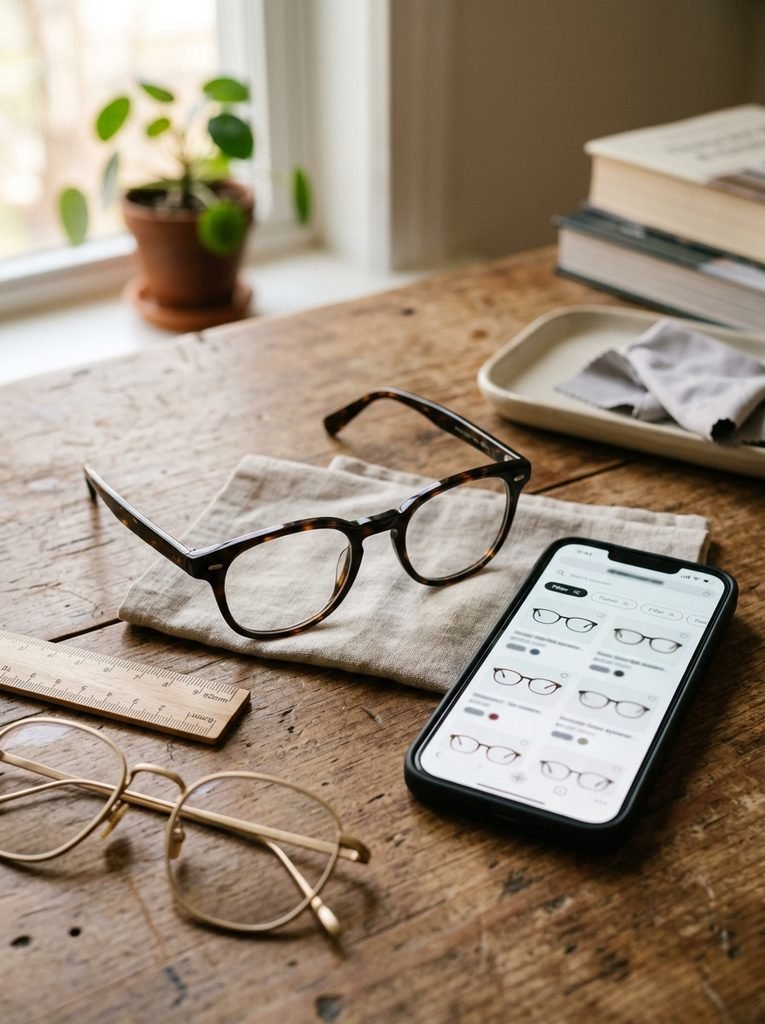
How The Buying Methods Differ
| Factor | Online order | In-person optical shop |
|---|---|---|
| Price comparison | Easy to compare listed prices and promotions | Possible, but may require visits or asking for itemized quotes |
| Frame selection | Broad catalog; virtual try-on may help | Try frames on your face before buying |
| Measurements | Entered or self-measured, depending on retailer | Staff can take measurements and inspect frame position |
| Adjustments | Often require self-adjustment or a visit to an optical shop | Staff may adjust the frame during fitting or collection |
| Support | Usually online, by phone, or by mail | Face-to-face help may be available |
| Returns | Depends on each retailer’s policy and exclusions | Depends on each shop’s policy |
Neither route is automatically best for everyone. A frequent glasses wearer who understands their prescription, knows the frame size that fits, and needs a simple single-vision pair may find online ordering convenient. Someone ordering their first pair, using a complex prescription, or needing progressive lenses may value an in-person fitting.
What Online Glasses Cost
The final bill can include the frame, standard lenses, lens thinning, coatings, shipping, taxes, insurance, and optional protection plans. A basic frame price may not include the lens type or upgrades you need. Progressive lenses, high-index materials, prism, and other prescription-specific requirements can change the total.
Recent U.S. listings illustrate how wide the advertised range can be. Forbes Vetted’s 2026 roundup listed one value retailer’s house frames with standard prescription lenses at $7 to $60, while its GlassesUSA listings ranged from $19 to $847 across brands and products. These are retailer-specific listing ranges, not typical prices for all buyers or a global price guide.
A separate 2026 price comparison by Washington Consumers’ Checkbook, reported by The Washington Post, found that surveyed stores charged between $160 and $544 for the same Ray-Ban RX5286 frame model with single-correction lenses. Its researchers also found that the least expensive eyeglass sellers were usually online in their survey. Prices depended on the seller and the specific frame-and-lens combination.
These examples are not a direct online-versus-store average. The products, sellers, and pricing methods differ. Use them as a reason to gather comparable quotes, not as a promise that online glasses will cost a particular amount.
Compare The Same Lens Package
Ask each seller to price the same essentials:
- The same frame, or a frame with similar material and durability.
- The same prescription type: single vision, bifocal, or progressive.
- The same lens material and index where relevant.
- The same coatings, such as anti-reflective or scratch-resistant.
- Shipping, taxes, and any handling fees.
- The return or remake policy if the prescription feels wrong.
- Whether adjustments or local fitting are included.
For example, a $20 online listing may rise after you select thinner lenses, a progressive design, or extra coatings. A higher in-store quote may include measurements, frame adjustment, and follow-up service. Ask for the itemized final price before comparing.
A useful comparison is the cost of getting glasses you can wear comfortably, including the possibility that an online order may need adjustment or replacement. Some sellers offer a lower initial price but have a shorter return window or charge for return shipping. Check the policy before submitting your prescription.
Are Prescription Glasses Online Accurate?
A 2021 study tested 300 orders from three online vendors against optical standards and FDA drop-ball safety testing. The study reported that about 8% to 11% of lenses from those vendors failed at least one measured standard. It found no impact-testing failures in that sample. The authors also noted that frame fit, the position of lenses relative to the wearer’s visual axis, and cosmetic acceptability needed additional study. The results describe the vendors and orders in that research; they do not measure every online retailer today.
A 2016 comparison produced a different but complementary picture: the tested prescription tolerances were similar between online and practice pairs, while participants more often rejected online glasses, particularly progressive pairs, because of fit or appearance. Taken together, the research suggests it is too simple to ask whether online lenses are “accurate” as a category. The prescription, measurements, lens placement, and frame all affect the result.
Prescription Accuracy Is Only One Part Of Vision Comfort
A glasses prescription typically includes lens power values, and may include cylinder and axis for astigmatism, an add power for near vision, or prism. The exact information needed depends on the prescription and local rules.
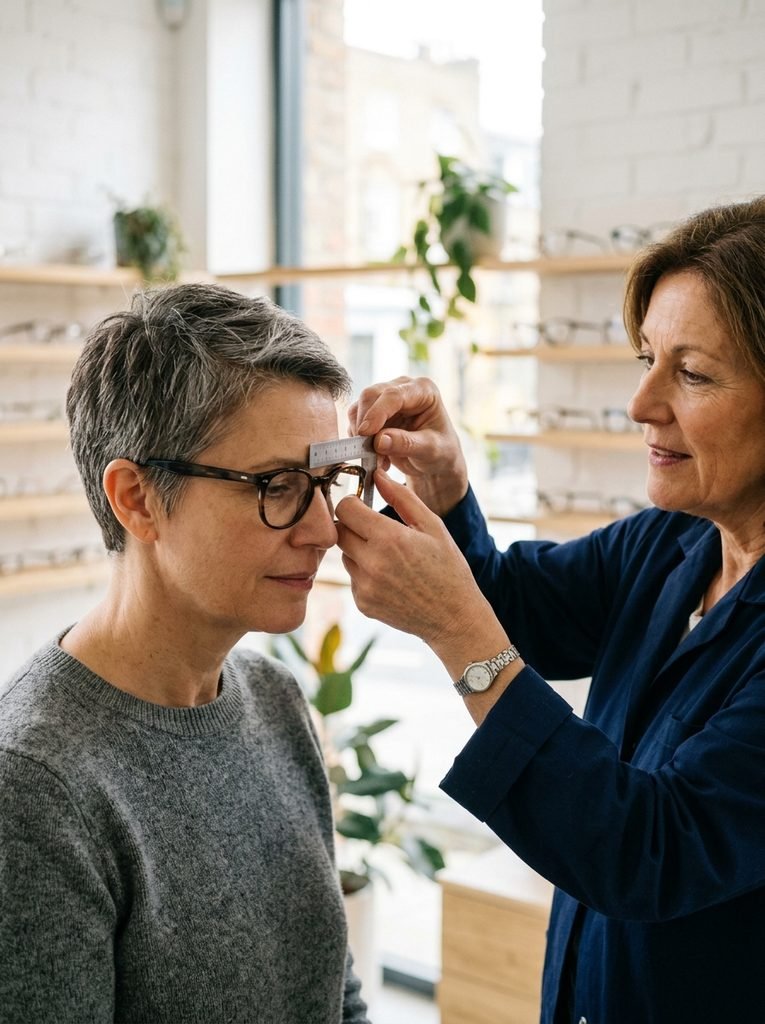
Pupillary distance measures the spacing between the pupils and helps position the lenses in front of the eyes. For progressives, the height at which the lenses sit in the frame also matters. A frame that is too wide, too narrow, or positioned too high or low can affect where you look through the lenses. This is why a frame that looks good on a screen may not feel right when worn.
If your prescription is stronger, includes prism, or requires progressive lenses, ask the retailer how it handles the measurements and whether it can confirm the lenses were made to your order. The more your glasses rely on precise positioning, the more useful professional measurement and fitting can be.
The College of Optometrists’ summary of comparative research notes that people in one study preferred high-street glasses on average, while some still preferred online ordering for convenience, clearer prices, and lower costs. Those advantages are real for some consumers, but they do not remove the need for a suitable fit.
What Pupillary Distance Means For An Online Order
In the United States, the FTC says only a few states require pupillary distance to be included on the prescription; most do not. The measurement is needed to fit glasses whether they are bought online or in person. If your eye-care provider has measured it, you may be able to request it under HIPAA or applicable state rules.
Some online sellers offer a phone-based measurement tool or instructions for measuring at home. These tools can be convenient, but the result depends on how the measurement is taken and on the method’s limits. If possible, ask an optician or eye-care professional to measure your PD, especially for a stronger prescription or progressive lenses. Do not guess or use someone else’s measurement.
Remember that rules differ by country. The FTC’s information applies to the United States. Prescription release, optical standards, consumer protections, and retailer requirements vary internationally. Check the consumer and professional rules in your location.
When Buying Online May Be A Good Fit
It may suit you if:
- You have a current prescription and understand its lens type.
- Your usual frames fit well and you know their size.
- You are ordering standard single-vision glasses.
- You have accurate PD measurements where needed.
- The retailer clearly lists lens inclusions, shipping, and returns.
- You are comfortable arranging an adjustment locally if necessary.
Online shopping can also help people compare frame styles without pressure to make a quick decision. Virtual try-on tools and frame measurements can narrow the choices, though they cannot reproduce every detail of how a frame rests on your nose or behind your ears.
A 2026 Good Housekeeping test assessed 20 pairs from 11 online retailers and considered convenience, price, return policies, insurance, and optician feedback. It found meaningful differences among sellers and notes that shoppers should know their prescription and PD. Its results are a product test, not a universal accuracy guarantee.
When An In-Person Fitting May Be Worth The Extra Cost
Consider a local optician if:
- You are ordering your first pair of glasses.
- You need progressive, bifocal, or prism lenses.
- You have a strong or recently changed prescription.
- Past glasses caused headaches, blur, or discomfort.
- Your frames regularly slide or sit unevenly.
- You need a safety-specific or occupational pair.
- You want help confirming the finished glasses and adjusting them.
An in-person purchase does not make errors impossible. A local seller can still make a mistake, and prices can vary widely between shops. But having someone check frame position, measurements, and the finished pair may make it easier to identify and address a problem.
If choosing a shop, ask for the total price in writing and what follow-up adjustments are included. You can also take the quote and compare it with online listings that include the same lens specifications.
How To Compare Offers Before Ordering
- Check the prescription date and type. Confirm the prescription is current and that the order form supports your lens type.
- Get the measurements. Confirm whether the seller needs PD, monocular PD, fitting height, or other details.
- Read the lens specifications. Compare lens material, index, coatings, and any add-ons line by line.
- Calculate the delivered price. Include shipping, taxes, insurance reimbursement, and currency conversion.
- Read the return and remake policy. Look for the return window, exclusions, restocking fees, and who pays shipping.
- Check support options. Find out how to contact a person if the glasses arrive damaged or do not feel right.
- Inspect the finished pair promptly. Compare it with your order and contact the seller if something seems incorrect.
In the United States, the FTC’s Eyeglass Rule requires prescribers to provide patients with a copy of their eyeglass prescription after a refractive exam, without an extra charge for the copy. It also allows consumers to shop elsewhere, including online. That rule is U.S.-specific; consumers in other countries should consult their local regulator or eye-care provider.
If Your New Glasses Feel Wrong
New lenses can feel unfamiliar, especially if the prescription or lens design has changed. But persistent blur, double vision, headaches, nausea, or difficulty walking are reasons to contact the seller and an eye-care professional. Do not drive if your vision is not clear enough to do so safely.
Keep the packaging and order details, and report the problem promptly while you are within the return or remake window. Ask whether the seller can verify the prescription and lens measurements. An optician may be able to measure the lenses and adjust the frame; an eye-care professional can assess whether the prescription itself needs review.
Sudden vision loss, severe eye pain, or other abrupt changes in sight need prompt professional attention rather than a retail exchange.
Which Option Should You Choose?
Online glasses can be a lower-cost option for someone with a straightforward prescription, reliable measurements, and a frame style they already know works. An optical shop may be worth the extra expense when you need help choosing or adjusting frames, are ordering progressives, or have had problems with previous glasses.
There is no single price or accuracy result that applies to every country, retailer, lens type, or wearer. Compare the same specifications, check the measurements, and make sure you understand the return policy before paying. If you are unsure about your prescription or the finished glasses, ask an eye-care professional to check them.
FAQ
Are prescription glasses cheaper online?
They can be, particularly for basic single-vision glasses, but the final price depends on the prescription, lens material, coatings, shipping, taxes, and return terms. Compare a complete quote with the same lens specifications rather than comparing starting prices.
Are online glasses as accurate as glasses from an optician?
Research has found that many online lenses meet tested prescription standards, while some fail; fit and comfort also vary. One 2021 study of three vendors found an 8% to 11% failure rate against measured standards. That sample does not represent every current seller.
Can I order progressive glasses online?
Some retailers accept progressive prescriptions, but accurate fitting measurements matter. If you have not worn progressives before, have a strong prescription, or have struggled with lens comfort, an in-person fitting may be a better choice.
Do I need pupilla distance to buy glasses online?
Many online sellers request PD to position the lenses. In the United States, most states do not require it to appear on the prescription, according to the FTC, so you may need to ask the provider or retailer how to obtain it. Rules differ elsewhere
What should I do if online glasses feel blurry or uncomfortable?
Check the order details and contact the seller promptly, especially while the return or remake policy is active. Ask an optician to inspect the frame and lenses, and contact an eye-care professional if the discomfort persists or your vision seems wrong.