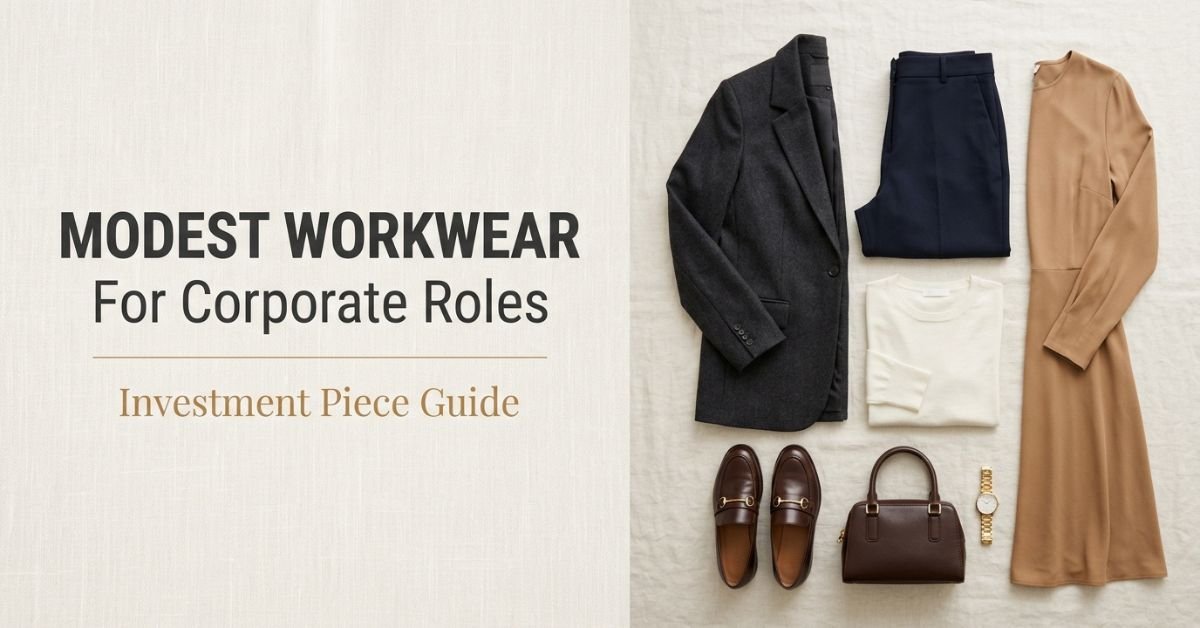
Modest Workwear For Corporate Roles: Investment Piece Guide
There is one predictable error at the start of almost every covered work wardrobe, and it happens on the very first shopping trip. The largest share of the budget goes to the garment that photographs best — the sweeping coat, the embroidered abaya, the dress that looked extraordinary on the hanger. The quiet pieces underneath get whatever is left over.
A year later the beautiful thing has been worn a dozen times. The cheap trousers worn beneath everything have been worn a hundred and twenty, and they are shiny at the seat, bagged at the knee, and already replaced once.
Investing sensibly in modest workwear for corporate roles means reversing that instinct completely. The money follows the wear count, not the compliment count.
Quick Answer: The pieces worth investing in for a modest corporate wardrobe are the ones you will wear constantly and nobody will remark on: a long-line tailored blazer, two pairs of full-length trousers, an opaque long-sleeve base layer, a long-sleeve midi dress, and real leather shoes. Roughly sixty percent of your clothing budget belongs to those five.
What Actually Counts As Investment Modest Workwear For Corporate Roles
Price tells you almost nothing about whether something is an investment. Three other things do.
It earns at least a hundred and fifty wears. Once a week for three years clears that easily. Good construction only repays itself across high mileage.
It reads correctly in more than one situation. The same jacket should be right for a budget review, a client introduction and the dinner afterwards, without any adjustment.
Other outfits depend on it. If this garment fails, several outfits fail with it.
Judged that way, a well-cut jacket in a deep neutral qualifies and an ornate occasion piece does not, no matter what either one cost. Layered dressing makes this stricter than it would otherwise be. A covered outfit is usually two or three garments cooperating a base layer, a main garment, a jacket so one weak link spoils all the work the other two are doing. Uncovered wardrobes forgive a mediocre component. Modest ones rarely do.
Which Five Pieces Deserve The Money First
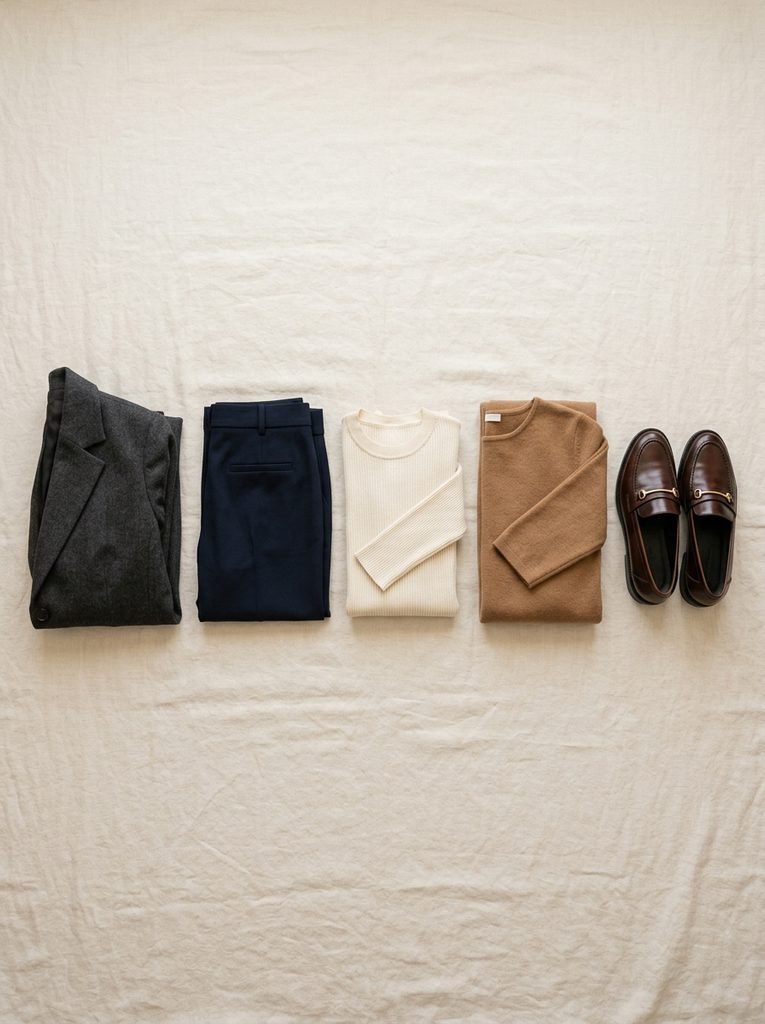
These five will carry roughly four working days out of every five. Buy them in this sequence.
The Long-Line Tailored Blazer
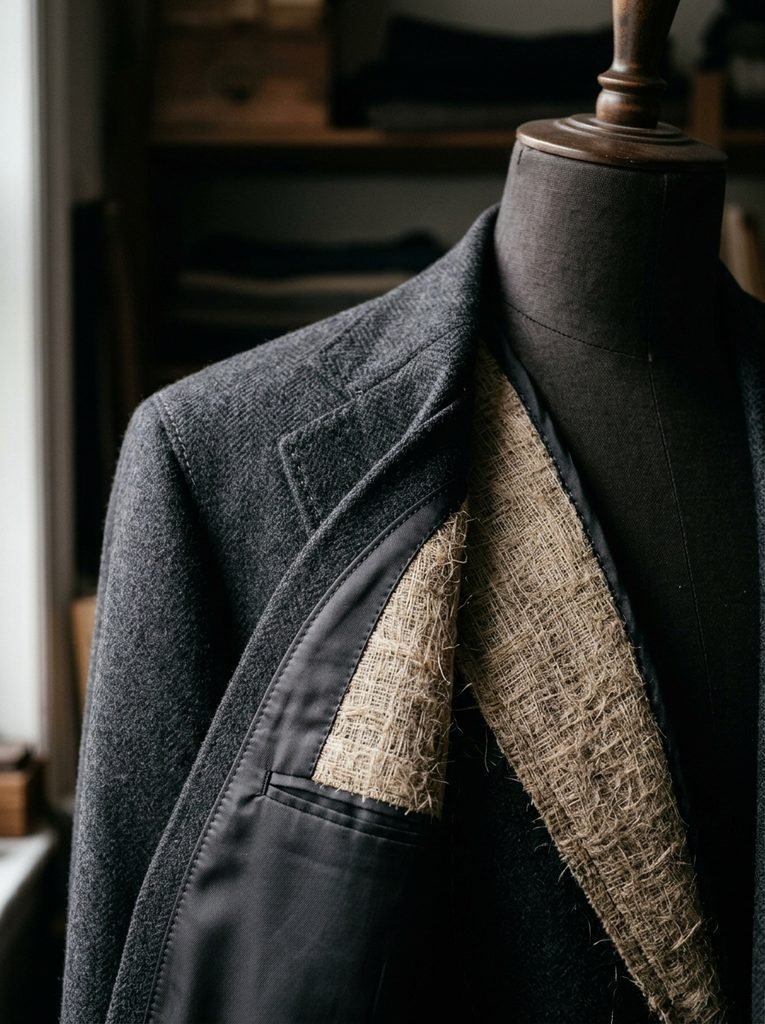
Nothing else in the wardrobe changes an outfit as fast. Look for a hem that reaches mid-thigh or below, a front that stays closed when you lean forward, and a sleeve that does not retreat up your forearm when you reach across a table. Cropped and boxy cuts fight against a long silhouette; a longer jacket finishes it. This is also the piece where the difference between careful construction and cheap assembly is most visible from across a room.
Two Pairs Of Full-Length Tailored Trousers
Two, not one — in the same two base colours you intend to build everything around. Straight or gently wide through the leg, sitting high at the waist, either properly lined or cut from something dense enough not to need it. These are worn more often than anything else you own, which makes them the cheapest items per wear and therefore the most logical ones to upgrade first.
The Opaque Long-Sleeve Base Layer
The garment nobody ever compliments and everybody quietly relies on. A fitted long-sleeve top that is genuinely opaque, in black, in a soft off-white and in one mid-tone, converts short-sleeved dresses, open-necked shirts and sleeveless pinafores into proper office clothing. Find a cut that works on your frame, then buy it twice more.
The Long-Sleeve Midi Or Maxi Work Dress
One correct dress is an entire outfit decided in seconds on a morning when nothing is going well. Column or lightly A-line, sleeves to the wrist, hem below the knee at the very least, and no back vent that opens higher than that. Add the blazer and it becomes formal. Swap heels for flats and it becomes unremarkable in the best way.
Leather Shoes You Can Actually Walk In
Loafers, a low block heel, or a neat ankle boot. Leather uppers, a heel tip that can be replaced, and a footbed that will survive a commute on foot. Shoes are where poor quality announces itself soonest, and where discomfort quietly damages how you carry yourself all day.
How Much Should You Actually Spend On Each Piece
Readers are working in dozens of different currencies and cost levels, so fixed figures are close to useless. Two frameworks travel better.
The tier framework. In every market there are three tiers worth knowing: the lowest level at which a garment still survives three years, the middle level where fabric and construction improve sharply, and the point beyond which you are mostly paying for a name. The middle tier, bought patiently in a sale, is where almost everyone should shop.
| Piece | Entry that still lasts | Sweet spot | Diminishing returns above |
|---|---|---|---|
| Long-line blazer | 1.0× baseline | 2.0–3.5× | 6× |
| Tailored trousers (per pair) | 1.0× baseline | 1.8–3.0× | 5× |
| Long-sleeve base layer | 1.0× baseline | 1.8–3.0× | 5× |
| Long-sleeve midi dress | 1.0× baseline | 2.0–3.5× | 6× |
| Leather loafers or low heels | 1.0× baseline | 1.8–3.0× | 5× |
The income framework. As a rough sanity check, a single foundation garment intended to last several years rarely needs to exceed around five percent of one month’s take-home pay, and the whole five-piece set can usually be assembled for well under half a month’s earnings when spread across a year.
One line belongs in every budget and is almost always forgotten: alterations. Shortening a sleeve, taking in a waist or adjusting a hem costs a fraction of the garment and is the single cheapest way to look expensive. Assume at least two of your five pieces will need it, and set the money aside before you shop rather than after.
What Does Cost Per Wear Look Like For Modest Office Outfits
Cost per wear is the purchase price divided by the number of times the garment is genuinely worn. It is the only calculation that makes an expensive jacket look sensible and a bargain blouse look careless.
Picture a well-made blazer worn twice a week for three years. That is somewhere near three hundred outings, so even a substantial price divides down to pocket change per wear. Now picture a cheap one that loses its shoulder shape after a single winter, gets replaced, and then replaced again. You spent less three times and ended up spending more, with worse outfits in between.
Sensible targets, expressed as a fraction of what the item cost:
- Daily foundations — trousers, base layers, everyday shoes: aim to divide the price by at least two hundred wears.
- Frequent pieces — blazer, work dresses: one hundred wears is a fair target.
- Occasional formal — conference coats, event pieces: twenty to thirty wears, and be honest about whether the occasion truly recurs.
Do the arithmetic before you pay, not afterwards. If a garment cannot realistically reach fifty wearings in the life you actually live, it is not an investment piece. It is simply a purchase, and it should be priced like one.
Which Fabrics Survive Full Coverage And A Full Day
Covered dressing keeps more cloth against more skin for more hours, so fibre choice carries more weight here than in a short-sleeved wardrobe. Climate widens the gap further.
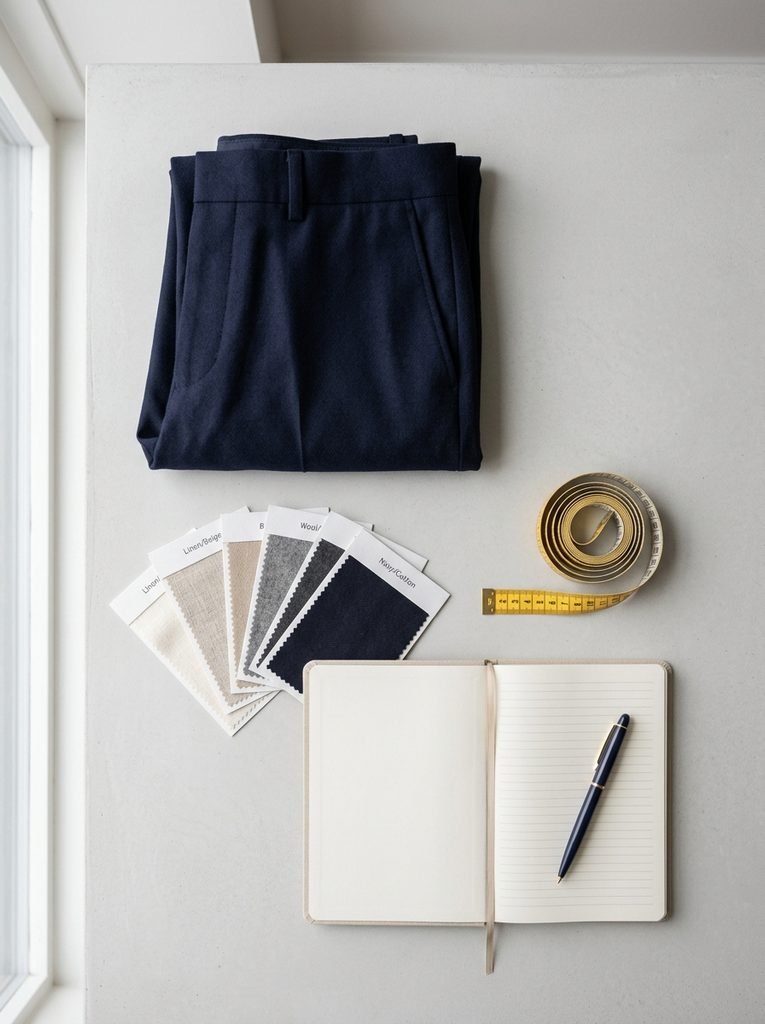
Reliable choices: wool and wool blends, crepe, ponte, twill, dense viscose blends, cotton poplin with a trace of stretch, and suiting cloth with a small percentage of elastane for recovery. These hold their shape through long meetings and long journeys.
Handle with care: pure linen creases within the hour of sitting down; fine jersey clings and sags at the elbow; unlined sheer fabrics demand a slip underneath, which adds heat; heavy synthetic satin shows every mark.
Two checks before you commit:
Weight and density. Suiting with real substance drapes properly and conceals reliably. Anything you can see daylight through will behave the same way under strong office lighting.
Lining. A lined trouser or dress glides over a base layer rather than gripping it. Unlined works when the outer cloth is dense enough, but test it seated, not standing in front of a mirror.
In hot and humid climates, lean toward loose cuts in breathable natural fibres and let air move between layers rather than trapping it. In cold ones, the outer layer does the insulating work, so the pieces closest to the skin can stay fine and light.
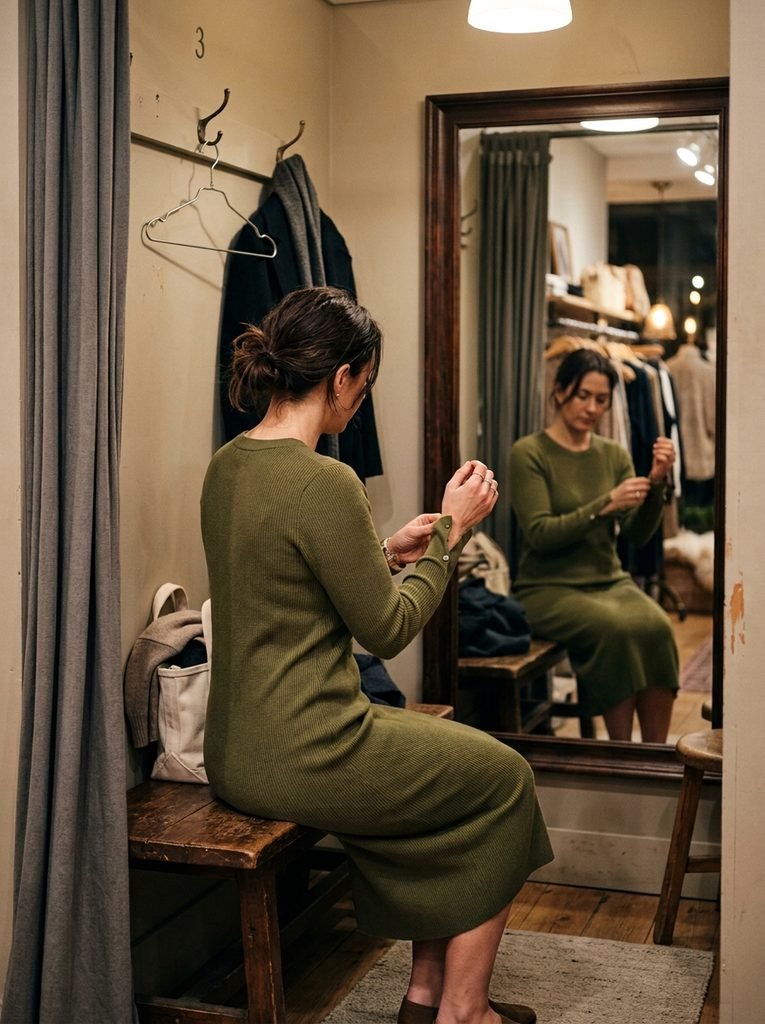
How Do You Test Fit And Coverage Before You Pay
Run this sequence in the fitting room every single time. It takes about ninety seconds and prevents most returns.
- Raise your arms. Fully overhead. Does the hem climb above the waistband? Does the cuff abandon your wrist? If so, the garment is cut too short for a covered wardrobe, whatever the size label claims.
- Sit down. Use the bench. Watch for pulling across the thigh, a skirt riding upward, and a jacket front that separates at the chest.
- Check the light. Stand with a bright source behind you. Pale shades are the usual offenders, and fitting-room lighting is far gentler than a conference room at noon.
- Cross your arms. On any wrap or buttoned front, fold your arms as though reaching for a laptop. What opens in a shop opens in a meeting.
- Find the shoulder seam. On a blazer it should land exactly where your own shoulder ends. This is the one thing alterations cannot fix affordably. Everything else can.
- Layer it properly. Try the piece over the base layer you actually own, not over bare arms. Two garments that each fit alone can still be one garment too many together.
What Should You Never Spend Investment Money On
| Put the money here | Keep the money here |
|---|---|
| A blazer with a true shoulder line and a proper lining | Sharply trend-led jackets — cropped, exaggerated, novelty hardware |
| Trousers in your two core neutrals | Bold-print trousers you will date instantly in photographs |
| Everyday leather footwear | Formal heels that appear twice a year |
| Base layers in three shades, bought in multiples | Fragile blouses that need hand washing after every wear |
| One structured, well-made bag | Seasonal bags that match exactly one outfit |
| Alterations on pieces you already love | A fifth version of something you already own |
The pattern behind the table is simple enough to carry into any shop. Money belongs on the garments that are worn most, seen from closest, and noticed least and away from anything whose appeal depends entirely on this year being this year.
How Do You Build It When You Can Only Buy One Piece At A Time
Very few people assemble a wardrobe in one transaction, and guides that assume otherwise are the least helpful ones. A realistic twelve-month sequence:
- Months one and two: Trousers, first pair. Wear them constantly and pay attention to what is actually missing.
- Month three: Base layers — two of them, in your most-used neutral and in black.
- Months four to six: The blazer. Save deliberately for this one. It is the piece where the middle tier shows its value most plainly.
- Month seven: Trousers, second pair, in your other neutral.
- Months eight and nine: Shoes. Replace whichever pair you currently find yourself explaining.
- Months ten to twelve: The long-sleeve dress, plus alterations on anything bought earlier that never quite sat right.
Colour discipline is what makes the sequence work. Choose two neutrals and one accent charcoal, ivory and a deep green, for example and decline everything outside that range for a full year. Every piece then combines with every other piece, which is the real mechanism behind wardrobes that appear far larger and more expensive than they are.
Does A Strict Corporate Dress Code Change Any Of This
It changes the finish, not the framework. In law, banking, consulting and government-facing work, move toward matte cloth, deeper neutrals, closed jackets and scarves kept within the same tonal family as the outfit. Nothing should pull focus. In creative studios, technology companies, universities and NGOs the same five pieces still carry, simply in softer fabrics, warmer colours and flat shoes.
Regional norms shift the dial too. Some corporate cultures treat a full matched suit as the default and read anything softer as informal. Others find a matched suit faintly old-fashioned and prefer separates. Spend your first month in a new job observing what the people one level above you actually wear, then dress a small step more considered than that.
For hijab-friendly workwear, treat the scarf as part of the tailoring rather than an accessory. Solid colours in jersey or fine cotton, secured properly underneath, will hold through a full day of movement. A scarf needing adjustment every twenty minutes undermines an otherwise immaculate outfit, and it is the least expensive problem on this entire list to solve.
How Do You Make These Pieces Last Long Enough To Pay Off
The value of an investment piece is created after you buy it, not at the counter.
- Have the blazer professionally cleaned two or three times a year at most. Brush it and air it between wears instead.
- Steam structured cloth rather than pressing it flat with an iron, which crushes the shaping you paid for.
- Rest tailored trousers for a day between wears so the fibres recover at the knee.
- Use broad hangers for jackets. Thin wire ones distort the shoulder within a season.
- Wash base layers cold and inside out, then dry them flat or on a line. Machine drying is what turns opaque into transparent.
- Replace worn heel tips early, before the damage travels into the sole.
- Book one alterations appointment a year for the pieces that have shifted as you have.
Key Takeaways
- Spend on the garments with the highest wear count, not the highest visual impact.
- Five pieces — long-line blazer, two pairs of trousers, opaque base layer, long-sleeve dress, leather shoes — handle most corporate working days.
- The middle price tier, bought patiently, beats both disposable fashion and luxury on value in any currency.
- Budget for alterations from the beginning; it is the cheapest route to looking expensive.
- Two neutrals plus one accent, held for a year, is what makes a small wardrobe feel deep.
- Aim to divide the price of daily foundations across at least two hundred wears.
Your Action Plan
- Open your wardrobe and count how many times each work garment was worn in the past month.
- Identify the foundation piece you wear most and like least — that is purchase number one.
- Write down your two neutrals and your single accent colour.
- Set a per-piece budget using the tier framework, then add a line for alterations.
- Run the six fitting-room tests on the next thing you try on, before you look at the price tag.
- Gather everything you already own that almost fits and take it to a tailor in one trip.
Where To Start This Week
- Audit before you buy anything at all — the gap is usually not where you assume it is.
- Replace the weakest daily foundation first, rather than the most exciting item on your list.
- Fix your colour scheme and hold it for twelve months without exception.
- Try the blazer over your own base layer, seated, with your arms raised, before deciding.
- Note the purchase date beside each new piece. In a year you will know your true cost per wear, and that number will quietly make every future decision for you.
FAQ
Is Modest Workwear More Expensive Than Conventional Office Clothing?
Not in principle, though it can be if the buying is unplanned. A covered outfit often involves one additional garment, so a single day’s outfit may cost a little more to assemble. That is offset by the fact that covered pieces tend to be worn all year rather than seasonally, which pushes the wear count up and the cost per wear down. Five strong foundations generally cost less across three years than fifteen forgettable ones.
How Many Work Outfits Do I Genuinely Need?
Enough to move through a working week without obvious repetition, which is a smaller number than most people expect. Two pairs of trousers, three tops or base layers, one dress and one jacket will generate well beyond a fortnight of distinct combinations. Wardrobes that feel empty are usually full of pieces that refuse to combine.
Can I Build This On A Limited Budget?
Yes, by staggering purchases instead of compromising on all of them simultaneously. Buy one middle-tier foundation every two to three months and bridge the gaps with what you already own. End-of-season sales on tailoring are the single largest lever available, often moving a piece from unaffordable to sensible without any drop in quality.
Which Colours Work Best For Modest Business Attire?
Charcoal, navy, black, ivory, camel and deep green carry quiet authority and combine with one another without effort. Keep any pattern small and low in contrast. One accent shade — burgundy, teal or rust — supplies personality without breaking the wardrobe’s internal logic.