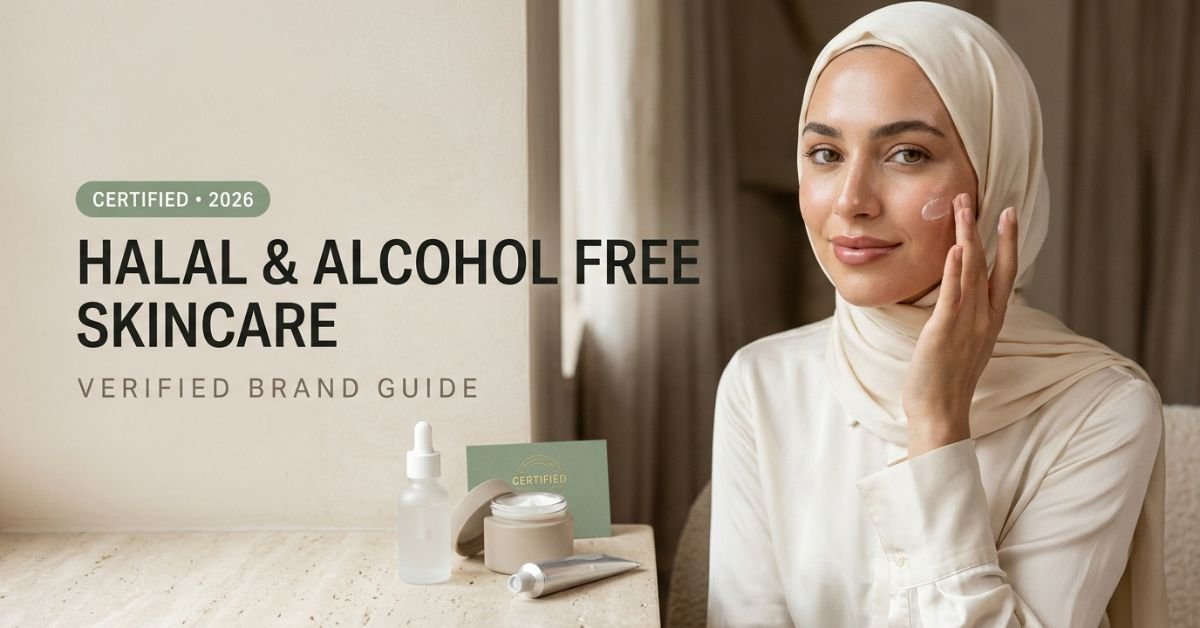
Halal and alcohol Free skincare: Complete Verified Brand Guide
Halal and alcohol free skincare describes products formulated without ethanol and without pig-derived or otherwise impermissible animal ingredients, produced in facilities checked for contamination risk. Certification is what turns that description into a verifiable fact: an independent Islamic authority reviews the ingredients, the suppliers, the production line and the storage before granting approval.
Three separate layers sit inside that sentence, and most shoppers only ever check the first.
Layer one is the ingredient list. No pig-derived gelatin or collagen, no carmine from insects, no lanolin from an unverified source, no ethanol.
Layer two is the supply chain. Glycerin, stearic acid, emulsifying wax and even some vitamins can come from animal fat or from plants. The label rarely says which. A certifier demands documentation from the raw-material supplier, which is something a consumer simply cannot do alone.
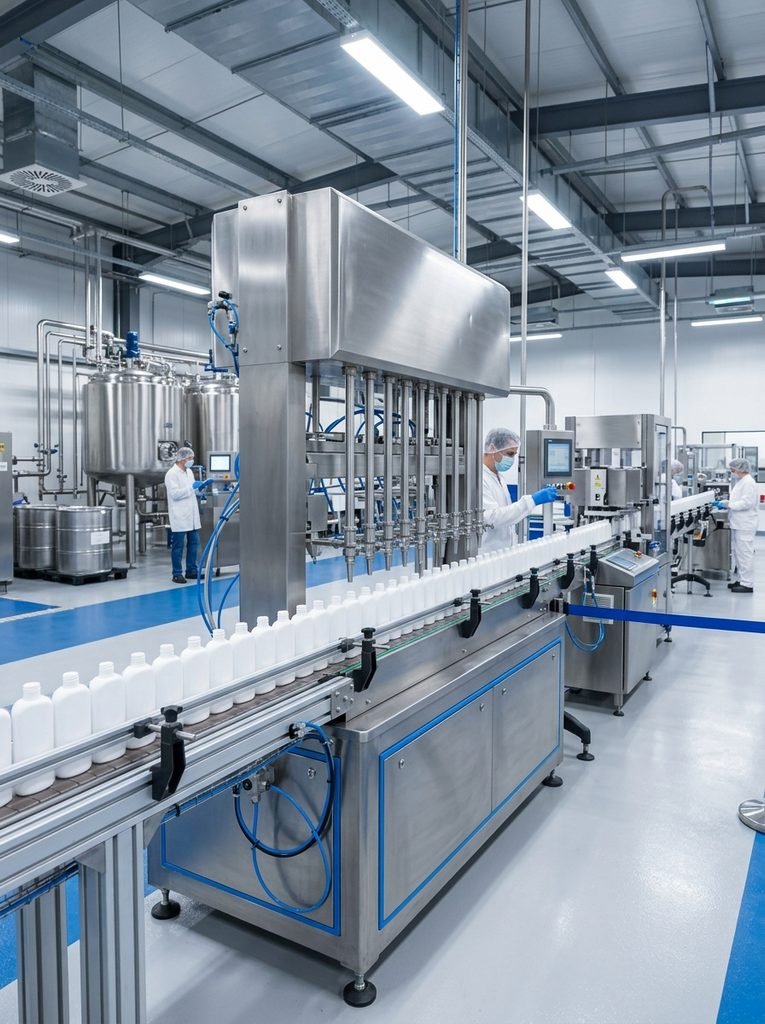
Layer three is the factory. If the same equipment produces a non-compliant product on Tuesday and yours on Wednesday, cleaning protocols become part of the religious question. Auditors inspect this. Marketing departments do not.
That is the honest difference between a product that is probably fine and a product that has been checked.
The Alcohol Confusion That Costs People Money
Here is where a great deal of well-meaning online advice goes wrong.
Turn over almost any moisturiser and you’ll see cetearyl alcohol somewhere in the middle of the list. A lot of people put the jar straight back on the shelf. They shouldn’t.
Fatty alcohols — cetyl, stearyl, cetearyl, behenyl — are long-chain waxy solids, usually derived from coconut or palm oil. They don’t evaporate, they don’t strip the skin, and they cannot intoxicate anyone under any circumstances. Chemists call them alcohols because of a structural feature, not because of anything they share with a drink. In a formula, their job is to soften skin and hold water and oil together.
The one to actually look for is ethanol. On an international INCI list it appears as Alcohol, Alcohol Denat., or SD Alcohol followed by a number.
Scholarly opinion on topical ethanol is not uniform, and any guide claiming otherwise is overselling its own certainty. Broadly speaking: alcohol produced from grapes or dates and still intoxicating is treated as prohibited by consensus, while ethanol synthesised industrially or denatured into something undrinkable is permitted for external use by a significant body of scholars and ruled against by others. Certification bodies generally take the cautious road and exclude ethyl alcohol from cosmetics they approve — which is precisely why certification is useful. It settles the question before you have to.
Quick label rule: Alcohol Denat. in the first five ingredients of a toner, essence or setting spray is worth pausing over. Cetearyl alcohol halfway down a cream is not.
There’s a skincare benefit hiding in here too. High-percentage volatile alcohol gives a fast dry-down that feels pleasant on oily skin, but over months it can weaken the barrier and worsen sensitivity. Avoiding it for religious reasons often improves the skin as a side effect.
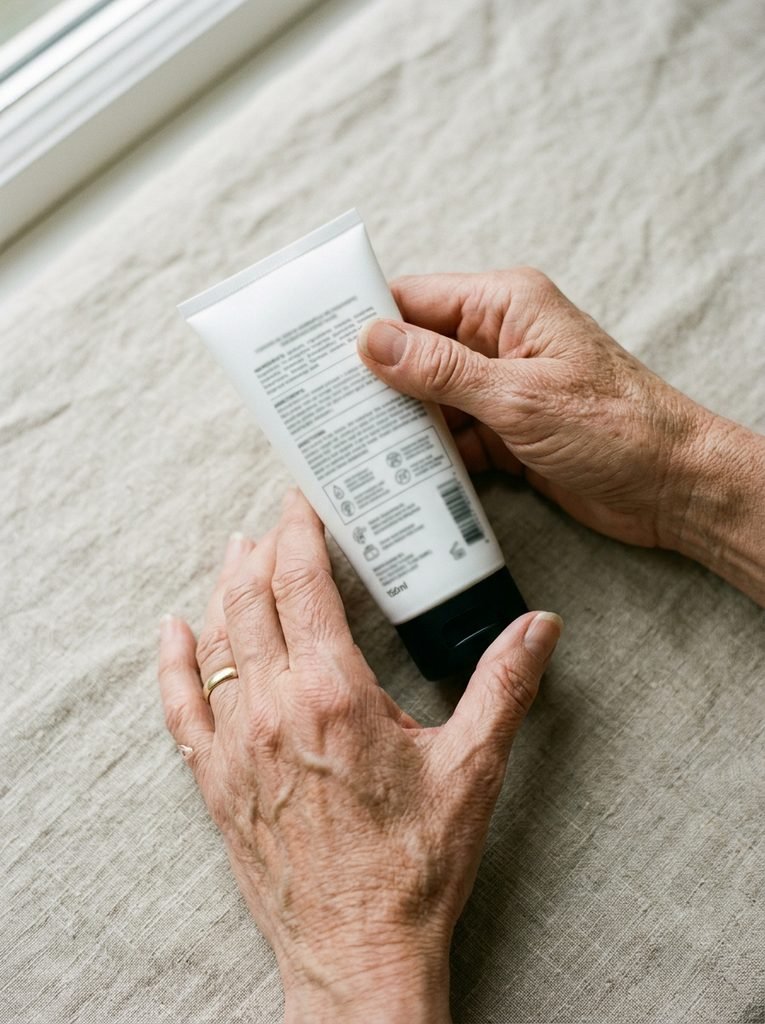
How To Check A Halal Skincare Certification Yourself
This is the most valuable habit in the entire article, because brands reformulate, certificates lapse, and a list published today ages quietly.
There is no single worldwide halal symbol. Hundreds of certification bodies operate across different countries, each with its own mark, its own standard and its own level of rigour. A green crescent designed in a graphics program looks almost identical to an accredited mark at thumbnail size.
Four steps that work anywhere:
- Find the issuing authority’s name, not just a logo. If no body is named on the packaging or the brand’s website, treat the claim as marketing until proven otherwise.
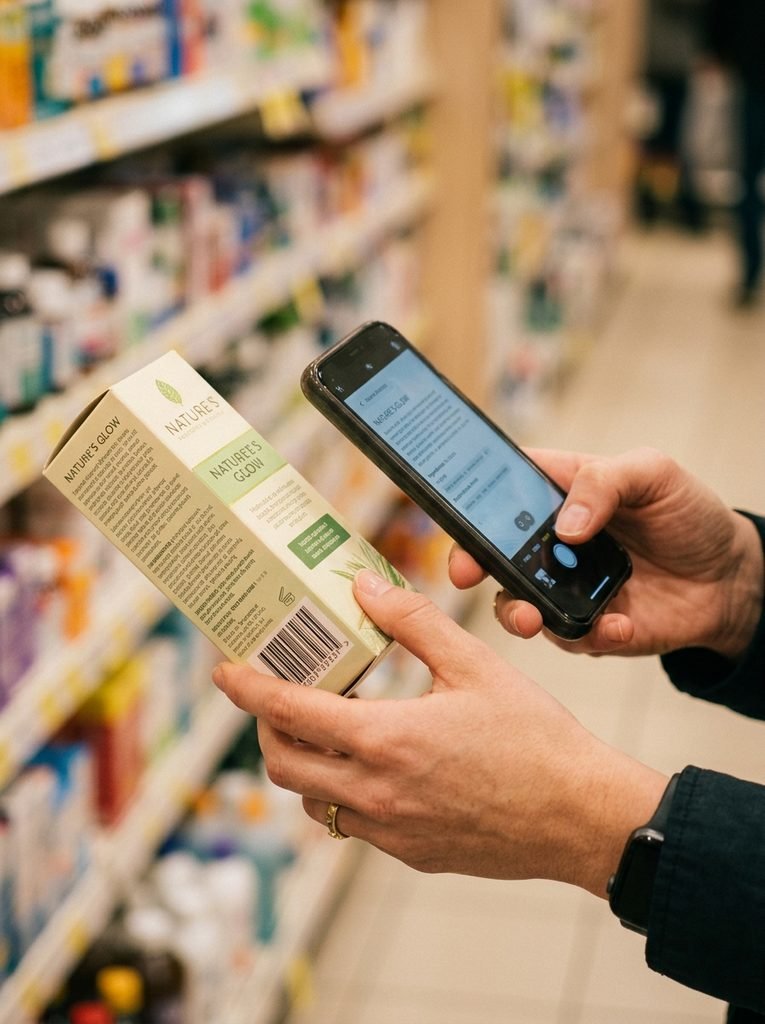
- Cross-check against the certifier’s own register. Most major authorities publish a searchable database, an app, or a scannable code that resolves to their records. If the certifier has no public record and no contactable office, that tells you what you need to know.
- Check the date and the renewal. Certificates run for a fixed term, commonly one to a few years, and must be renewed with a fresh audit. An expired certificate is a historical document, not a current guarantee.
- Check the scope. Certification is often granted per product, per line or per factory — and sometimes per market. A brand certified for its domestic range may sell a different formulation abroad.
When a brand can’t or won’t send you a copy of its certificate on request, you’ve learned something.
Wardah — The Brand That Built The Category
Wardah launched in Indonesia in the mid-1990s and became the country’s first cosmetics brand to pursue formal halal certification through the Indonesian religious authority structure. That decision looked niche at the time. It turned out to be the template the whole global category copied.
The skincare range is unusually complete for the price — cleansers, toners, serums, day creams, night creams and sunscreens — and it’s built around what Indonesian and wider Asian skin actually deals with: humidity, sun, and oil.
For readers outside Southeast Asia, availability is the catch. Wardah travels through distributors and marketplace resellers in many countries, and marketplace listings are where counterfeits live. Buy from an authorised seller or an official regional store.
Safi — Alcohol Free As A Formulation Rule
Safi is a Malaysian skincare and personal care brand certified under the Malaysian government’s halal framework, and it has spent decades positioning itself as alcohol-free and gelatin-free across the range rather than in selected lines.
That distinction matters more than it sounds. Plenty of brands have one certified hero product and an uncertified catalogue behind it. When a company builds its entire manufacturing chain — sourcing, blending, filling, packing — around a single standard, you stop having to check each item individually.
The range covers cleansers, toners, serums, moisturisers and haircare, sold widely across Malaysia, Indonesia, Singapore, Brunei and parts of the Middle East.
INIKA Organic — Halal Certified Skincare Brands With An Organic Overlap
INIKA Organic is an Australian brand that holds a stack of independent certifications, halal among them, alongside certified organic and certified vegan status. For a shopper whose criteria overlap — halal and vegan and no animal testing — it removes a lot of cross-referencing.
The skincare side covers cleansers, hydrating mists, facial oils, serums and mineral sunscreen, and the pricing sits in the premium natural bracket rather than the mass market.
One honest note. Because INIKA leads with its organic identity, the halal certification is sometimes listed without the certifying body named prominently. If certification is your primary criterion rather than a bonus, email the brand and ask which authority issued it and when it expires. That request is normal, and a well-run brand answers it in a day.
PHB Ethical Beauty — Alcohol Free Skincare For Muslims Made In Europe
PHB is a British family-run brand that makes its skincare, haircare and body products in the UK and has built its range around being natural, vegan, cruelty-free and halal-certified, with volatile alcohols deliberately left out of the formulas.
For European and North African readers, this solves a genuine logistics problem. Halal-certified skincare has historically meant importing from Malaysia or Indonesia, with shipping costs and customs delays attached. A locally manufactured option changes the maths.
The formulations lean gentle — fragrance-light, simple ingredient decks — which suits reactive and sensitised skin.
Amara Cosmetics — Certified Beauty From North America
Amara was founded in California by a Muslim entrepreneur who was tired of reading ingredient lists in supermarket aisles, and it became the first North American cosmetics company built entirely on halal certification through a recognised American Islamic certifying council. Products carry that council’s mark on the outer packaging.
The strength here is colour cosmetics. The skincare line is smaller than the others on this list — cleansers, moisturisers and a handful of treatments — so treat Amara as a partial routine rather than a complete replacement.
What it does offer North American shoppers is the thing that matters most in a market with no halal labelling regulation: a named certifier, a printed mark, and a company that answers questions about both.
Value Certification From South Asia
Iba is an Indian brand, founded by two sisters who left professional careers abroad to build it, and it positions itself as the country’s first fully halal-certified cosmetics and personal care range — certified through an Indian halal authority, with the manufacturing facility included in the scope rather than just the finished goods.
Products are formulated free of alcohol, animal-derived ingredients, sulphates and parabens. The skincare catalogue is broad — face washes, ubtan-style treatments, serums, sunscreens, moisturisers — and priced far below every other brand mentioned here.
For readers in South Asia, the Gulf diaspora markets and increasingly parts of Africa and Southeast Asia, it’s the easiest place to start without committing real money to an experiment.
The Mainstream Brands People Keep Asking About
This is the question that fills search boxes worldwide, and most guides duck it.
The large global skincare houses — the drugstore names and the dermatologist-recommended ranges you already know — are, as brands, not halal-certified. A few hold certification for specific product lines in specific markets, usually because a country’s import rules required it. That is not the same as brand-wide certification, and it does not transfer to the same product bought elsewhere.
None of this means those products contain prohibited ingredients. Many almost certainly don’t. It means no independent body has verified the ingredients, the suppliers or the production line, so nobody can tell you either way with authority.
Whether that gap matters is a personal decision, shaped by your own school of thought and your own comfort level. The point is to make it knowingly rather than by accident.
Quick Scan Table
| Brand | Home Market | Certification Region | Alcohol Position | Skincare Depth |
|---|---|---|---|---|
| Wardah | Indonesia | Southeast Asia | Formulated without ethanol | Full routine |
| Safi | Malaysia | Southeast Asia & Gulf | Alcohol-free by policy | Full routine |
| INIKA Organic | Australia | Australia & export markets | Natural formulation focus | Moderate |
| PHB Ethical Beauty | United Kingdom | Europe | Volatile alcohols excluded | Full routine |
| Amara Cosmetics | United States | North America | Alcohol-free | Light |
| Iba | India | South Asia | Alcohol-free | Full routine |
Wudu, Nail Polish And The Water Permeability Question
Skincare almost never blocks water from reaching the skin. Nail polish does, and it comes up in nearly every halal beauty conversation, so it’s worth addressing here.
Conventional polish forms a sealed film over the nail, which raises a question for ablution. Several brands now produce breathable, water-permeable polishes designed specifically so that water can pass through the film.
Opinions differ on whether permeability is sufficient, and it’s not a question a beauty article should try to settle. What is fair to say is this: for nail products, certification and functional permissibility are two separate tests, and a product can pass one while leaving the other open. If it matters to you, ask a scholar you trust rather than a brand’s marketing page.
Who Should Switch Now, And Who Should Wait
Switch now if you’ve been buying on the strength of a green logo alone, or if the first five ingredients of your toner or essence include Alcohol Denat. At the Wardah and Iba end of the market the price difference is negligible, and you gain a documented answer instead of an assumption.
Wait if your skin is currently calm on a routine that works. Certification tells you a product is permissible. It tells you nothing about whether it suits your barrier, your climate or your acne. Replacing six products in one week is how people end up with a reaction they can’t trace back to a cause. Swap one item at a time, three weeks apart.
Verify regardless of which camp you’re in. Formulas change, certificates expire, and a brand certified in one country may be selling an uncertified variant in yours. The two minutes it takes to check the certifier’s register is the single highest-value habit in this entire subject
FAQ
Is cetyl alcohol halal in skincare?
Cetyl alcohol is a fatty alcohol, typically derived from coconut or palm oil. It is a waxy solid, cannot intoxicate, and is chemically unrelated to the ethanol in alcoholic drinks. It appears routinely in halal-certified products and is not the ingredient to worry about.
What is the difference between halal-friendly and halal-certified skincare?
Halal-friendly is a self-declared claim about ingredients. Halal-certified means an independent authority audited the ingredients, the suppliers and the production facility, then issued a certificate that can be checked.
Which authorities certify halal cosmetics?
Recognised bodies operate in Malaysia, Indonesia, Singapore, the UAE, Turkey, the UK, India and North America, among many others. Hundreds exist worldwide with varying standards, so the certifier’s name matters as much as the mark itself.
Can a halal-certified product still contain alcohol?
Yes, if it is a fatty alcohol such as cetearyl or behenyl alcohol, which are permitted. Certifiers generally exclude ethyl alcohol from approved cosmetics.
How long is a halal certificate valid?
Validity periods vary by certifier, commonly running from one year to a few years, with renewal requiring a fresh audit. Any ingredient or supplier change usually triggers a re-review.