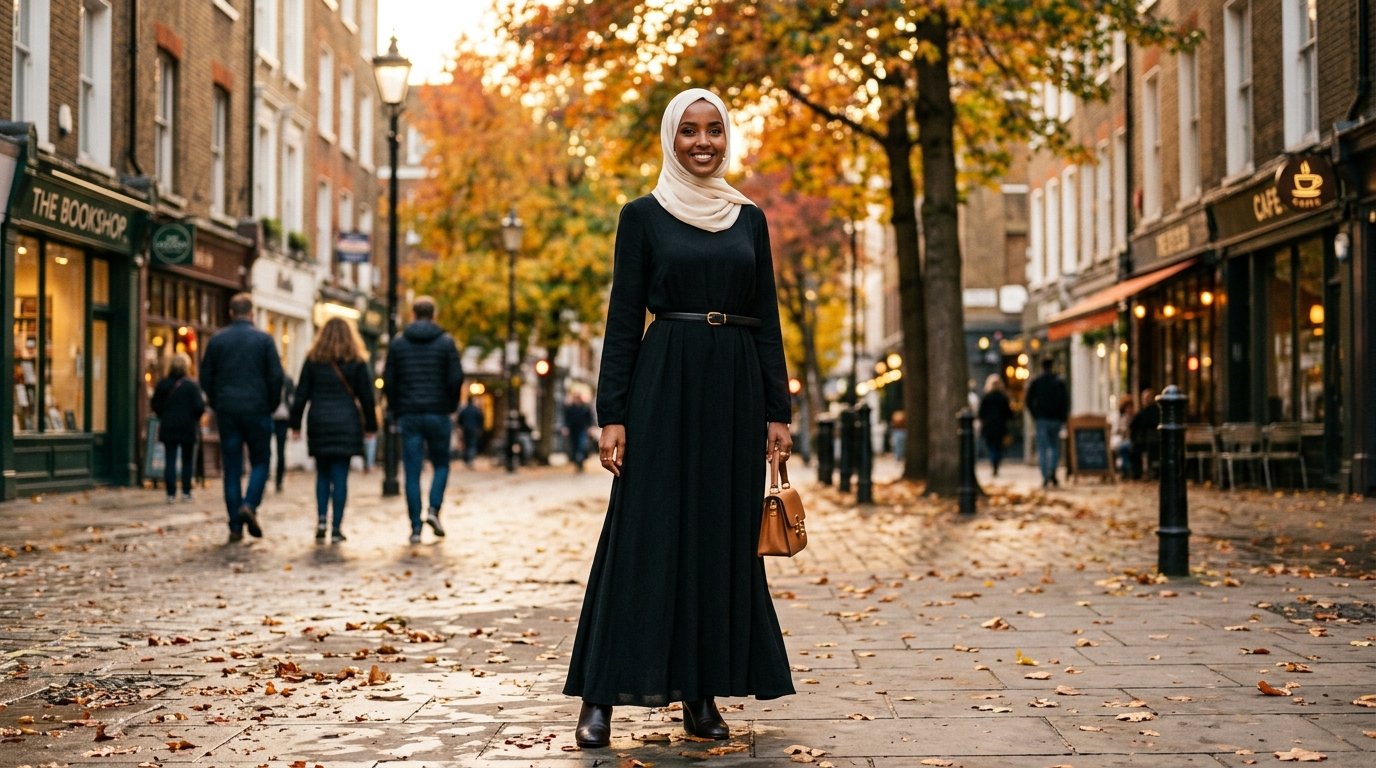
Fall 2026’s Biggest Dress Trend Is Sheer. Here’s the Rest of the Season — and How to Wear the Sheer One Anyway.
There is a moment every autumn when you open a dress trend round-up, scroll for ninety seconds, and close it again. This year that moment arrives faster than usual, because two of the season’s headline dress stories are sheer organza and embellishment designed to be seen through.
But something else happened on the Fall 2026 runways, and it has been largely buried under the sheer coverage: this was one of the most covered, most tailored, most fabric-heavy seasons in years. The high necks are real. The floor-skimming lengths are real. The tuxedo shirt is back. If you dress modestly, more of this season belongs to you than to the readers those round-ups were written for.
The short answer
What are the modest dress trends for fall 2026? Tuxedo-inspired dressing, head-to-toe black, tomato red, velvet and texture-mixing, fringe used as trim, and bouclé or beaded occasionwear all cover by design. Sheer organza layers and sheer-led embellishment need a proper lining or a solid base layer underneath.
What fall 2026 actually sent out
Start with the overall direction, because it explains why so much of this season works.
Across New York, London, Milan and Paris, designers leaned into expressive silhouettes, rich colour and polished tailoring, producing collections described as bold and refined in equal measure — and unusually wearable. One retail trend read described a strong return to structured tailoring and slim, nineties-inspired silhouettes, with strong-shouldered shrunken blazers, slim trousers and oversize coats standing out as investment pieces.
Structure, length and fabric weight are all in fashion at the same time. That combination almost never favours modest dressing. This year it does.
The two trends that genuinely fight you
Honesty first, because the rest of the article depends on it.
Sheer organza layering. Airy, gauzy organza layers are carrying through into the colder months rather than winding down after summer, with the fall runways full of dresses in delicate sheer fabric — from military-inspired embroidery at Khaite to Prada’s window-dressing approach. This is the season’s most photographed dress idea and the one that needs the most work. Skip to the lining section below before you write it off.
Deliberately frivolous occasion dressing. A group of designers turned away from hushed tones and practical fits toward pieces described as borderline frivolous and grandiose, built on ruffles, lace, bows and elaborate draping. Not unwearable — but these are pieces engineered around exposure and drama, and adapting them usually costs more than buying a well-cut alternative.
Everything below this line is the part you can wear as designed.
Trend 1: Tuxedo dressing — the season’s quiet gift
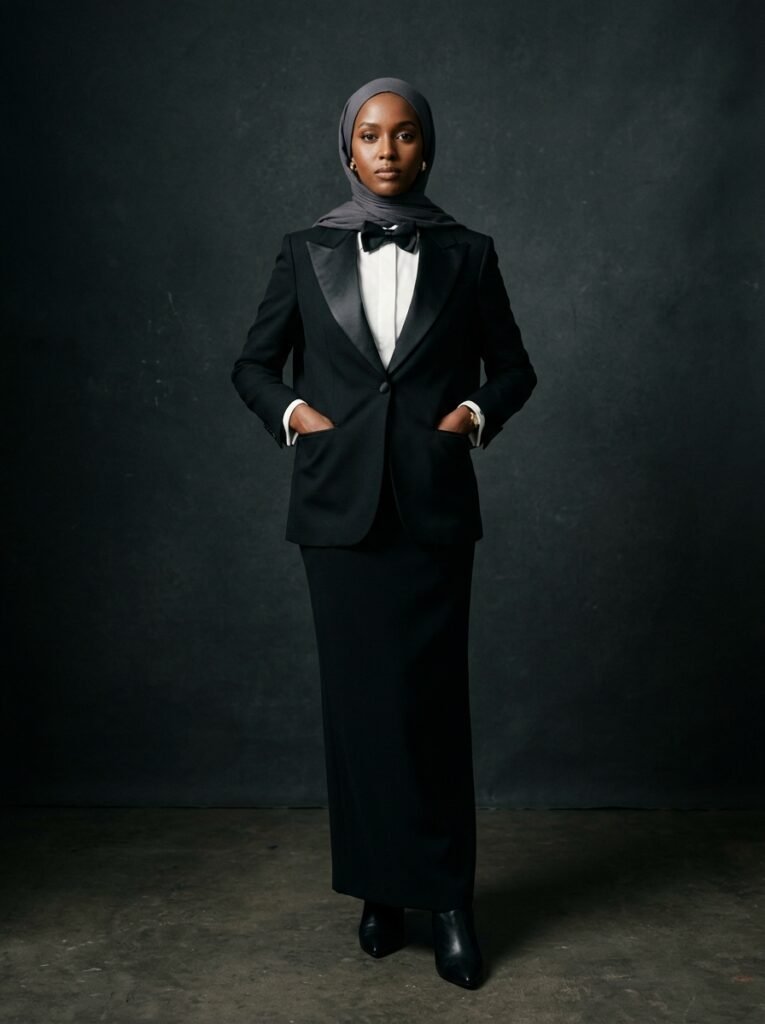
Le Smoking returned in force, with tuxedo dressing across the runways — satin lapels, cummerbunds, dress shirts and bow ties — appearing in ways that read fresh rather than stiffly formal.
Think about what a tuxedo actually is: a high closed neckline, long sleeves, full-length trousers or a long skirt, a jacket with structure. It is one of the few genuinely covered silhouettes in Western fashion history, and it is the trend of the season.
How to wear it: a satin-lapel jacket over a long column skirt, or a floor-length tuxedo dress with the shirt collar visible at the neck. A hijab in the same tone as the satin lapel reads deliberate rather than accidental.
Why it works in hijab: the shirt collar gives you a place to tuck the scarf edge, which solves the neckline gap that makes most formal dresses awkward.
Trend 2: Full black, back as a statement
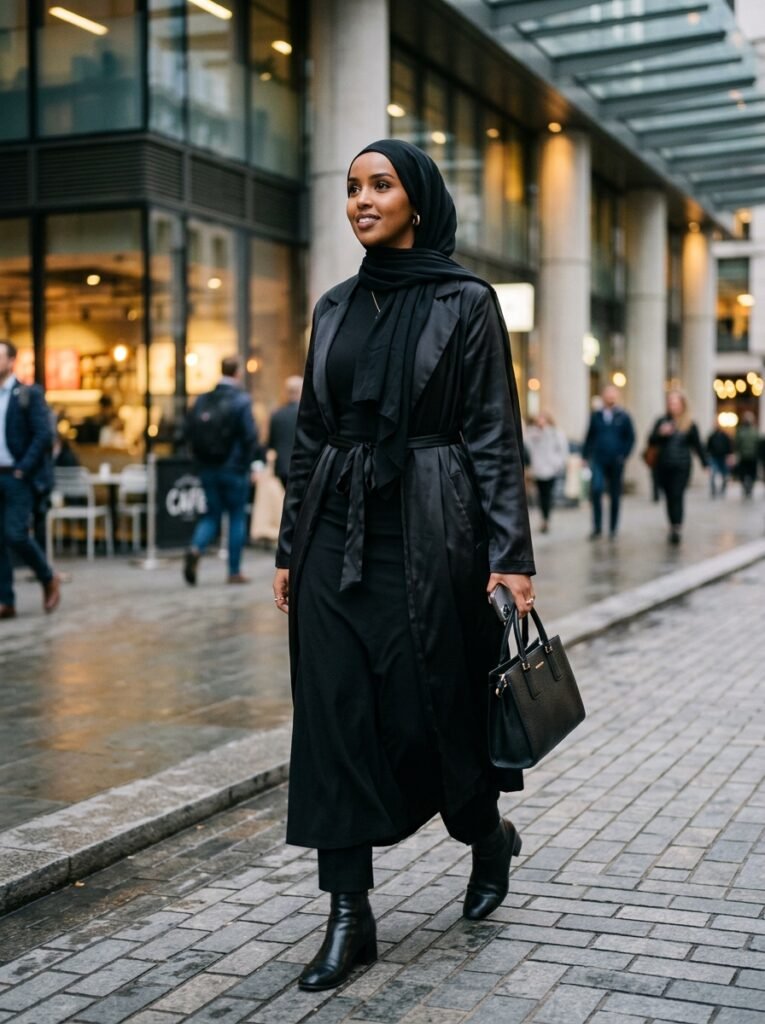
Full-black looks re-emerged as a power statement, dominating the Milan runways in particular.
This is the easiest trend on the list to execute, and the one most likely to be dismissed as boring. It is not boring this season — it is the point. The trick is texture: a matte crepe dress with a satin scarf, or a wool column with a velvet coat over it. All-black in a single fabric flattens under photography and in low autumn light. All-black in three fabrics reads expensive.
Trend 3: Tomato red, again
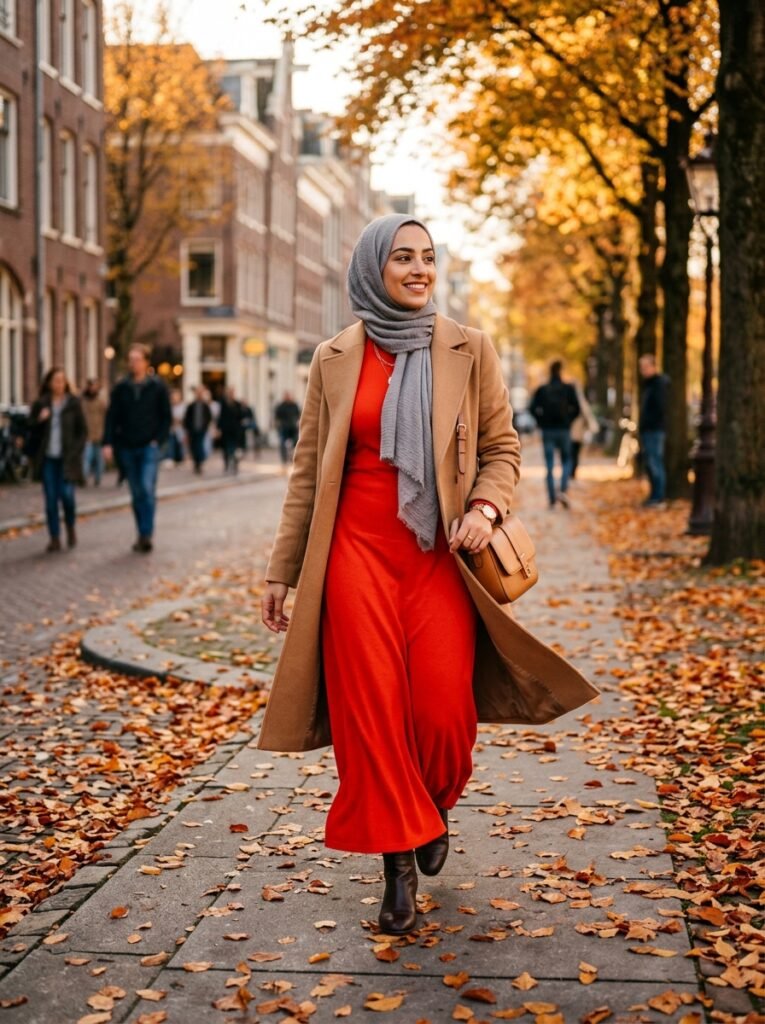
Tomato red carried straight from Spring into Fall 2026, with designers embracing head-to-toe scarlet across gowns, outerwear and knitwear — an effect described as rich and impossible to ignore, especially against autumn’s usual blacks, browns and greys.
A long-sleeve red maxi is the highest-impact single purchase of this season. If head-to-toe feels like too much, the same effect comes from a red dress under a camel or charcoal coat, with the red visible only from the knee down and at the cuff.
Trend 4: Velvet and deliberate texture mixing
Designers focused heavily on layering and mixing textures and patterns for depth — velvet paired with leather and charmeuse, jacquards and plaids mixed with florals, satin and lace. Velvet draping also featured in the season’s more romantic looks.
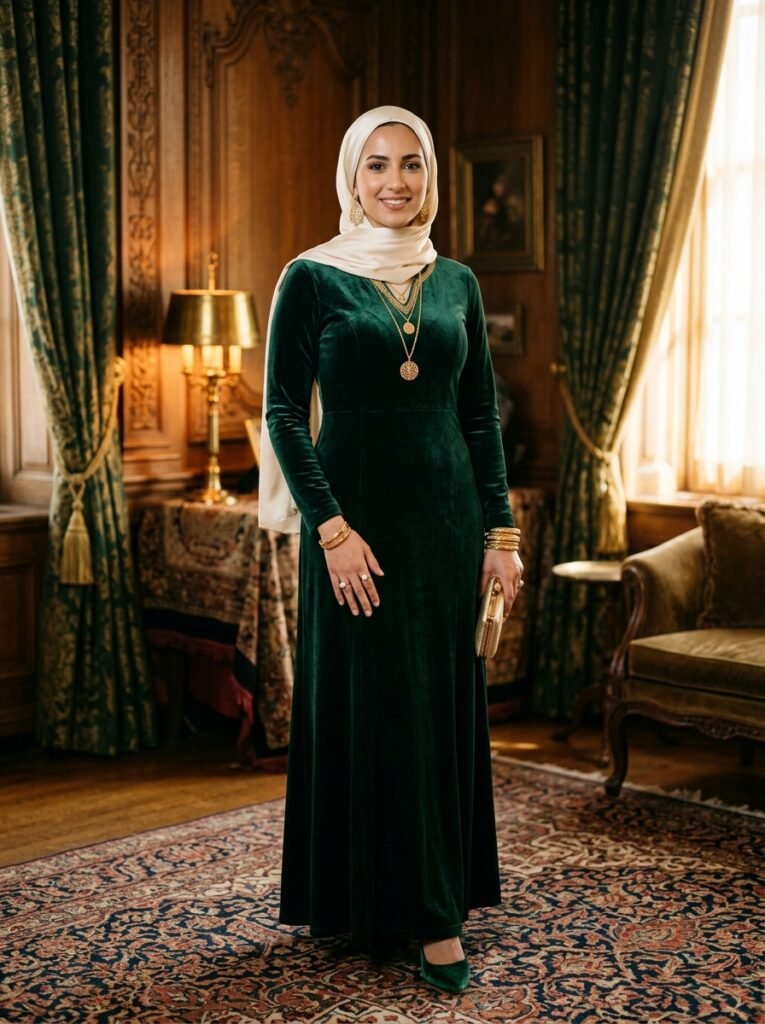
Velvet is a modest dresser’s best fabric and always has been: it is opaque, it has weight, it drapes rather than clings, and it photographs as luxury under artificial light. For autumn events, a velvet maxi in bottle green, burgundy or navy will outperform anything else in your wardrobe.
One caution: velvet plus a velvet hijab is too much of the same surface. Pair velvet with satin, crepe or fine wool at the head.
Trend 5: Fringe — as trim, not as a whole dress
Rather than all-over fringe, the season’s defining dress details are pops of fringe and decisive fringe trimming. Fringe also appeared as bows transformed into swaying movement.
This is good news. All-over fringe on a long dress adds visual width and moves unpredictably. Fringe at a cuff, a hem edge or a single horizontal band gives you the trend with none of the problems.
Trend 6: Occasionwear got heavier — and that helps
For autumn/winter 2026, occasionwear came through in bouclé and beaded dresses, embroidered gowns and intricate embellishment. Art Deco–inspired dresses were reimagined with intricate embellishment in unexpected fabrics.
Bouclé is the underrated word in that sentence. It is thick, textured, fully opaque and inherently formal — the single best fabric for a modest autumn wedding guest dress. Beading over a solid base does the same job: it delivers the occasion without the exposure.
For a fall wedding guest look: long-sleeve bouclé midi or maxi, closed neckline, one beaded or embroidered element, plain everything else.
Trend 7: Layering as the design method
At Prada, layering was the backbone of the collection, with a small cast of models walking repeatedly in stacked ensembles that revealed a fresh outfit as each piece was removed — and Tom Ford, The Row and Victoria Beckham also built looks around stacked garments.
Modest dressers already layer out of necessity. The shift this season is that layering is being treated as intentional design rather than as covering up. Practically: build outfits in three visible layers rather than two — base dress, mid layer, outer piece — and let each one show at a different point.
Trend 8: The belt, worn over everything
The runways made a case for what one round-up called the “useless belt” — worn loosely at the hip, cinched at the waist, or layered over knits and outerwear purely as an accessory.
For a long dress, this is the most useful accessory trend in years. A belt worn over the dress or over the coat gives you waist definition without altering the garment’s coverage at all. It is the single fastest way to stop a maxi dress reading as shapeless.
How to actually wear the sheer trend
Since sheer is the season’s headline, here is the practical answer rather than a shrug.
- Buy the lined version, not the lining. Many organza-layer dresses come in a lined variant. Check the product description for a full lining, not a partial one — partial linings usually stop at the knee.
- Use a solid slip dress, not a bodysuit. A full-length slip in a matching tone reads as intentional design. A visible bodysuit edge at the hip does not.
- Match tone, not colour. A cream slip under blush organza looks designed. A white slip under blush looks like an accident.
- Sheer sleeves need a base too. A common mistake is lining the body and leaving arms sheer. If the sleeve is organza, wear a fine long-sleeve base underneath in the slip’s tone.
- Sheer over trousers is easier than sheer over a slip. An organza overlayer above a slim trouser is the lowest-risk version of this trend and looks current.
- Check it in daylight and in flash. Fabric that reads opaque in a fitting room can behave completely differently in an event photograph.
The fabric checklist before you buy any autumn dress
- Weight over structure. A heavy crepe hangs away from the body; a light jersey maps it. Weight is doing more work than cut.
- Lining, and how far it goes. Ask specifically. This is the number one returns reason for modest buyers.
- Sleeve seam at the shoulder. A dropped shoulder gives you room; a set-in seam that sits inside your shoulder line will pull every time you raise your arm.
- Neckline behaviour when you move. Test it sitting and reaching, not standing still.
- Slit position. Front and thigh-high slits are widespread on maxi dresses this season. A back or low side slit is fine; a front slit usually needs stitching.
Five outfit formulas for the season
- Everyday: black long-sleeve crepe maxi + belt over the dress + ankle boots + grey scarf.
- Work: tuxedo jacket with satin lapel + long column skirt + collared shirt beneath.
- Autumn event: bottle-green velvet maxi + gold-toned jewellery + satin hijab in cream.
- Wedding guest: long-sleeve bouclé midi + one beaded element + closed pointed heel.
- Weekend: red long-sleeve maxi + oversized wool coat left open + trainers.
Key Takeaways
- This season’s dominant direction — tailoring, length, weight, high necks — favours modest dressing more than any recent autumn.
- Tuxedo dressing is the season’s best modest trend, because it is a covered silhouette by construction.
- Full black and tomato red are the two colour stories, and both are easiest in long-sleeve maxi form.
- Velvet and bouclé are the fabrics to prioritise — opaque, weighty and formal without exposure.
- Take fringe as trim, not as a whole garment.
- A belt over the dress or coat solves waist definition without changing coverage.
- Sheer organza is the one trend that needs work — full lining, tone-matched slip, and a base layer.