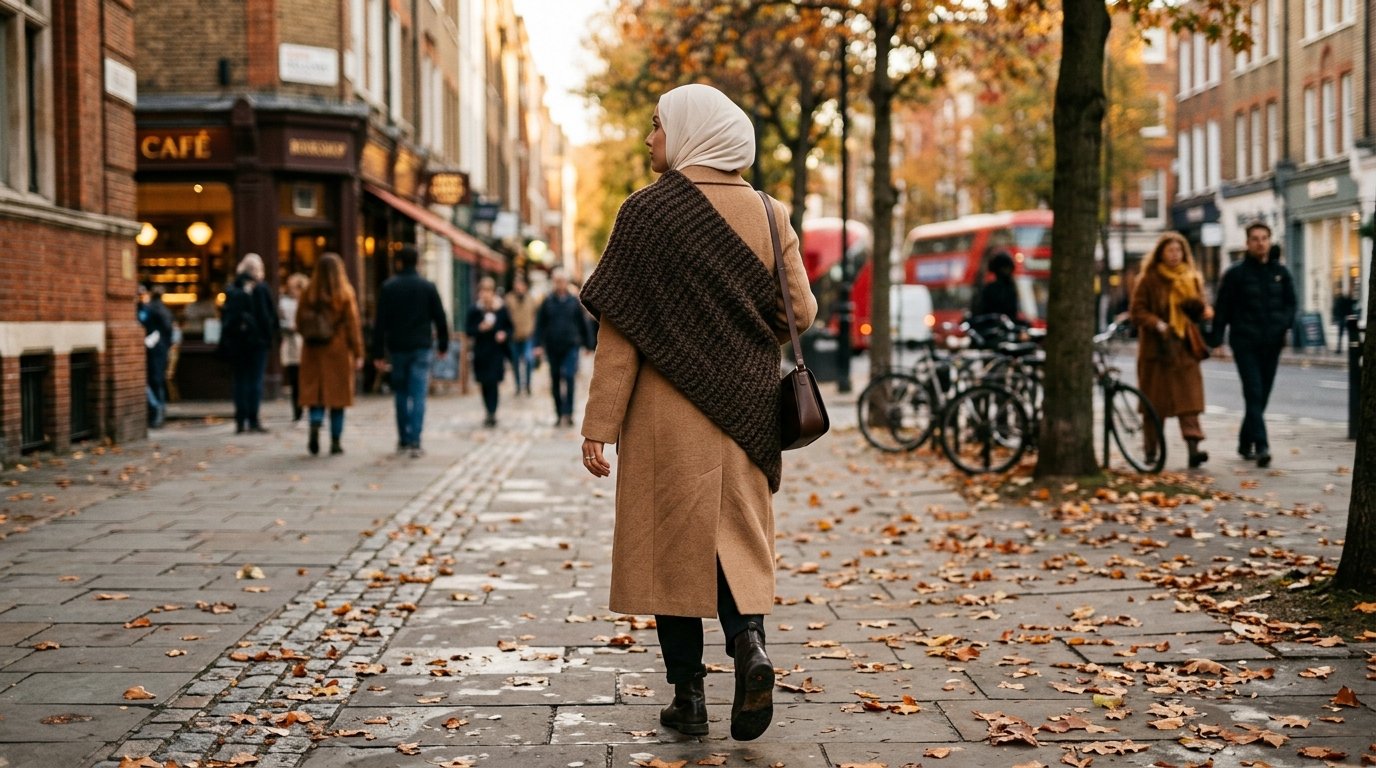
Fashion Made the Scarf Its Hero Accessory This Year — and If You Wear Hijab, You Already Own the Entire Trend
There is a particular irony in this season’s biggest accessory story. Fashion has spent 2026 rediscovering the scarf — draping it, belting it, turning it into outerwear — while the women who own the most scarves on earth have been left out of every single guide written about it.
Designers and street-style regulars have been manipulating the accessory in every direction: worn as skirts, belts and shawls, tied to bags and into hair, with the rise of the scarf coat and the craze for the triangle scarf making 2026 the year of the scarf.
If you already wrap one every morning, you are not late to this trend. You are its most experienced practitioner. What you need is not permission — it is the styling logic for wearing two at once without looking like you got dressed in a hurry.
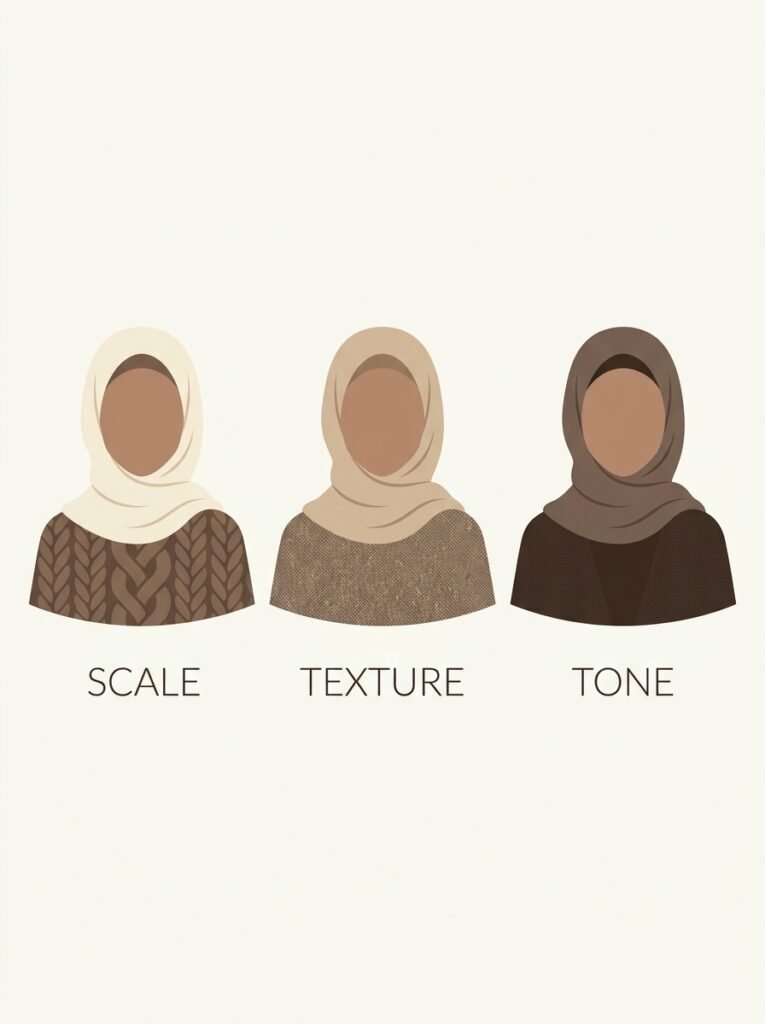
Quick answer: The rule for wearing a second scarf with hijab is contrast. The two pieces must differ in at least two of three things — scale, texture and colour depth. Matching weights and similar tones read as one confused garment; a chunky stole over a smooth hijab reads as deliberate styling.
What actually happened on the runways
The scarf did not simply return this season. It expanded its job description.
Wrap scarves were a pervasive trend, worn not only at the neck but also at the waist, with inflatable versions at Loewe and standout satin styles at Celine putting a spin on the classic, while Loro Piana and Saint Laurent used them to create a defined silhouette on the body. Knit accessories were a go-to for warmth, with beanies at Chloé and Bottega Veneta sitting alongside eccentric scarves at Dries Van Noten and Stella McCartney.
Then there is the piece that has dominated the conversation outside the shows. The fur stole trend is having its biggest moment since the 1950s and is fully faux this time, with Miu Miu’s shearling stole and Toteme’s shearling scarf among the most talked-about accessories of the season.
Accessories, in fact, are the story this autumn — the pillbox hat, the cherry-red handbag, the faux fur stole thrown over a plain coat are what is actually being photographed, rather than full runway looks.
For a wardrobe built on layering and coverage, this is the friendliest trend cycle in years. Nothing here requires shorter, tighter or barer. It requires more fabric, better draped.
The two-scarf problem, solved
This is the section that does not exist anywhere else, so here it is properly.
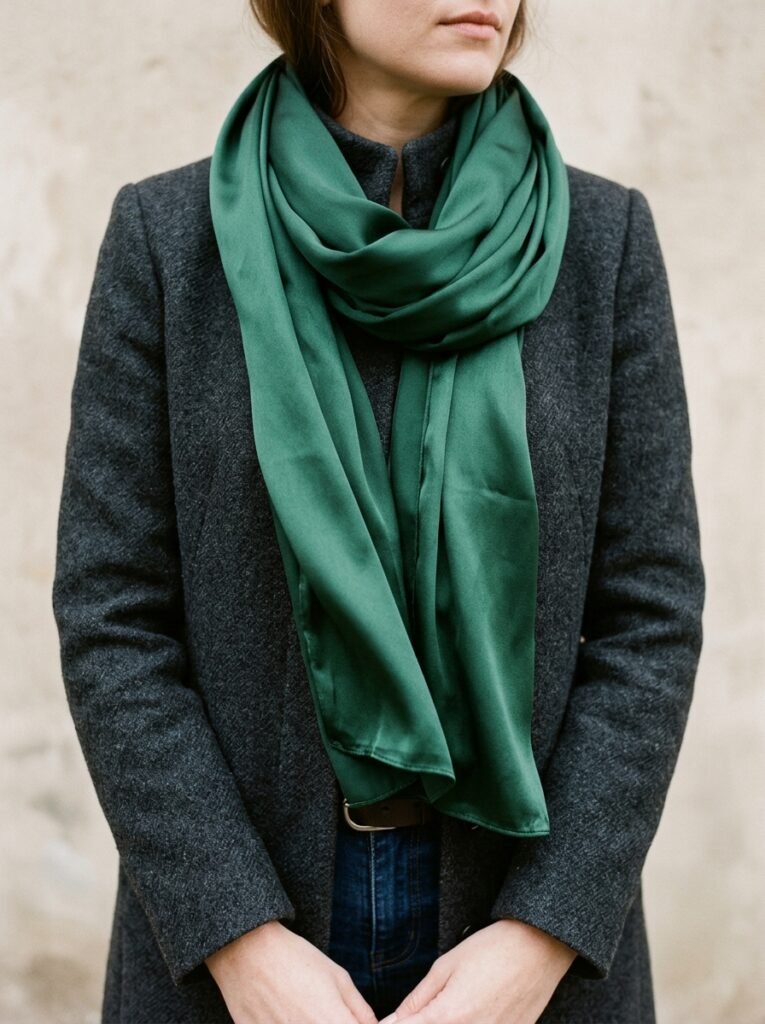
When you add a neck scarf or stole to a headscarf, you create two competing focal points within about thirty centimetres of each other. Whether it reads as styled or messy comes down to contrast on three axes:
Scale. A fine, smooth hijab under a big chunky knit stole works. Two mid-weight wool wraps of similar bulk do not.
Texture. Matte against fuzzy. Smooth satin against brushed wool. Shearling against fine jersey. If both pieces have the same surface, the eye cannot separate them and the whole neckline turns into an undifferentiated mass.
Colour depth. Either go strongly tonal — espresso stole over a camel hijab, three shades apart — or fully contrasting. The failure zone is two shades that are almost the same but not quite, which looks like an accident rather than a choice.
Meet two of those three and the outfit works. Meet all three and it looks like it came from a lookbook.
One practical addition: keep the volume on one side. A stole gathered at one shoulder and left long on the other creates an asymmetric line that stops the layers from reading as bulk around the face.
The stole, and why it suits covered dressing
Of everything on the season’s list, the faux fur or shearling stole is the piece most worth buying.
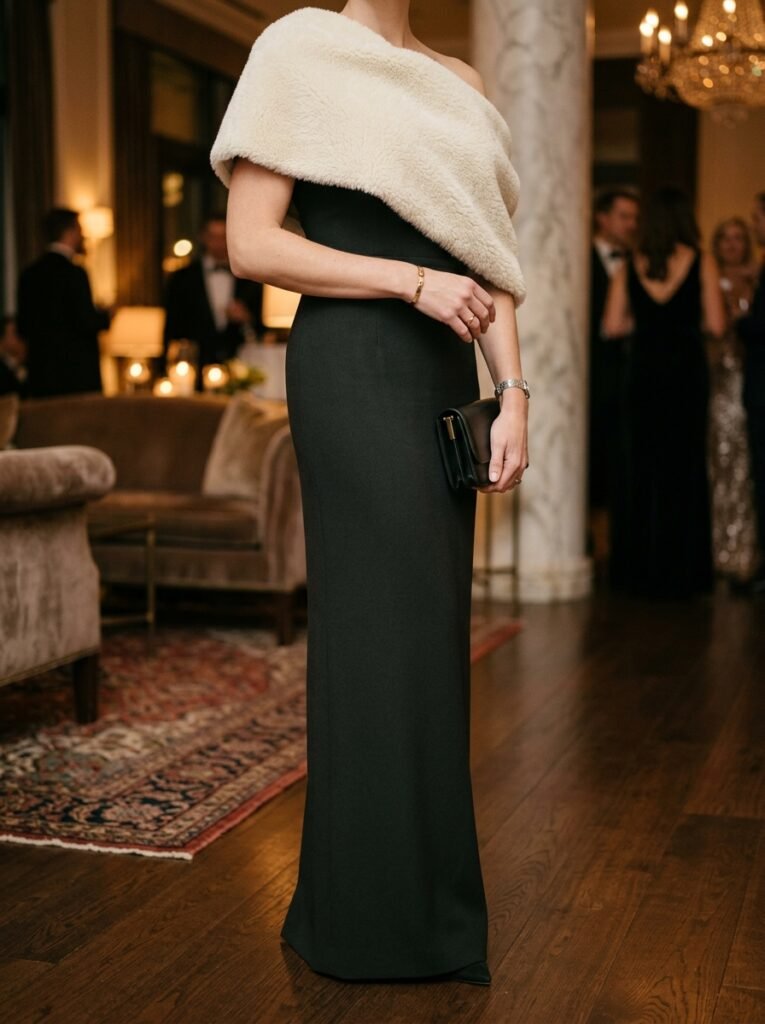
It sits on the shoulders rather than around the throat, which means it never competes directly with a headscarf. It adds visible luxury to plain outerwear, which is exactly what a long coat over a maxi needs. And it solves the eternal problem of the modest evening outfit — how to look occasion-dressed without a neckline.
Styling notes that matter:
- Over a long wool coat, not under it. The stole is the top layer or it does nothing.
- In a colour drawn from your outfit’s darkest tone, so it anchors rather than floats.
- Kept plain if your hijab is patterned, and vice versa. Two textures, one pattern, maximum.
For a wedding, an evening event or Eid, a stole over a plain column dress does the entire job of dressing up an outfit that is otherwise completely covered.
The scarf coat and the oversized wrap
The scarf coat — an outer layer with the drape and softness of a blanket rather than the structure of a coat — is the trend’s most wearable large-scale expression.
It suits long hems naturally because it has no fixed waist to fight your silhouette, and it layers over a maxi skirt or abaya without shortening the line. Look for one that closes or overlaps generously at the front rather than hanging open, which is both warmer and cleaner over a long dress.
The oversized blanket wrap does a similar job at a fraction of the cost. Folded into a triangle across the back and pinned at the shoulder, it reads as considered outerwear. Left loose over both shoulders, it reads as a throw you took off the sofa. The pin is the difference.
Waist scarves: yes, but with conditions
Wrapping a scarf at the waist was one of the season’s defining moves, and it is the one trend here that needs the most care.
It works when:
- The scarf is thin enough to tie flat — a fine wool, a silk-blend, a lightweight jacquard.
- The garment beneath is loose and long, so the tie defines shape without clinging.
- The knot sits at the side or slightly off-centre, which flatters more than a front-and-centre bow.
It does not work when the scarf is thick. A chunky knit tied at the waist adds bulk exactly where nobody wants it and pulls a long skirt out of line.
If a waist tie feels like too much, the season offers an easier alternative: wide leather belts with big buckles have replaced skinny cinching, with Celine and Dior leading that conversation, and a wide belt over a coat turns outerwear into something sculptural. Over a long coat, that is one of the most flattering things you can do to a modest silhouette.
Fabric matters more than you think
The difference between a scarf that stays put and one you spend all day adjusting is almost entirely fibre.
Wool and wool-blends: grip well against a jersey hijab. Best for stoles and big wraps.
Cashmere-blends: softest drape, but slide against satin. Pin them.
Satin and silk: beautiful for waist ties and bag ties, disastrous as a neck layer over a satin hijab — two slippery surfaces will not hold.
Shearling and faux fur: heavy, structured, and the least likely to move once placed.
Jacquard: already looks expensive, which means one piece can carry an otherwise plain outfit.
The pairing rule follows directly: slippery under, grippy over. A jersey or cotton hijab with a wool stole is stable all day. Satin under satin is a losing battle.
Colour: two ways to play it
The season’s palette gives you a safe route and a bold one.
The safe route is the deep browns the whole autumn has been built on — espresso, chestnut, chocolate — which flatter almost everything and look considerably more expensive than black in daylight.
The bold route is a deep, saturated royal purple, rich enough to read as sophisticated but bold enough to stand apart from the usual burgundy-and-camel rotation, and best used as an accent rather than head to toe. An accessory is exactly the right dose of it — a purple stole over a neutral coat gives you the whole trend for the price of one item.
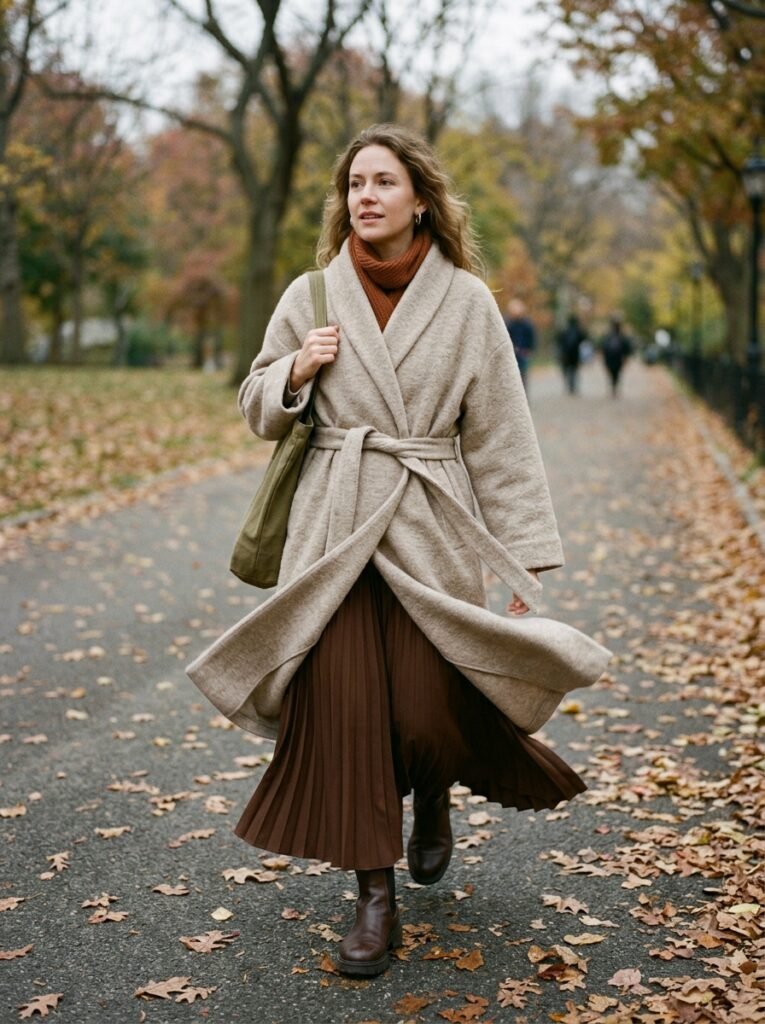
Six ways to wear one scarf this week
- Chunky knit stole over a long camel coat, plain hijab, brown boots.
- Fine wool wrap tied low at the waist over a loose maxi dress, no belt.
- Faux fur stole over a plain column dress for an evening event.
- Blanket wrap folded to a triangle, pinned at one shoulder, worn as the outer layer.
- Silk square knotted to the handle of a plain bag — the lowest-effort version of the trend.
- Jacquard scarf as the single statement over an entirely neutral outfit.
Keeping them wearable
Wool and cashmere pill where they rub — at the shoulder seam, under a bag strap. A fabric shaver used twice a season keeps a cheap scarf looking expensive far longer than careful washing does.
Store folded, not hung; hanging stretches the drape out of a knit within a season. And for static in dry indoor air, a light mist of water on the inside of the scarf before wearing does more than any spray sold for the purpose.
Key Takeaways
- Scarves are the defining accessory of 2026, worn at the neck, waist, shoulders and on bags.
- The two-scarf rule: contrast on at least two of scale, texture and colour depth.
- The faux fur or shearling stole is the best single buy — it sits on the shoulders and never competes with a headscarf.
- Waist wraps need thin fabric and a loose garment underneath; a wide belt is the easier alternative.
- Grippy fabric over slippery: wool over jersey stays put, satin over satin does not.
- Espresso brown is the safe palette, royal purple the bold accent.
FAQ
1. What are the biggest scarf trends for fall 2026?
Wrap scarves worn at the neck and waist, satin styles, and sculptural silhouettes built from scarves featured heavily on the autumn runways, alongside the faux fur and shearling stole, which is having its biggest moment in decades.
2. How do you wear a neck scarf with hijab?
Contrast the two pieces on scale, texture or colour depth — a chunky stole over a smooth fine hijab, or a plain wrap over a patterned one. Keep the volume asymmetric, gathered at one shoulder.
3. What is a scarf coat?
An outer layer with the soft drape of a blanket rather than the structure of a tailored coat. It layers well over long hems because it has no fixed waist.