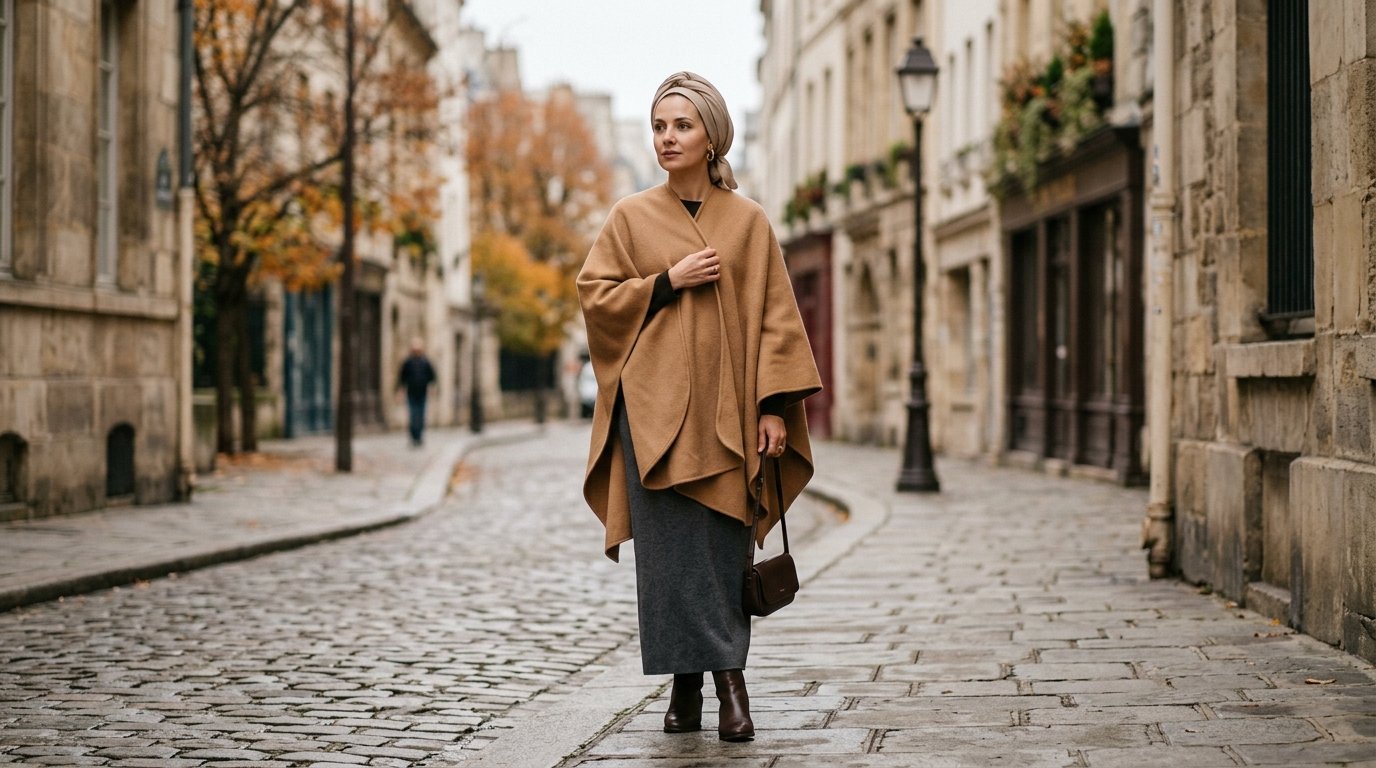
The Cape Came Back and It Was Made for Modest Dressing — Fall 2026’s Coat Trends, Decoded
Look at what the Fall/Winter 2026 runways actually sent out and a pattern appears that modest dressers have been asking for from designers for years: capes and ponchos, high funnel necks, coats cut to skim the floor, volume that hangs away from the body rather than clinging to it. Fashion press has been describing this as outerwear taking up space and coats commanding a whole look on their own.
Read that list again from a modest wardrobe’s point of view. Coverage, length, drape, a collar that sits neatly with a scarf. There is almost nothing here to modify.
What are the biggest coat trends for fall 2026?
Fall 2026 outerwear is defined by scale and drape: statement coats that carry the whole outfit, the return of capes and ponchos, funnel necks and high collars, oversized and cocoon silhouettes with dramatic shoulders, and tactile fabrics — shearling, bouclé, brushed wool and jacquard — replacing loud prints.
Why outerwear is the whole story this season
Across the fall 2026 collections shown in New York, London, Milan and Paris, reporting has converged on the same read: a season built on precision rather than spectacle, with exceptional tailoring, knitwear, and above all outerwear doing the heavy lifting.
FASHION Magazine described outerwear this season as literally taking up space — massive proportions, dramatic shoulders and floor-skimming silhouettes, with oversized puffers, sculptural cocoon coats and exaggerated wrap styles across both womenswear and menswear. Marie Claire’s runway roundup put statement coats alongside sharp tailoring and heritage knitwear as the defining trends, noting that when the coat is good enough the rest of the outfit almost stops mattering.
That last point is the practical one. If the coat carries the look, your under-layers can be simple, comfortable and modest without anyone noticing they are doing less work.
1. Capes and ponchos: the season’s most modest-friendly shape
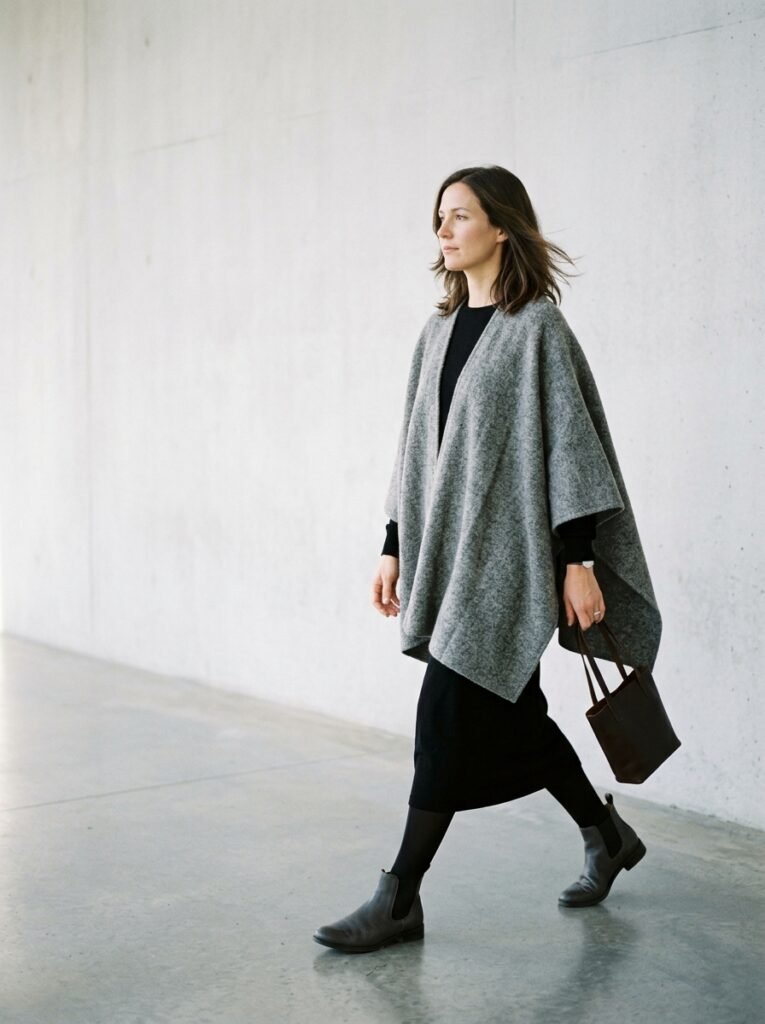
The cape is back, and it is the single most useful thing to happen to modest outerwear in several seasons.
A cape or poncho solves coverage structurally rather than through adjustment. There is no gap at the wrist, no tugging at the hem, no sleeve riding up when you reach. It falls from the shoulder and hangs.
How to wear it without disappearing into it:
- Keep everything underneath narrow. A cape adds width at the top, so a straight or slim skirt, tailored trousers or a column dress restores the line.
- Let the cape be the longest layer, or clearly the shortest. A cape that ends within a few centimetres of your dress hem creates a confused, stacked look.
- Define a waist somewhere the eye can find it — a belted dress under an open cape reads as intentional; a cape over volume over volume does not.
- For a hijab, choose a scarf that sits close to the head. The cape is already supplying drama at the shoulder.
If a full cape feels like a lot, a poncho in a heathered wool or a cape-back coat — a coat with a cape overlay stitched into the shoulder — gives you the silhouette with more structure.
2. Funnel necks and high collars: the detail worth planning around
This one is quietly the most practical trend of the season.
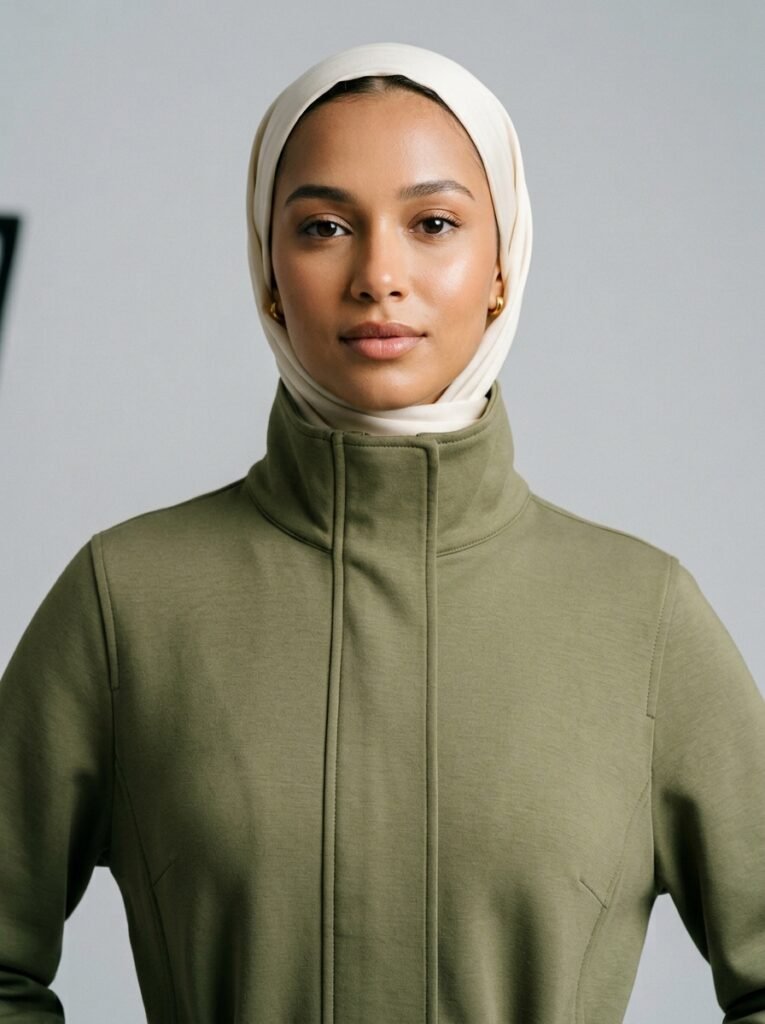
Fall’s most-cited outerwear detail has been the funnel neck — high, standing collars appearing everywhere, largely on lighter transitional layers. Style press has flagged the elevated neckline as the thing that makes a simple outfit look finished, with the bonus of warmth on cold mornings.
For anyone wearing a hijab, a funnel neck does something no ordinary lapel does: it closes the space at the throat where a scarf otherwise has to be tucked, pinned or fussed with all day. The collar holds the line for you.
Styling notes:
- Wear the scarf tucked inside the collar for a clean, sculptural neckline, or draped over the outside for softness — both work, but pick one and commit for the day.
- Avoid a heavily textured scarf with a heavily textured collar. One of them should be smooth.
- A funnel-neck jacket in a mid-length is the single most useful transitional piece you can buy in August, because it works over a summer dress now and over a knit in November.
3. Volume, without being swallowed by it
Oversized is the direction, and it is where modest dressers most often go wrong — because volume plus coverage plus more volume stops reading as elegant and starts reading as shapeless.
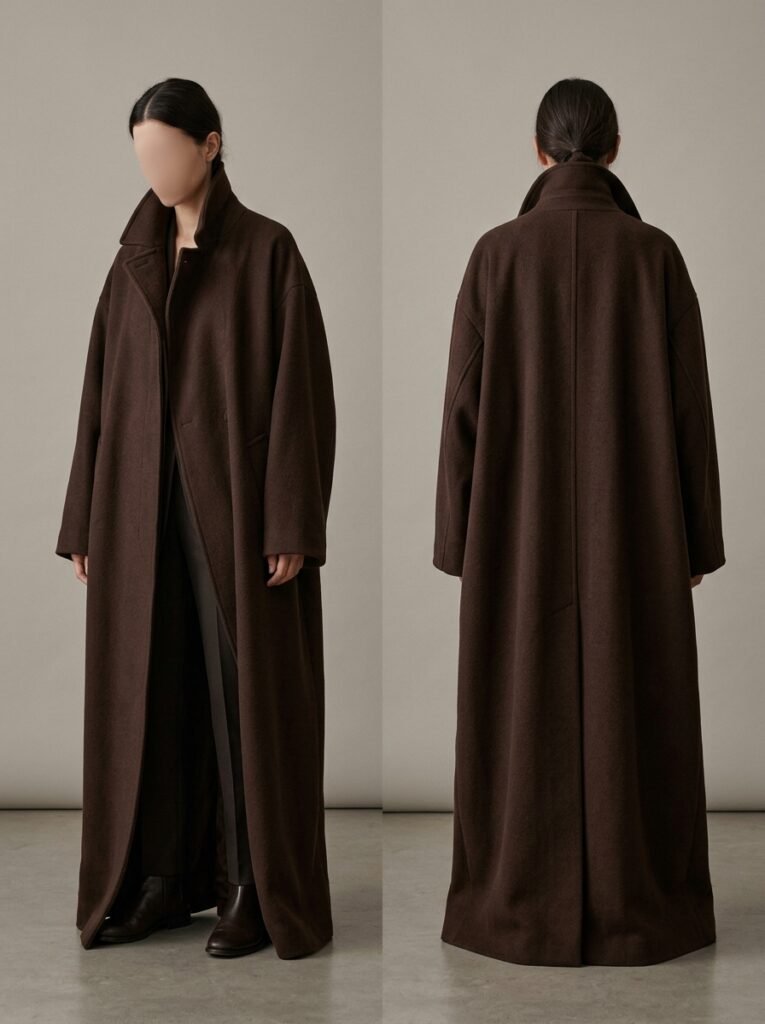
The runway version is deliberate: broad shoulders, cocoon shapes, coats that skim the floor. The wearable version needs one rule.
Choose one place to be big, and be narrow everywhere else.
- Big coat → slim trousers, straight skirt, fitted knit underneath.
- Wide trousers → a coat that follows the body, or one worn open and belted.
- Dramatic shoulder → keep the hem line simple and the accessories small.
The other lever is length. A floor-skimming coat is doing something very different from a hip-length one: it creates a single unbroken vertical line, which is the most flattering thing available to almost anyone. If you are wearing a maxi dress or a long skirt anyway, a long coat harmonises with it instead of chopping you in half.
4. Texture is replacing print
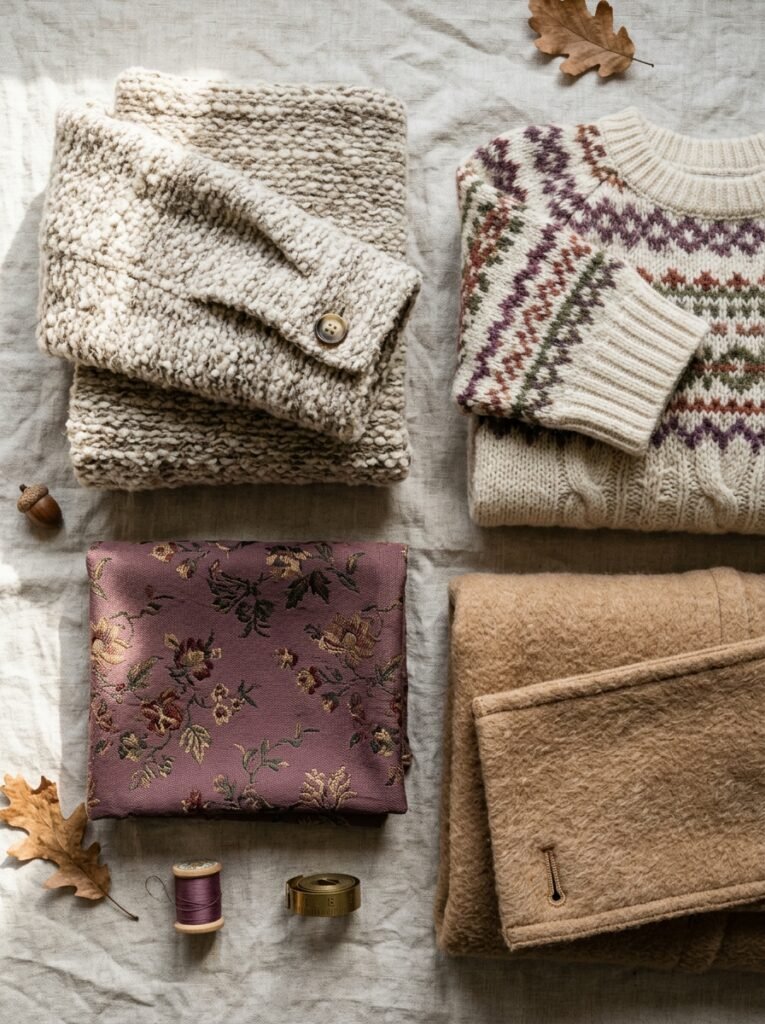
The other consistent read from the collections is tactility over pattern: shearling, fringe, brushed wool, bouclé, and jacquard — where the pattern is woven into the cloth rather than printed on it, giving a subtle raised surface and a depth flat prints cannot reach. Heritage knitwear made a strong showing too, with Fair Isle appearing far beyond its usual winter niche.
Why this matters for modest dressing specifically: texture creates visual interest without requiring the garment to be tight, short or sheer. It is the easiest kind of “statement” for a wardrobe built on coverage.
Where to spend it:
- One textured hero piece per outfit. A bouclé jacket with a plain skirt. A jacquard coat over plain everything.
- Bouclé in deeper autumn tones — chestnut, espresso — reads more seasonal than the pale spring version.
- Brushed wool gives warmth without the bulk of heavy melton, which matters if you are already layering.
5. The colour question
Colour is where reporting splits this season, and it is worth knowing all three positions rather than following one:
- Jewel tones — burgundy, mulberry and plum lead, with a punchier mandarin orange alongside them.
- Soft pink and berry — blush and berry-inspired shades appearing against autumn’s usual neutrals, seen at labels including Chanel and Valentino, and unexpectedly easy alongside camel and grey.
- Deep purple and tomato red — royal purple is being called a defining hue of the season, while tomato red carried straight over from spring into head-to-toe scarlet dressing on the runways.
For a modest wardrobe, colour in outerwear is high-leverage: the coat is the largest single block of colour you wear, so one strong coat changes an entire neutral wardrobe. But be honest about wearability — a full head-to-toe red look is a runway proposition. One red piece, styled against black, grey or chocolate, is the version that gets worn.
6. Boots and bags: espresso suede is the accessory story
If there is one accessory investment being repeated everywhere, it is suede boots — knee-high, slouchy or ankle — with dark chocolate suede singled out by stylists for the warmth and depth it brings to cold-weather dressing, and for the way a matte, velvety surface contrasts against heavy knits and smooth leather. Deep espresso suede is being called the dominant finish for slouchy shoulder bags too.
For modest outfits this is genuinely useful, because a knee-high boot under a midi skirt or a long dress closes the leg line completely and makes shorter hemlines wearable that otherwise would not be.
7. Tailoring, worn softly
Underneath all that outerwear, the tailoring story is relaxed rather than rigid: oversized blazers with easy trousers, a structured jacket over a knit dress, a suit separated into pieces worn across the week. Tuxedo-inspired dressing has also carried through the season.
This is close to ideal for modest dressing. A well-cut blazer covers the hip and the upper arm, adds structure without tightness, and instantly formalises a simple dress.
Building the capsule: five pieces
If you buy nothing else this season:
- A funnel-neck transitional jacket in a neutral — the piece you will wear most between now and November.
- One long coat in a strong colour or a rich texture — the item that carries every outfit it touches.
- A cape or cape-back coat for occasions and colder days, in a plain weave so the shape reads clearly.
- Knee-high suede boots in chocolate or black.
- One textured knit — Fair Isle if you like pattern, plain bouclé if you do not.
Everything else you likely already own.
What to skip
Not every runway idea is worth your money. Reporting this season has been unusually candid about which trends are nostalgia rather than necessity:
- Skinny jeans and denim-on-denim returned on the runways, but this is a revival, not a requirement — no reason to abandon a fit that works for you.
- Head-to-toe tomato red looks extraordinary on a runway and demanding on a Tuesday.
- Polka dots have had their run; stripes are taking over as the season’s pattern of choice.
Key Takeaways
- Outerwear is the defining fall 2026 story — statement coats, oversized and cocoon shapes, dramatic shoulders and floor-skimming lengths.
- Capes and ponchos have returned, and they solve modest coverage structurally rather than by adjustment.
- Funnel necks and high collars are the season’s most practical detail for anyone wearing a hijab.
- Choose one place to be voluminous and stay narrow everywhere else — that single rule prevents the shapeless-layering trap.
- Texture is replacing print: shearling, bouclé, brushed wool, jacquard and Fair Isle knitwear.
- Colour is split between jewel tones, soft pink and berry, royal purple and carried-over tomato red — one strong coat is the efficient way in.
- Suede is the accessory finish, especially chocolate and espresso, across knee-high boots and slouchy bags.
- Skip the nostalgia trends unless you already love them.
FAQ
Q1. What are the biggest coat trends for fall 2026?
Statement outerwear leads the season — oversized and cocoon coats, dramatic shoulders, floor-skimming lengths, the return of capes and ponchos, and funnel-neck jackets as the key transitional layer. Tactile fabrics like shearling, bouclé, brushed wool and jacquard are replacing bold prints.
Q2. Are capes actually wearable, or just a runway trend?
They are wearable if the proportion is right. Keep what you wear underneath narrow, make the cape clearly the longest layer, and define a waist somewhere. A cape-back coat is the more structured, everyday version of the same silhouette.
Q3. What is a funnel neck and why does it suit hijab styling?
A funnel neck is a high, standing collar without lapels. It closes the space at the throat, which means a hijab can be tucked inside or draped over without constant readjusting — and it makes a simple outfit look finished