
Bridal Hair Treatments: Keratin, Botox And What They Cost
The costliest error brides make with bridal hair treatments has nothing to do with choosing the wrong one. It happens earlier, and quieter. Somebody says “you should get a keratin done before the wedding,” the appointment gets squeezed into the fortnight before the date, and nobody asks a single question about what the treatment will do to the hairstyle that has already been trialled and approved.
The consequences are predictable once you have seen them a few times. Hair so slippery that pins slide out during the ceremony. A bill that arrives noticeably higher than the number quoted on the phone. A texture that photographs flat under strong light when the plan was soft, moving volume.
Both treatments can be excellent decisions. They are simply surrounded by more confident half-truths than almost anything else on a bridal beauty checklist, so it is worth separating what these services actually do from what people assume they do.
Quick Answer
Bridal hair treatments split into two families. Keratin smoothing chemically reshapes the hair for roughly three to six months and typically costs $150–$500. Hair botox is an intensive protein and conditioning treatment that repairs damage without altering texture, lasting two to four months at around $100–$300. Book either four to six weeks before the wedding.
Hair Botox Is Botox For Hair
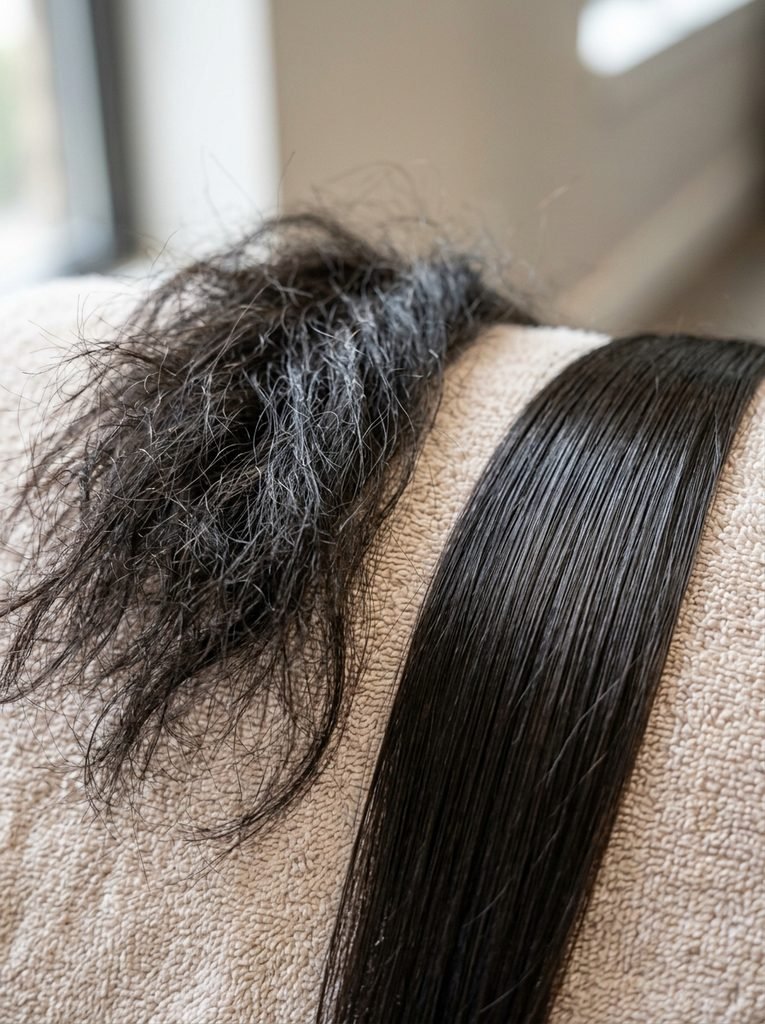
Hair botox is a category label rather than a specific formula. What sits inside the bottle is usually a concentrated blend of proteins, amino acids, humectants and conditioning oils, designed to fill the microscopic gaps that open up along a damaged hair shaft. Because it does not break the internal bonds that hold your curl pattern, your natural texture stays exactly where it was.
What changes is condition. Hair takes light better, feels denser between the fingers, and stops fraying at the ends. Frizz softens rather than disappearing, which is the honest way to describe it.
There is one thing worth verifying before you book. A handful of products sold under this label include acids that can genuinely loosen curl, which defeats the purpose if you chose the treatment specifically to keep your texture. Ask what is in the formula, and ask the stylist to say plainly whether it will change your wave.
Keratin And Hair Botox Do The Same Job
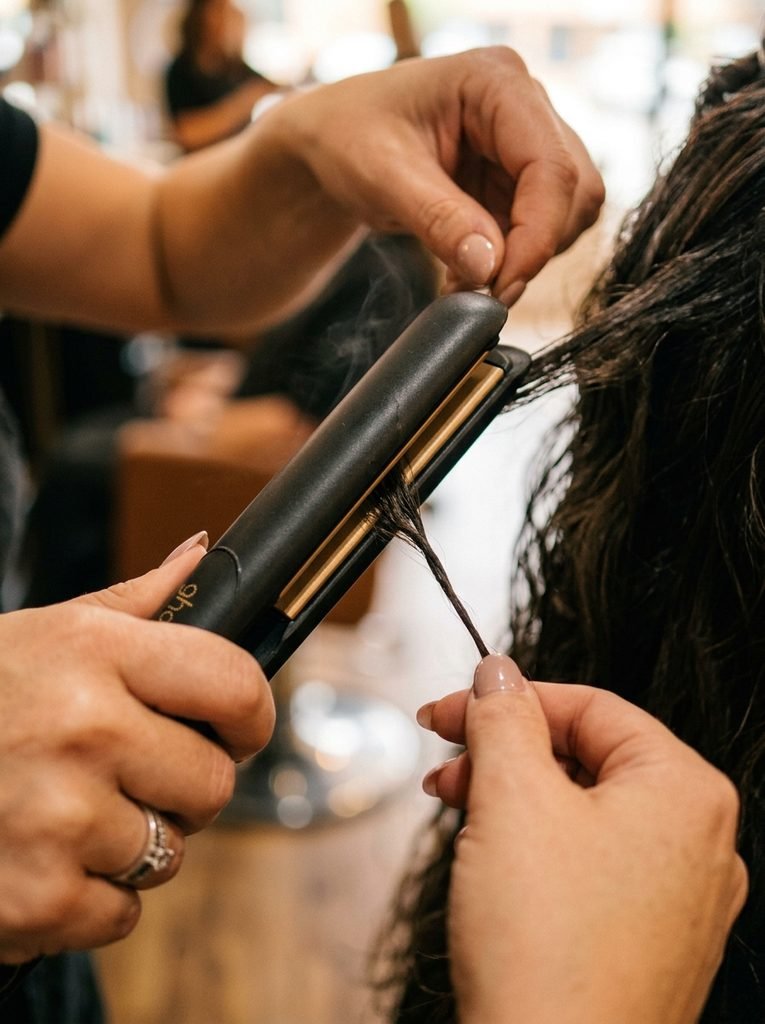
Keratin smoothing works structurally. The formula loosens bonds inside the hair, the stylist blow-dries and then passes a hot iron through fine sections, and the hair sets into a straighter, flatter shape as it cools. That heat-setting step is what buys months of resistance to humidity, and it is also why the service takes hours rather than minutes.
Hair botox never gets that far. It coats, fills and seals, then rinses away gradually over weeks. No bonds are broken, so no permanent change occurs.
Translated into bridal terms, the choice is usually straightforward. If your hair is coarse, curly or reliably frizzy in warm weather and you want it sleek and controlled for a long day, keratin is the tool. If your hair is fine, coloured, bleached or simply tired-looking, and the goal is to look healthy in close-range photographs, hair botox is the better fit.
There is a third answer nobody offers, because it earns the salon less. Mildly frizzy hair often needs no chemical treatment at all. A good gloss, a proper cut and a skilled blow-dry on the morning will do the same work for a fraction of the outlay.
Formaldehyde-Free Means Gentle And Risk-Free
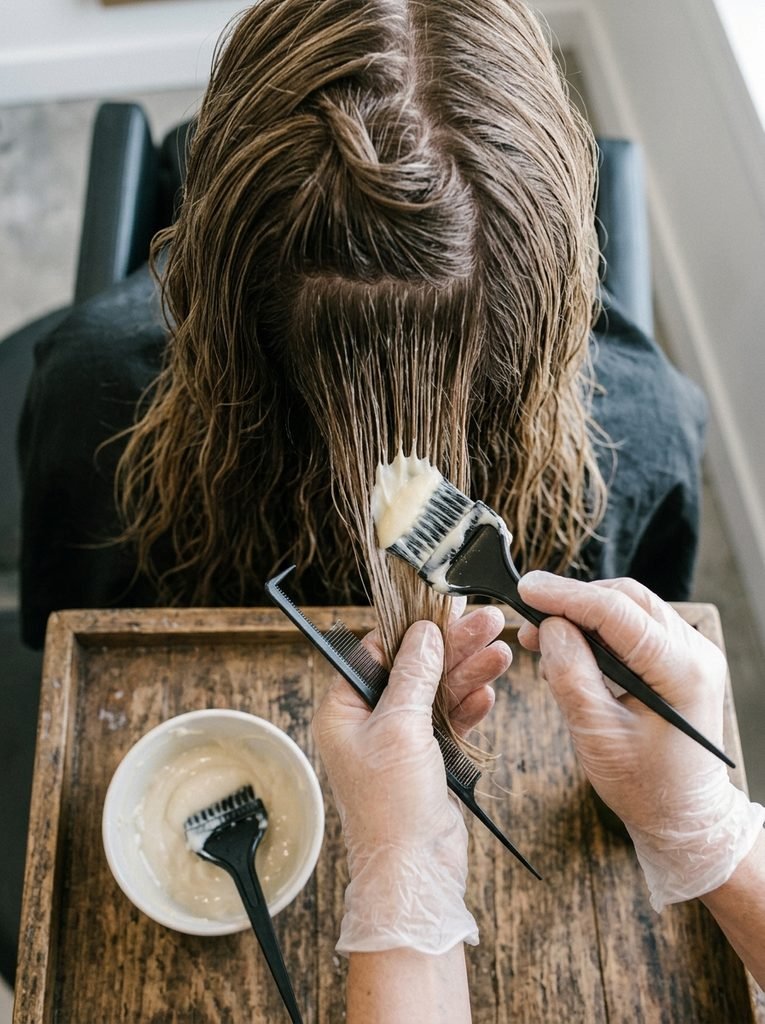
Smoothing chemistry has moved through several generations, and the industry’s shorthand has not kept pace. When a formula advertises itself as free of one problem ingredient, something else is performing the same function, and the replacement deserves the same scrutiny the original received.
Two practical points matter far more than the marketing on the bottle.
The first is heat. Any smoothing treatment that relies on a flat iron at high temperature is doing chemistry in the air around your face, whatever the label says. If the salon is small, poorly ventilated, or has no extraction running, you will feel it — eyes sting, the throat tightens, and a dull headache builds. None of that is a normal part of the service. It is a signal to open a door or stop.
The second is honesty about your own circumstances. If you are pregnant, trying to conceive, breastfeeding, managing a scalp condition, or living with a kidney or respiratory issue, chemical smoothing is not the place to take a small risk for a cosmetic gain. Hair botox achieves a softer version of the same visual result without restructuring anything, and no bride has ever regretted the cautious choice at the reception.
Regulatory positions on smoothing chemistry differ from country to country, and they have been shifting, so the sensible habit is to ask the salon which system they use and to check what your own national health or cosmetics authority currently advises before booking.
If It Were A Problem It Would Already Be Banned
A product that is restricted in one country can be sold openly in another. Salons buy from international distributors, formulas are reformulated and rebranded, and professional-use products often sit under different rules than the retail versions of the same thing. Assuming that availability equals approval is a shortcut that does not hold up.
This is not a reason for alarm. It is a reason to treat the conversation with your stylist as a real consultation rather than a booking formality.
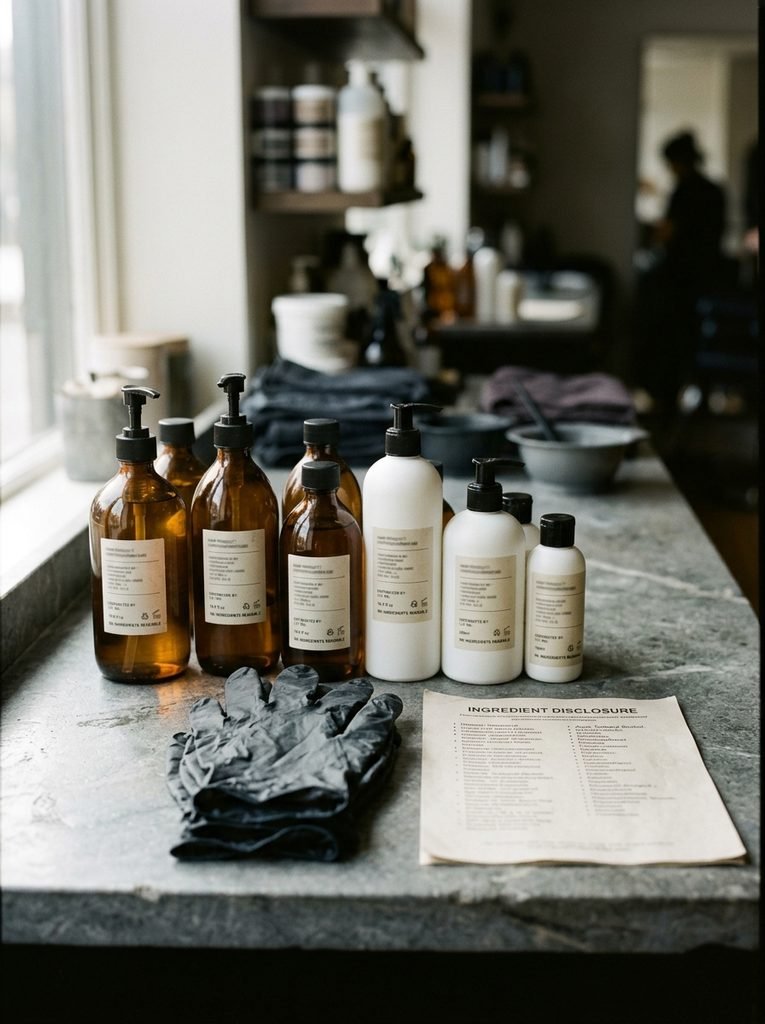
Four questions cover almost everything you need to know. Which system and brand are you using on my hair? What is in it, in writing? What iron temperature will you use for my hair type specifically? And what is the total price once my length and thickness are taken into account?
A confident professional answers all four without hesitation. Anyone who deflects, offers only a brand name, or tells you not to worry about it has told you what you needed to learn.
The Quoted Price Is What You Pay
Pricing for these services swings more widely than almost any other salon treatment, because three separate variables stack on top of each other: how much product your hair absorbs, how long the stylist stands behind the chair, and what the local market will bear. A treatment that costs $150 in a small town can cost three times that in a major capital, and both prices can be entirely fair.
Use the ranges below as a planning framework rather than a promise. Convert them to your own currency and expect meaningful local variation.
| Item | Typical range (USD) | Duration | Best suited to | The bridal catch |
|---|---|---|---|---|
| Hair botox | $100–$300 | 2–4 months | Fine, coloured, brittle or over-processed hair | Can sit slightly heavy or greasy for the first day or two |
| Keratin smoothing | $150–$500 | 3–6 months | Coarse, curly, humidity-reactive hair | Can flatten root volume until several washes have passed |
| Length and density surcharge | +$80–$200 | — | Anyone below shoulder length | Only assessed in person, never over the phone |
| Sulfate-free aftercare | $40–$90 | One purchase | Both treatments | Genuinely required, almost never quoted |
| Gloss or trim add-on | $50–$150 | — | Photography finish | Booked as a separate visit, not included |
Two costs get quietly excluded from nearly every estimate. Aftercare is the first, and it is not an upsell. Harsh cleansers strip either treatment out early, so buying gentler shampoo and conditioner is part of the price of the result, not an optional extra.
The second is time. Keratin in particular can occupy three to five hours depending on length, and a rushed version of it is worse than none at all. If a salon offers to fit a full smoothing service into ninety minutes on a busy Saturday, the corner being cut is almost certainly the sectioning or the heat pass.
Budget the whole thing honestly: treatment, plus length, plus aftercare, plus around twenty per cent of headroom.
Book It As Close To The Wedding As Possible
Freshly treated hair behaves like new hair, and not always in helpful ways. It is smoother, which means grips and pins lose their bite. It sits closer to the scalp, which means volume has to be built rather than assumed. And it takes a few washes to settle into its final movement.
Stylists therefore want a buffer, for two reasons. The first is that the hair needs to relax into itself. The second is insurance: if the result is not what you hoped for, four weeks is enough time to correct, tone or grow past it, and five days is not.
The Bridal Hair Timeline
- Six to four months out — Choose your wedding-day stylist and complete your first hair trial. If you have never had a smoothing treatment before, this is the window to test one, well away from the date.
- Eight to six weeks out — Make the decision between keratin and hair botox with a stylist who has physically examined your hair, not from a video that made someone else’s hair look extraordinary.
- Six to four weeks out — The treatment itself. Enough time to settle, enough time to fix.
- Two to one weeks out — Colour, gloss, grey coverage, and a light trim only. No structural changes.
- The final week — Nothing chemical. Deep conditioning at home and reasonable sleep will do more than any appointment.
- The morning of — Clean, completely dry hair. Skip heavy silicone serums, which make treated hair even harder for the stylist to hold.
One refinement that solves most problems: if you are having a smoothing treatment, schedule your hair trial after it rather than before. The trial should be run on the hair you will actually be wearing.
Any Competent Salon Can Do It, So Choose On Price
Virgin hair, bleached hair, home-coloured hair and previously relaxed hair each respond differently to the same product. The right system for one is the wrong system for another, and the iron temperature that sets a coarse strand beautifully will scorch a fine, over-processed one.
That judgement is what you are paying for. A stylist who quotes a firm price before touching your hair is guessing, and guessing six weeks before a wedding is a poor trade for a modest saving.
Look for someone who asks about your colour history, checks porosity by feel, and is willing to talk you out of the service if your hair is not in a state to take it. Willingness to decline work is one of the strongest quality signals in this industry.
The Treatment Guarantees Beautiful Wedding Hair
Smoothed hair needs different products and a different technique. Grip pastes and texturising sprays replace shine serums. Pins go in with more of them, placed with more intent. Curls set with a lower heat and need to cool completely before they are touched.
This matters most for soft, romantic updos, which depend on a little natural friction to hold their shape. Brides planning that kind of look often find hair botox serves them far better than keratin, because it improves the condition of the hair without removing the texture the style is built on.
Tell your stylist what you have had done, and when. That one sentence prevents most surprises.
Quick-Scan: Myth Versus Fact
| The myth | The reality |
|---|---|
| Hair botox contains botulinum toxin | It is a protein and conditioning treatment, with no injections involved |
| Both treatments do the same thing | Keratin reshapes the hair; hair botox repairs it |
| Formaldehyde-free means completely safe | It describes one absent ingredient, not the whole formula |
| Availability means official approval | Cosmetic rules differ widely between countries |
| The advertised price is the final price | Length, density and aftercare typically add $100–$250 |
| Later is better for booking | Four to six weeks out is the reliable window |
| Cheapest salon, same result | Formula choice and heat control are skill-dependent |
| The treatment delivers the hairstyle | It changes the baseline; styling still does the work |
Key Takeaways
- Keratin reshapes hair and lasts three to six months, usually $150–$500. Hair botox repairs hair and lasts two to four months, usually $100–$300.
- “Formaldehyde-free” is a claim about one ingredient. Ask what is actually in the formula and insist on proper ventilation.
- Four to six weeks before the wedding is the booking window that protects both your hair and your styling plan.
- Sulfate-free aftercare is part of the true cost, not an optional add-on.
- Run your hair trial after the treatment, never before.
What To Do Next
- Book a consultation rather than a treatment. Ask for a hands-on assessment of your hair’s condition, porosity and colour history before anything is scheduled.
- Get the formula details in writing. Vagueness at this stage is the clearest warning sign available to you.
- Mark the four-to-six-week window in your planner now, before the calendar around your date fills with everything else.
- Price the entire package — treatment, length surcharge, aftercare products and any follow-up gloss — and compare totals, not headline figures.
- Move your hair trial to after the treatment, and bring the exact accessories you plan to wear.
- Check your own country’s current cosmetic safety guidance before committing, since national rules on smoothing chemistry differ and continue to evolve.
FAQ
Can I have a smoothing treatment if my hair is bleached?
Often yes, but it becomes a specialist job rather than a routine one. Bleached hair is more porous and far more heat-sensitive, so both the formula and the iron temperature need adjusting. Ask for a strand test on a hidden section first, and treat any stylist who skips that step as the wrong choice for this particular appointment.
Will hair botox work on curly hair?
It conditions the hair and calms frizz while leaving the curl pattern intact, which is exactly why many curly brides prefer it. Confirm the formula does not contain curl-loosening acids, since a few products sold under this name will subtly relax the pattern you wanted to keep.
How long should I wait before washing treated hair?
It depends on the system. Some require no wash for two to three days while the treatment cures; others allow same-day washing. The stylist should tell you before you leave, and following that instruction is the cheapest thing you can do to protect the result.
Do I need more than one session before the wedding?
No. Both treatments are designed as single sessions. Stacking them close together adds cost and stress on the hair without improving the outcome.
What should I do if I feel unwell during the appointment?
Stinging eyes, a burning throat, nausea or a sudden headache are not normal parts of the service. Ask the stylist to pause, step outside for fresh air, and do not let anyone talk you into finishing through the symptoms. If you feel unwell in the hours afterwards, seek medical advice rather than waiting it out.