
Botox Cost Per Unit: Real Prices Around The World
Understand What One Unit Actually Buys
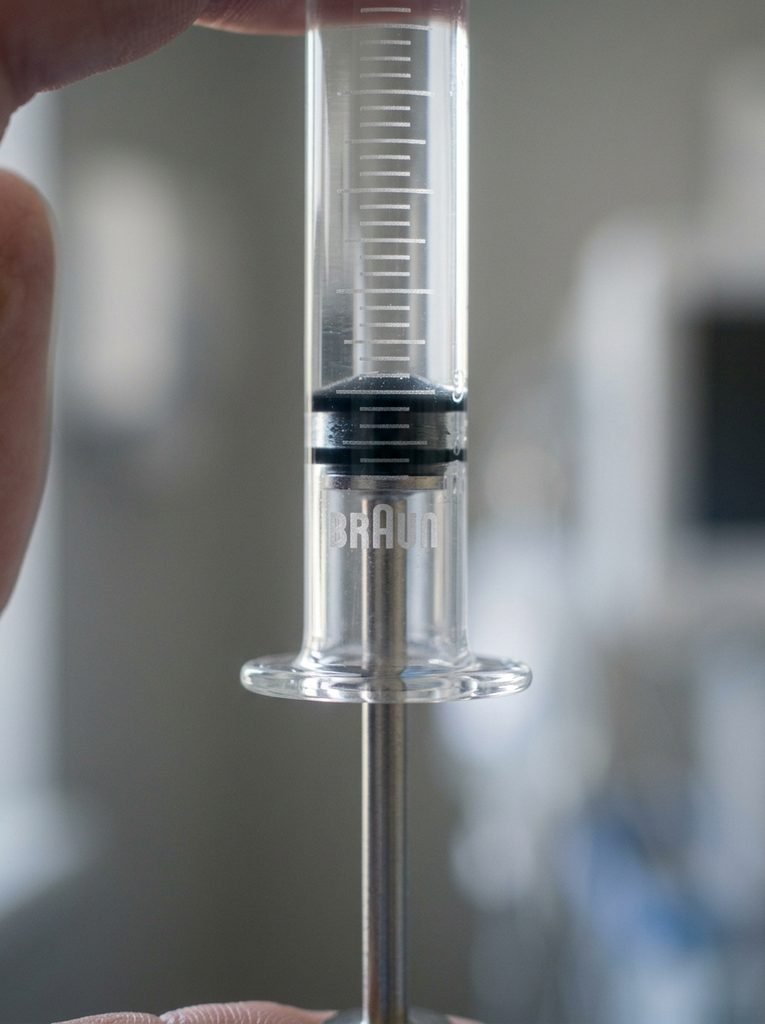
A vial of botulinum toxin arrives as a freeze-dried powder holding a fixed number of units. The clinic mixes it with sterile saline before injecting. Adding more saline changes the concentration, not the number of units you receive, so a heavily diluted vial can be spread across more appointments while the number written on your invoice stays exactly the same.
The second point catches out more patients than the first. Units are brand-specific. A unit of one botulinum toxin product is not clinically equivalent to a unit of another, and the ratios between the major brands differ substantially. Some products routinely require two to three times as many units to achieve a comparable result. That is why a clinic advertising an unusually low per-unit figure may not be cheap at all it may simply be quoting a brand whose unit is smaller.
Learn The Three Pricing Models Used Around The World
Clinics globally tend to use one of three approaches. Recognising which one you are being quoted is the first real skill in comparing costs.
| Pricing model | How it is quoted | What it reveals | What it hides |
|---|---|---|---|
| Per unit | A rate multiplied by the units used | Exactly what you receive | The final total until the dose is decided |
| Per area | A fixed fee for one, two or three facial areas | A predictable total | The number of units in each area |
| Per session | One flat fee for the whole appointment | Simplicity | Both the dose and the areas covered |
Per-unit billing dominates in markets where consumers are used to comparing injectables directly and where clinics compete openly on transparency. Per-area billing is the norm across much of Europe, and it appeals to patients who want to know the bill before the needle moves. Flat session pricing is most common in high-volume clinics and in markets where aesthetic treatments are sold as packages rather than as medicines.
None of the three is dishonest by nature. The problem is comparing across them without translating first, which is what Step 3 exists to fix.
Read A Per-Area Or Per-Session Quote Correctly
The conversion is simple arithmetic and it takes one question: how many units will you use in each area? A clinic that answers plainly is telling you what you are buying. A clinic that deflects is telling you something as well.
Once you have the number, divide the quoted fee by the planned unit count. A three-area package that uses fifty units at a given price gives you an effective per-unit rate you can compare against any per-unit clinic in your city. Run the same calculation on all three quotes and the differences become obvious in seconds.
Two things frequently emerge from this exercise. First, per-area clinics often work out cheaper per unit than their per-unit competitors, because a fixed fee gives the practitioner control over the dose and therefore over their own margin. Second, the cheapest headline quote is regularly the most expensive per unit, because it comes with the smallest dose.
Neither finding means one clinic is better than another. A conservative dose is a legitimate clinical choice, and some patients genuinely prefer a lighter, more mobile result. What matters is that you know which one you are paying for.

Work Out How Many Units Your Face Actually Needs
The three areas treated most often across every market are the horizontal forehead lines, the vertical frown lines between the brows, and the fine lines fanning from the outer corners of the eyes. Standard dosing for each sits within a fairly narrow band, and a full upper-face treatment lands broadly between forty and sixty-five units in total.
| Area | Common name | Typical dose band |
|---|---|---|
| Forehead | Horizontal lines | Around 10–20 units |
| Glabella | Frown lines, the vertical “11s” | Around 20–25 units |
| Outer eye | Crow’s feet | Around 20–24 units, split evenly between both sides |
| All three | Full upper face | Roughly 45–65 units |
| Nose crinkles | Bunny lines | A small handful of units |
| Outer brow | Subtle brow lift | Very few units, precisely placed |
Individual variation is genuine and significant. Strong, well-developed muscles need more product to relax; delicate ones need less. Practitioners across every country consistently report that men generally require noticeably higher unit counts than women for a comparable outcome, simply because the muscles being treated are heavier. Age, wrinkle depth, how much movement you want to keep and whether you have been treated before all shift the figure too.
Lighter dosing, marketed under various names in different markets, costs less at the appointment and typically wears off sooner. That trade is worth making deliberately rather than discovering afterwards.
Turn The Rate Into A Real Total
Multiply the per-unit rate by the planned units, and compare the result against every flat quote you have been given. To make this work in any currency, think in per-unit bands relative to your own market rather than in absolute figures.
| Clinic tier in your market | Relative per-unit rate | What the premium usually pays for |
|---|---|---|
| High-volume or membership clinic | Lowest band | Bulk purchasing, minimum unit requirements, faster appointments |
| Standard local clinic | Mid band | Experienced injector, ordinary overheads, routine follow-up |
| Premium city clinic | Upper band | Prime location, senior practitioner, longer consultation |
| Reputation or specialist injector | Highest band | Advanced technique, complex cases, individually planned dosing |
Now run the numbers three ways. Take your local mid-band rate and multiply it by a conservative dose, a standard dose and a generous dose. Those three totals are the realistic span of what you will pay for the same treatment at the same clinic depending purely on how much product goes in. For most people the gap between the lowest and highest is close to double.
That span, not the per-unit rate, is the thing worth budgeting against.
Check What The Price Includes
Ask directly whether the quote covers the consultation, the follow-up review a couple of weeks later, and any small top-up if one area responds less than expected. Practice varies widely. Some clinics build the review into the fee and correct any unevenness at no charge. Others treat the consultation as a separate line item, sometimes redeemable against treatment on the same day.
Loyalty schemes, prepaid unit banks and membership pricing exist in most markets and can genuinely reduce the effective rate. They can also lock you into a treatment frequency you did not choose, or push you toward more product than you need in order to hit a threshold. Do the annual arithmetic before joining one.
Be wary of pricing that sits far below everything else locally. When a quote is dramatically cheaper than the market around it, the saving usually comes from somewhere real: the product, the injector’s training, the insurance cover, or the plan for handling a complication if one occurs.
Check The Rules Where You Live
Botulinum toxin is a regulated medicine almost everywhere, but who may prescribe it, who may inject it, and what qualifications are required vary enormously from one jurisdiction to the next. In some countries injections are restricted to doctors. In others, registered nurses, dentists or pharmacists with additional training may inject, sometimes under supervision. In a few markets the practical oversight remains thinner than patients assume.
Several themes recur internationally and are worth checking locally before you compare prices at all. Many countries now restrict or prohibit cosmetic injectables for minors. Many require an in-person assessment before a prescription can be issued, which rules out purely remote consultations. Most maintain a professional register you can search in a couple of minutes to confirm that the person treating you is who they claim to be.
Cost coverage differs too. Cosmetic treatment is self-funded essentially everywhere. Medical uses of botulinum toxin for conditions unrelated to appearance may be funded by a public health system or an insurer in some countries, subject to eligibility criteria and referral pathways that have nothing to do with the cosmetic market.

Compare The Yearly Cost, Not The Appointment Cost
Results generally hold for around three to four months, which means most people treat somewhere between two and four times a year. Multiply your session total by your realistic frequency and judge the answer against your actual budget. A modestly cheaper clinic that under-doses and leaves you rebooking every couple of months can easily cost more across the year than the one you rejected on price.
Duration deserves weight in the comparison. If one practitioner’s work reliably carries you to the four-month mark and another’s fades within weeks, the per-unit rate has stopped being the relevant number entirely.
Travelling abroad for treatment is a genuine option in some regions, and the headline saving can be substantial. Weigh it properly. Add flights, accommodation and time away. Consider that a follow-up review, a correction or the management of a complication will be difficult to obtain from a practitioner in another country. And apply exactly the same registration and qualification checks abroad that you would apply at home, where you are far better equipped to verify them.
Your Printable Checklist
☐ Which brand of botulinum toxin is being used?
☐ Which pricing model is this quote per unit, per area, or per session?
☐ How many units are planned for each area?
☐ What is the effective per-unit rate once I divide?
☐ Is the consultation included?
☐ Is the follow-up review included?
☐ Is a top-up charged separately?
☐ Is the prescriber or injector on the professional register here?
☐ Is the practitioner insured, with a written complication pathway?
☐ What is the total for this session?
☐ What is the total for a full year at my expected frequency?
Key Takeaways
- A unit measures biological activity and is brand-specific, so a low per-unit rate may simply reflect a product that needs more units.
- Clinics worldwide price per unit, per area or per session, and quotes cannot be compared until they are converted to the same basis.
- A standard full upper-face treatment commonly uses roughly forty-five to sixty-five units, with real variation by anatomy and gender.
- Dividing any flat quote by the planned unit count gives you an effective per-unit rate that works in any currency.
- Inclusions matter as much as the headline figure consultation, review and top-up policies differ widely.
- Prescribing and injecting rules vary by country, and the professional register is the fastest safety check available anywhere.
- Judge cost annually, not per appointment, and include travel if you are considering treatment abroad.
What To Do Next
- Decide which areas you want treated, and note the typical dose band for each.
- Collect three written quotes locally, each stating the pricing model and the planned unit count.
- Convert all three to an effective per-unit rate using simple division.
- Check each practitioner on your national professional register before comparing any prices.
- Calculate the session total and the annual total for all three options.
- Book with the clinic that gave you the clearest numbers, not the smallest one.
FAQ
Is Per-Unit Pricing Better Than Per-Area Pricing?
Neither is inherently better value. Per-unit billing shows you exactly what you receive but leaves the total open until the dose is set. Per-area billing gives you certainty on the bill while concealing the dose. Ask for the unit count either way and the two become directly comparable.
Why Do Men Usually Pay More For The Same Treatment?
The muscles typically treated in men are stronger and bulkier, so a higher unit count is generally needed to achieve a comparable result. Where clinics charge per unit, the higher dose shows up directly in the total. Some clinics using flat pricing publish a separate rate for this reason.