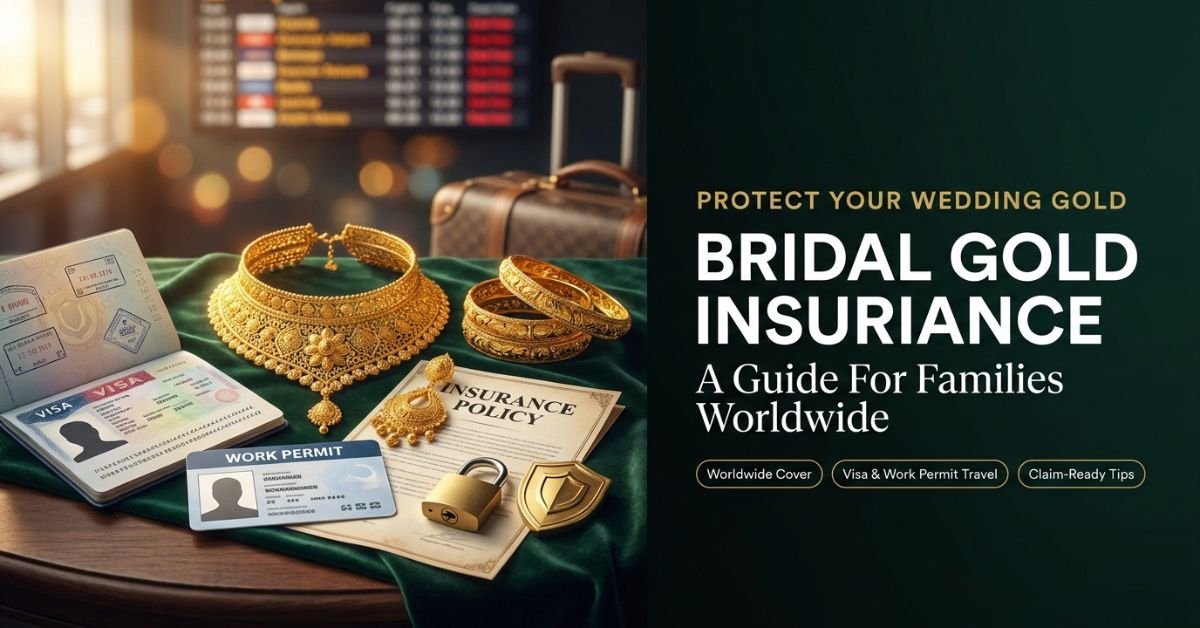
Bridal Gold Insurance: A Guide For Families Worldwide
A bridal set made from 150 grams of 22-karat gold contains about 137 grams of pure metal, a little over four troy ounces. No family would leave four ounces of bullion in a bedroom drawer while the house is full of guests. Yet that is exactly where countless wedding pieces spend the week before the ceremony, which is why bridal gold insurance deserves far more attention than it usually gets.
The tradition looks different from one culture to the next. It might be a layered necklace for a bride in India, dragon-and-phoenix bangles at a Cantonese tea ceremony, thirteen gold coins blessed at a church altar in Mexico or the Philippines, or gold coins pinned to a ribbon across a bride in Turkey. Underneath, the risk is the same everywhere: valuable, portable metal passing through many hands in a very short time.
Most families assume something already protects them. Usually, something only partly does.
When The Set Is Still Being Made
Few bridal sets come straight off a shelf. Many are designed to order, some are reworked from a grandmother’s pieces, and plenty begin with old family gold being melted and recast. For weeks, sometimes months, that metal sits in someone else’s workshop.
Before handing anything over, weigh it, photograph it, and ask for a signed receipt recording the weight and purity of what you left. Then ask the jeweller a simple question: if the workshop is burgled or catches fire, does the business’s insurance cover customers’ pieces? A written yes is worth far more than a reassuring smile.
Ownership deserves the same care. Wedding gold arrives from parents, in-laws, godparents, grandparents and relatives overseas, and insurers compensate the person who actually owns the item. A short note of who gave what, agreed while everyone is still feeling generous, prevents awkward questions at claim time.
Finally, gather quotes before the collection date so cover starts the moment the pieces become yours. The trip from the jeweller’s counter to your front door is short, but it is completely unprotected unless you arrange cover in advance.
Purchase Day And The Paper Trail
Insurers settle claims on evidence, not on how beautiful a necklace looked in the wedding album. The file you build on purchase day often decides whether a claim is paid quickly, paid in part, or disputed for months.
What A Claim-Ready File Holds:
- A detailed receipt. Every piece should appear on its own line with its weight, karat, the gold price used, labour or making charges, and a description of any stones.
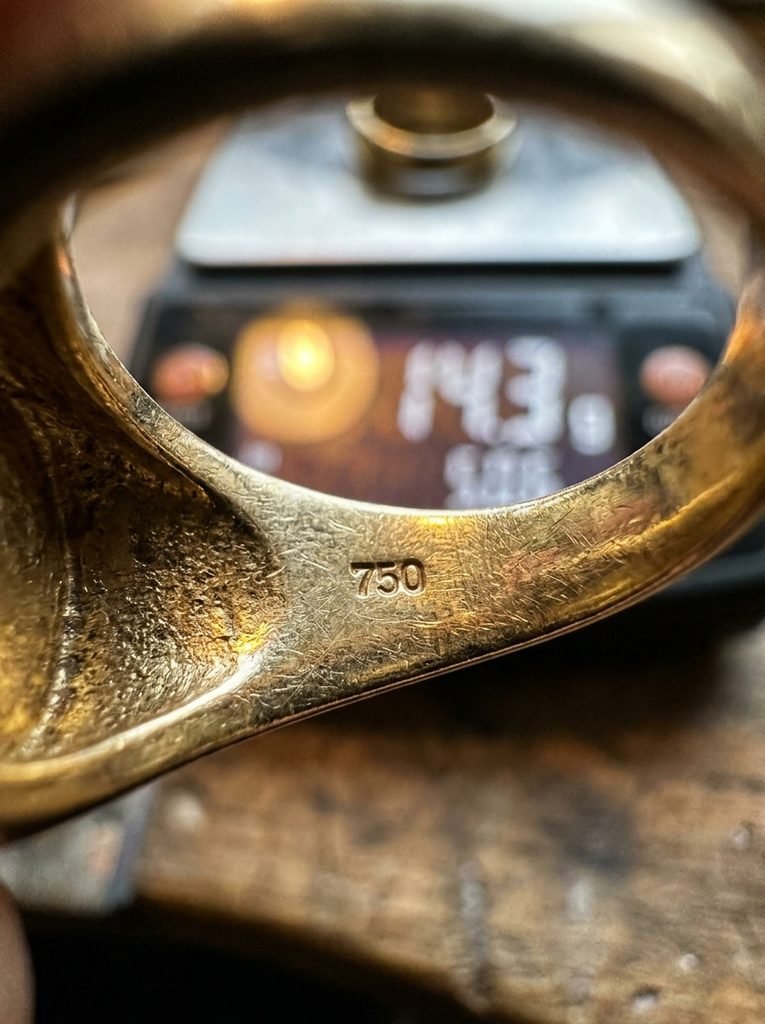
- A record of the purity mark. Many countries stamp gold with a number showing its fineness: 916 for 22-karat, 875 for 21-karat, 750 for 18-karat and 585 for 14-karat. Photograph the stamp. If a piece has none, ask for a written purity statement or an independent test.
- Clear photographs and a short video. Shoot each item on a plain background with a coin or ruler for scale. Add close-ups of clasps, engravings and stamps.
- An independent valuation for heirlooms. Inherited pieces rarely come with receipts, so a qualified valuer’s report is the only reliable way to put a fair figure on them.
- A simple gift log. Write one line per piece noting the giver, the date and the occasion.
Store the file in two separate places, such as a secure cloud folder and a relative’s home. A fire or break-in should never destroy both the jewellery and the proof that it existed.
Weight units vary around the world. Gold is weighed in tolas across South Asia and parts of the Gulf, in chỉ in Vietnam, in taels in Hong Kong, and in grams or troy ounces almost everywhere else. Whatever the local unit, also record the weight in grams, so an insurer or valuer anywhere can read it without conversion mistakes.
Picking The Right Bridal Gold Insurance Cover
This stage quietly costs families more money than any other. Two policies can both promise that “jewellery is covered” and then behave in completely different ways when a piece actually goes missing.
Named Perils Versus All-Risk
A named-perils policy pays only for the specific events written into it, usually fire and theft involving a break-in. An all-risk policy goes much further and covers accidental loss and damage. Many versions also cover unexplained disappearance: the bracelet that was definitely on at the ceremony and is nowhere to be found by morning.
Jewellery worn repeatedly over several days needs the broader option. Burglaries make headlines, but most wedding losses are far less dramatic. A clasp gives way on the dance floor, or an earring slips off during an outfit change.
Listed Versus Unlisted Items
Unlisted jewellery shares a general allowance, usually with a firm limit on any single item. Listed pieces, sometimes called specified or scheduled items, are named individually on the policy at an agreed or declared value.
Every significant bridal piece should be listed on its own. Read the pairs-and-sets wording closely too. If one earring from a matching pair is lost, some policies pay only for that single earring, even though its partner is now worth far less on its own.
Home Add-On, Standalone Jewellery Insurance, Or Takaful
- Home contents add-on: often the cheapest choice, though protection may stop at your front door unless you add away-from-home or worldwide cover.
- Standalone jewellery policy: built specifically for valuables, typically with wider territorial cover, higher item limits, and clearer rules on repair and replacement.
- Takaful and other faith-based options: families who prefer Shariah-compliant arrangements can find takaful home plans in many Muslim-majority markets, and some of these include jewellery.
Whichever route you take, ask one plain question before paying: is jewellery covered while it is worn outside the home, and in which countries
The Weeks Before The Wedding — Home Safe Or Bank Vault
Once the set is collected, the risk changes shape. In the days before a wedding, homes fill with visiting relatives, planners, florists, caterers and helpers, and it becomes almost impossible to know who has been in which room.
A bank safe deposit box takes the crowd out of the picture, but not the financial risk. Banks have no idea what customers keep in their boxes, so rental agreements usually limit how much the bank will pay if something goes wrong. In most countries, deposit protection schemes guarantee money held in accounts, not the contents of a box. Many insurers will extend a policy to cover jewellery kept in a bank vault, and because that risk is low, the extra cost is often small.
If the jewellery stays at home, read two conditions carefully. First, some policies expect valuable pieces to be locked in a safe whenever they are not being worn, and some refuse claims for jewellery left out in plain view. Second, some policies reduce or suspend cover when a property sits empty beyond a set period, which is exactly what happens when a whole household travels for a wedding.
Choose one key holder, one secure safe, and one written list of what is inside. It may feel strict during a joyful week, but it removes all guesswork if anything is later questioned.
Wedding Week From Pre-Wedding Rituals To The Reception
Around the world, weddings are rarely a single event. There may be a henna night, a tea ceremony, a rehearsal dinner, a religious or civil ceremony, a reception, and a brunch the next morning. Each event brings a new venue, a change of outfit, and moments when heavy pieces are taken off and handed to someone else.
A Wedding-Week Routine That Holds Up:
- Appoint a jewellery keeper. Choose one dependable person who isn’t hosting, performing or greeting guests to look after the pieces between events.
- Keep a sign-out sheet. Record each item as it leaves the safe and when it comes back, so questions about who last had something are answered in seconds.
- Photograph the bride wearing each set at every event. Dated phone photos show that the pieces existed and were in her possession that day.
- Never leave jewellery in a car or an empty dressing room. Valuables left unattended in vehicles are among the most common reasons claims get declined.
- Check borrowed pieces. A relative’s necklace lent for the ceremony may lose cover under their policy once it leaves their home, so confirm protection or arrange temporary cover.
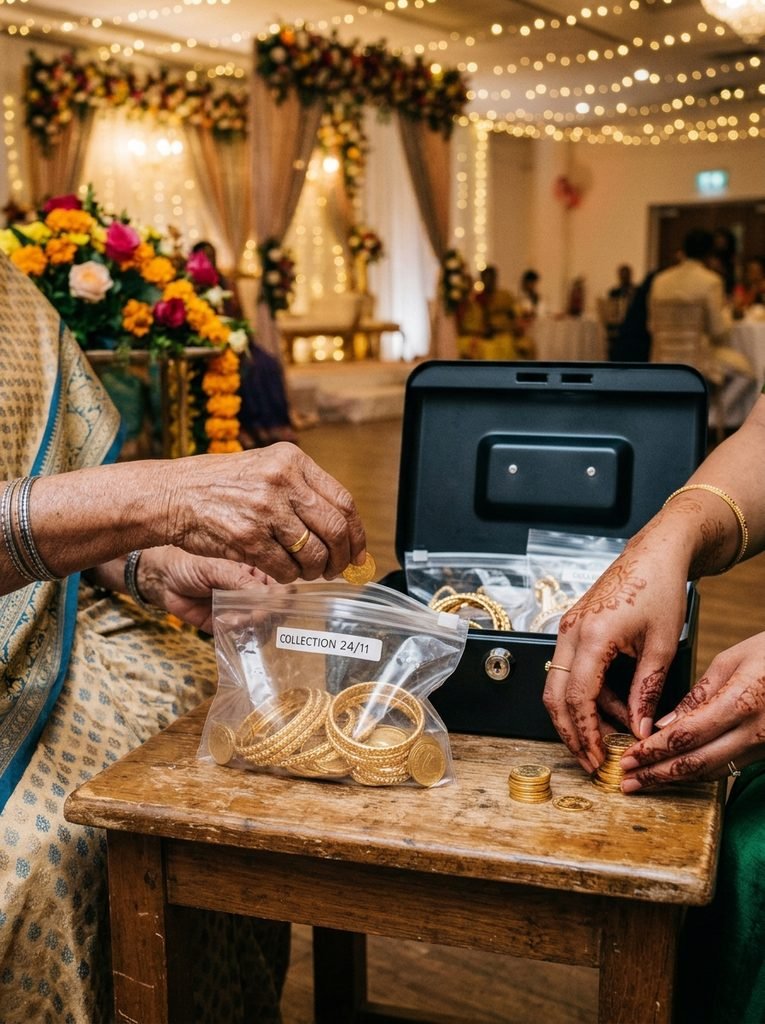
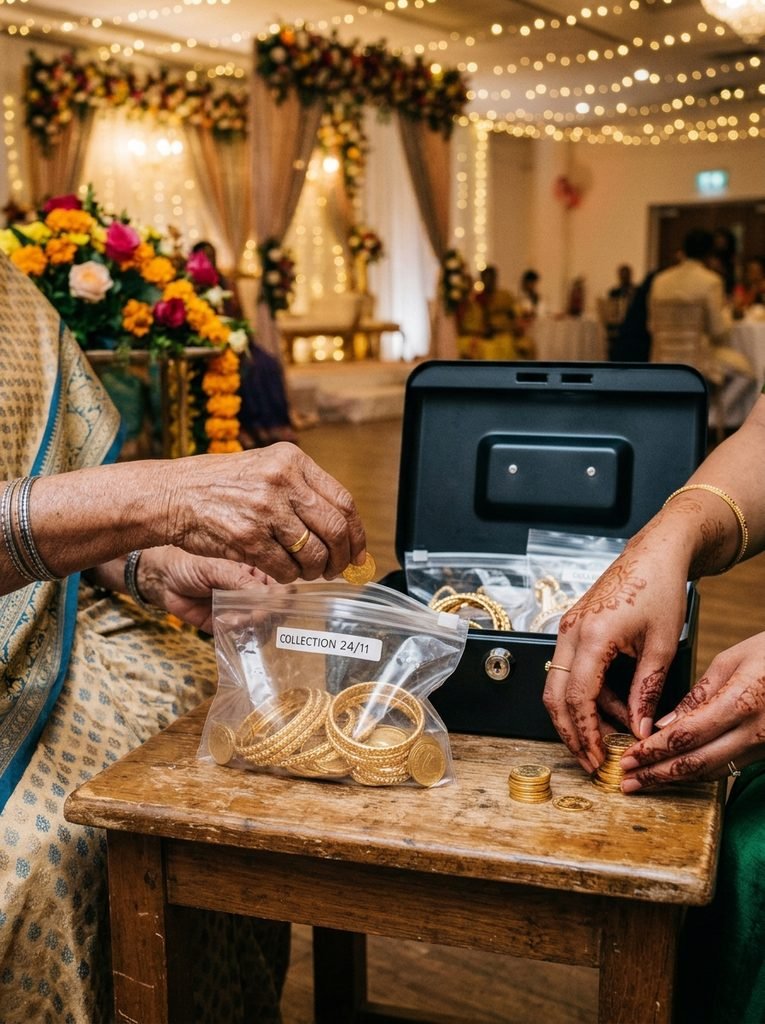
- Secure gifted gold the same night. In many cultures, guests present gold coins, bangles or jewellery during the celebration. Have two people count the gifts, seal them in a bag and lock them away. Tell your insurer about any significant items soon afterwards, because automatic cover for newly acquired valuables is usually limited in both amount and duration.
Before the wedding, ask each venue where its security cameras point and how long footage is kept. If something disappears, that recording may be erased within days.
Carrying Bridal Gold Across Borders
More and more weddings cross borders. Families fly from London to Lagos, Toronto to Lahore, Sydney to Ho Chi Minh City or Paris to Beirut, and brides often carry their gold to a new home in another country once the celebrations end.
Always pack jewellery in your hand luggage. Airlines limit their liability for checked baggage, and many exclude valuables packed in the hold altogether.
Customs is the next hurdle. Jewellery allowances vary widely and can change, so check the official guidance for every country on your route. Declare anything above the limit, and carry receipts showing where and when each piece was bought. Some customs authorities also let travellers register valuables before departure, which makes it easier to prove on return that the jewellery wasn’t bought abroad.
Travel insurance is rarely enough on its own. Its baggage section usually carries low limits for valuables, often well below the worth of a single bridal piece.
Your jewellery or home policy is the stronger safeguard. Check that it covers every country you will visit and how many consecutive days abroad it allows, and tell the insurer your travel dates in writing. At hotels, keep pieces in the room safe or the front-desk safe, since many policies attach conditions to valuables left anywhere else.
If A Piece Goes Missing
The first hour after a loss matters most, and panic tends to waste it. Work through these steps in order.
- Search methodically. Check the car, venue, dressing room and hotel room, and ask the venue to keep any relevant security footage.
- Report it to the police. Most insurers expect an official police report for any theft or unexplained loss. Ask for a written reference number.
- Notify your insurer quickly. Policies set reporting deadlines that are usually counted in days, not weeks.
- Submit your claim file. Send the receipts, photographs, valuation certificates, event photos and police reference together in one package.
- Understand how the claim will be settled. Some insurers replace the item through a jeweller, some pay its cash value, and others pay by gold weight at the current market rate. Labour charges and gemstones may be handled separately.
Check the excess before you claim, too. On a large loss it barely matters, but on a small repair it can cancel out the payout entirely.
The First Year Of Marriage And The Years After
Once the celebrations are over, the insured value slowly goes out of date. Gold prices rise and fall, and a figure fixed on purchase day can soon sit well below what replacing the pieces would cost.
That gap can trigger underinsurance, a rule many policies call the average clause. Illustrative example, not a real case: a family insures its bridal set for 20,000 in its local currency, but at the time of a loss the set is actually worth 40,000. If a bracelet worth 8,000 is stolen, the insurer may pay only about 4,000, because the set was insured for half its true value.
Your After-The-Wedding Checklist:
- Revalue every one to two years, or sooner after a sharp rise in gold prices.
- Add new gifts from anniversaries, births and religious celebrations so they don’t sit unprotected.
- Update your address when moving into a marital home or abroad, because cover is often tied to the address named on the policy.
- Renew on time. Even a brief lapse leaves the entire collection without protection.
- Plan handovers. Make sure heirlooms passed to children or other relatives move onto the right person’s policy.
Where Things Stand Today
For many families, bridal gold is both a keepsake and a financial safety net, and higher gold prices over recent years have made that net far more valuable. In some households, the wedding jewellery is now one of the largest assets they own.
Jewellery insurance is widely available around the world, from basic home policies to specialist cover for valuables. The real problem is rarely a shortage of products. It is that many families still rely on outdated valuations, unlisted items and the hope that nothing will go wrong.
Who Should Act Now, And Who Can Wait
Act now if:
- Your wedding is only a few months away and the jewellery has already been bought or ordered.
- Gold will travel with you across borders, for the ceremony or afterwards.
- Your jewellery sits in a home safe or bank vault with no personal insurance behind it.
- Heirloom pieces have never been professionally valued.
You can wait a little if:
- Every significant piece is already listed on an all-risk policy with a recent valuation. Still confirm the worldwide cover and the insured value before the wedding.
- Your wedding is more than a year away and nothing has been bought yet. Compare quotes now and arrange cover to start on purchase day.
Key Takeaways
- Home safes and bank vaults lower theft risk, but neither guarantees full-value repayment.
- All-risk cover with individually listed pieces suits jewellery worn across several events.
- Build the claim file on purchase day: receipts, purity marks, photographs, valuations and a gift log.
- Wedding week and cross-border travel are the riskiest stages, so plan both in writing.
- Revalue regularly so the average clause never shrinks a future claim.
Frequently Asked Questions
Does Home Insurance Automatically Cover Wedding Jewellery?
Only to a limited extent. Most home contents policies treat jewellery as general belongings, with a cap on each item, and often only while it is at home. Valuable bridal pieces should be listed individually, ideally with all-risk and away-from-home cover.
Is Jewellery In A Bank Safe Deposit Box Insured By The Bank?
Usually not in full. Banks don’t know what customers store in their boxes, so their liability is normally restricted by the rental agreement. A personal policy or a vault extension is the dependable way to protect the full value.
What Affects The Cost Of Insuring Bridal Jewellery?
The main factors are the total value, where the jewellery is kept, home security, the type of cover, the countries included and the excess you choose. Vault-only cover tends to be cheapest, while worldwide all-risk cover for jewellery worn often costs more.
Can Gifted Wedding Gold Be Insured In The Bride’s Name?
Generally yes, if the gifts belong to her. Keep a record of who gave each piece and check with the insurer how the policy should name the owner, so there is no confusion if a claim is ever made.
Is Bridal Jewellery Covered During A Destination Wedding Abroad?
Only when the policy includes the destination country and the length of the trip. Confirm the territorial cover before booking, tell the insurer your travel dates, and keep every piece in hand luggage.