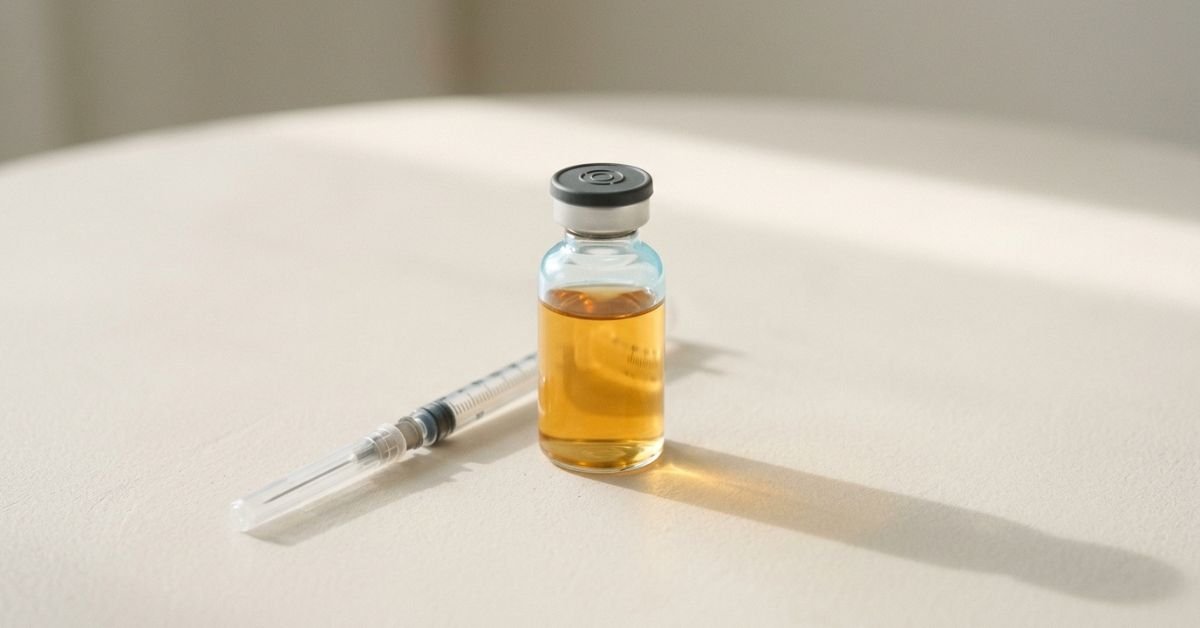
PRP FOR HAIRLOSS: COST PER SESSION AND SUCCESS RATE
Almost everyone researching this treatment gets caught by the same trap, and it costs them thousands. They open four clinic websites, line up the per-session figures, and pick the reasonable-looking one in the middle. It feels like careful shopping. It isn’t, because a single session of PRP achieves essentially nothing on its own, and the advertised price conceals both how many sessions you will need and how long you will keep needing them. The figure worth comparing is what twelve months costs — and then what every year after that costs, for as long as you want to keep what you gained.
HOW MUCH DOES PRP FOR HAIR LOSS COST, AND DOES IT WORK?
PRP for hair loss cost generally falls between $400 and $1,500 per session worldwide, with most clinics in developed markets charging $600 to $900. A starting course is three to four sessions across three to four months, so year one usually totals $1,800 to $3,600. Roughly 60–70% of well-chosen patients gain measurable density.
PRP MEASURED AGAINST THE ALTERNATIVES
Money means nothing without context, and PRP is competing for the same budget as four other approaches available in virtually every country. Placing them side by side changes how the price reads.
| Treatment | Typical global cost | Approximate response rate | Time to visible change | Effect after stopping |
|---|---|---|---|---|
| PRP injections | $400–$1,500 per session; $1,800–$3,600 first year | ~60–70% of suitable candidates | 4–6 months | Fades across 6–18 months |
| Topical minoxidil | $10–$50 monthly | ~40–60% | 4–6 months | Lost within 3–6 months |
| Oral finasteride (male pattern) | $10–$30 monthly, generic | ~80–90% halt further loss | 6–12 months | Loss resumes within a year |
| Low-level laser devices | $300–$1,200, one purchase | ~35–50%, modest gains | 6+ months | Gradual regression |
| Surgical transplant | $3,000–$15,000+, one procedure | Very high for relocated grafts | 9–12 months | Grafts persist; untreated zones keep thinning |
Sit with that table for a moment, because it delivers an uncomfortable verdict. Per unit of demonstrated benefit, PRP is the most expensive non-surgical route available. What it offers in exchange is freedom from a daily pill or nightly solution, and the capacity to add visible thickness to hair that medication has already stabilised. Whether that exchange is worth several thousand dollars is a personal judgement, but it should at least be made knowingly.
COST PER SESSION AROUND THE WORLD
Pricing varies enormously by market, and much of that variation reflects local clinical wage costs rather than any difference in what enters your scalp.
In the United States, sessions run roughly $400 to $1,500, with big-city dermatology practices at the upper end and suburban clinics near $500 to $800. The United Kingdom typically sits at £300 to £700. Continental Europe clusters around €400 to €900, with Northern Europe pricier than Southern. Canada and Australia broadly mirror US mid-market rates once currency is converted. Gulf states and major Middle Eastern cities often match or exceed Western European pricing, driven by a competitive premium aesthetics sector. South Asia, Southeast Asia, Turkey and much of Latin America come in dramatically lower — frequently $80 to $300 per session — which is why several of these countries have become destinations for combined treatment-and-travel packages.
That last point deserves caution rather than enthusiasm. Lower pricing in these markets reflects genuinely lower operating costs, and standards at established clinics can be excellent. But PRP requires repeat visits over months and then indefinite maintenance, which travel does not accommodate well. A discounted starting course abroad followed by full-price maintenance at home rarely produces the savings people imagine.
WHAT A HIGHER PRICE SHOULD BUY YOU
Within any single market, three factors justify a premium.
The first is the qualification of the person injecting. A dermatologist or trained trichologist commands more than a technician in a general aesthetics salon, and for repeated needle work across a living scalp that gap is substantive rather than decorative.
The second is preparation quality — the volume of blood drawn, the calibre of the centrifuge, and whether the clinic runs a validated double-spin protocol using purpose-designed kits. Proper preparation costs the clinic real money per patient, and a clinic absorbing that cost has to charge for it.
The third is what the session actually includes. Some prices bundle microneedling, topical growth-factor application, anaesthetic and follow-up photography. Others bill each separately, which makes a headline price look competitive until the final invoice arrives.
What does not justify a premium: marketing spend, interior design, and the word “advanced” attached to a standard procedure.
THE FIRST-YEAR TOTAL NOBODY PUTS ON THE PRICE LIST
Here the arithmetic turns against the advertised figure.
A conventional induction protocol runs three to four sessions, four to six weeks apart. At a mid-market $700, that alone is $2,100 to $2,800 before any maintenance.
Maintenance is not a luxury add-on. Nearly every credible protocol calls for a refresher every three to six months, indefinitely, which adds two to four sessions annually — another $1,400 to $2,800 per year at the same rate.
Project that across five years at mid-market pricing and you land somewhere between $8,000 and $14,000. Package discounts help: multi-session bundles commonly save 15–25%, and annual maintenance plans often discount further. But discounting changes the size of the number, not its shape. PRP is a recurring commitment, not a one-time purchase.
Nor will insurance intervene. In practically every health system worldwide, PRP for pattern hair loss is categorised as cosmetic and excluded from public and private coverage alike.
The useful question is never “what does one session cost?” It is “what does half a decade of this cost, and would that same money achieve more somewhere else?”
THE SUCCESS RATE THE EVIDENCE ACTUALLY SUPPORTS
The truthful answer sits between clinic promotion and online cynicism, and both extremes are wrong.
Controlled research in pattern hair loss has repeatedly shown that PRP increases hair density and individual hair calibre relative to placebo. Reported improvements typically fall in the range of a 15% to 30% rise in hairs per square centimetre against baseline, assessed at four to six months. Something in the region of 60% to 70% of carefully selected patients register a change that both they and an independent assessor can identify on standardised photographs.
Those gains are genuine. They are also moderate, and this is precisely where expectation and reality separate. PRP revitalises and thickens; it does not resurrect. A follicle dormant for ten years, with no fine hair visible at the surface, will not respond to anything injected into the scalp. The improvement most patients receive is the difference between scalp showing under bright light and scalp not showing — not the difference between thinning and abundance.
One weakness in the evidence base deserves stating openly. Many trials are small, follow-up periods are often short, and preparation methods differ so widely between studies that direct comparison is questionable. The consistent direction of findings is encouraging. The precision behind them is not.
Regulatory status is worth understanding too. In most jurisdictions the centrifuge equipment is approved for producing platelet concentrate, while using that concentrate to treat hair loss is off-label clinical practice. This is entirely lawful and widespread, but any clinic implying formal regulatory endorsement for hair regrowth is overstating its position.
WHO BENEFITS, AND WHO IS BUYING DISAPPOINTMENT
Patient selection accounts for more of the variation in outcomes than clinic quality does.
You are well suited if your loss is early or moderate, driven by pattern hair loss, and if the thinning zones still carry fine, shrinking hairs rather than smooth skin. You are especially well suited if you are already stabilised on medication and want additional density layered on top of that stability.
You are poorly suited if the area is fully bare and shiny, because there is no surviving follicle to stimulate. You are poorly suited if your condition is a scarring alopecia, where follicles have been destroyed rather than miniaturised. And you are poorly suited if an untreated systemic driver is at work — thyroid dysfunction, meaningful iron deficiency, recent serious illness, severe nutritional restriction — because no injection outpaces an active underlying cause.
Genuine contraindications exist as well: platelet disorders, active scalp infection, ongoing anticoagulant therapy, certain blood cancers, and poorly controlled systemic disease. A clinic that books you without asking about any of this has told you something important about itself.
THE SIX-MONTH TIMELINE, AND WHY PATIENCE MATTERS
Nothing visible happens quickly, and people who don’t know that in advance abandon the treatment before it has had a chance.
The first six to eight weeks deliver nothing except, occasionally, a brief uptick in shedding as the scalp resets its cycle. Months two and three usually produce the earliest real signal, which is reduced daily shedding rather than new growth. Months four to six are when density change becomes visible if it is going to appear at all. Somewhere between months six and twelve you reach peak effect, and that is the moment to compare standardised photographs rather than trusting recollection.
If consistent photography shows no measurable change at six months, further sessions are unlikely to rescue the outcome. That is your signal to stop spending.
SIDE EFFECTS AND RECOVERY
This is where PRP performs strongly. Because the injected material comes from your own blood, allergic and rejection responses are effectively removed from the picture.
Expect scalp tenderness lasting one to three days, possible mild swelling or small bruises, occasional headache, and pinpoint bleeding at injection points. Most people go back to work the same day and wash their hair after 24 to 48 hours. Serious complications such as infection are uncommon and generally reflect lapses in sterile technique rather than any inherent danger in the procedure.
Set against the sexual side-effect concerns that deter some men from finasteride, or the shedding phase and daily discipline minoxidil demands, PRP’s tolerability is a legitimate part of what you are buying.
WHAT HAPPENS WHEN YOU STOP PAYING
PRP does nothing to the genetics driving pattern hair loss. It improves conditions around follicles that remain alive, and that improvement decays once the stimulus ends.
Most people who discontinue entirely drift back toward their untreated baseline within six to eighteen months. Some hold a portion of the gain longer, particularly those who stay on a maintenance medication. The practical conclusion is that PRP performs best layered onto a pharmaceutical foundation rather than substituting for one. Any clinic marketing it as a drug-free alternative is selling you a treadmill with a subscription attached.
WHY TWO IDENTICAL PRICES BUY DIFFERENT INJECTIONS
Cost guides almost never cover this, and it explains more unhappy patients than any other factor.
There is no single standardised PRP. What ends up in the syringe varies substantially according to how it was produced, and the variables are clinically meaningful:
PLATELET CONCENTRATION. Therapeutic effect is generally associated with concentrating platelets to somewhere around three to five times whole-blood baseline. Single-spin methods in generic tubes frequently fall short of this, and patients are almost never told which method was used.
WHITE CELL CONTENT. Leukocyte-poor preparations are usually favoured for scalp work, since leukocyte-rich preparations carry greater inflammatory potential in soft tissue.
ACTIVATION METHOD. Some protocols activate platelets chemically before injection while others rely on tissue contact alone. Practice varies, and outcomes may vary with it.
INJECTION TECHNIQUE. Depth, spacing and total volume distributed across the treatment zone differ between practitioners. Spreading a fixed quantity across too large an area dilutes the effect toward irrelevance.
BLOOD VOLUME DRAWN. A small draw and a large draw do not yield comparable product, regardless of what the price suggests.
When comparing two quotations anywhere in the world, these five questions reveal more than any review page. A clinic that answers them precisely is probably running a real protocol. A clinic that responds with “we use the best system available” has not answered at all.
WHICH OPTION SHOULD YOU CHOOSE?
IF YOU ARE EARLY-STAGE AND HAVE NEVER TRIED MEDICATION: begin with minoxidil or finasteride for three to six months and reassess. They cost a fraction of PRP and address the mechanism directly. Adding PRP on top of an untested foundation makes it impossible to attribute any improvement.
IF YOU ARE ALREADY STABLE ON MEDICATION: this is PRP’s strongest indication. The loss is halted, and PRP becomes a reasonable way to recover thickness in zones that are thinning but still viable.
IF MEDICATION IS NOT AN OPTION FOR YOU: PRP becomes a defensible primary choice, with the caveat that you are supporting follicles without addressing the hormonal driver. Expect a shorter runway and budget for indefinite maintenance.
IF YOU HAVE SUBSTANTIAL BARE AREAS: direct the money toward a transplant consultation instead. Five years of PRP maintenance costs roughly what a modest transplant costs, and only one of those two options creates hair where none currently grows. PRP is often used afterwards to support surrounding native hair, which is a sensible order of operations.
IF YOUR BUDGET IS GENUINELY CONSTRAINED: medication combined with a laser device captures most of the achievable non-surgical benefit for well under $1,000 in the first year. PRP is a premium enhancement, not a requirement.
KEY TAKEAWAYS
| Question | Short answer |
|---|---|
| Cost per session | $400–$1,500 globally; $600–$900 typical in developed markets |
| Sessions required | 3–4 initially, then every 3–6 months indefinitely |
| First-year total | $1,800–$3,600 at mid-market pricing |
| Ongoing yearly cost | $1,400–$2,800 |
| Success rate | ~60–70% of suitable candidates; 15–30% density gain |
| Time to visible result | 4–6 months |
| Insurance coverage | None — cosmetic classification worldwide |
| Best role | An addition to medication, not a substitute |
YOUR NEXT STEPS
- Photograph your scalp today from four fixed angles under consistent overhead light. Without a baseline you can never judge whether the money delivered anything.
- Arrange bloodwork before booking — ferritin, thyroid function, vitamin D. Correcting a deficiency costs far less than injecting around one.
- Put the five protocol questions to every clinic: blood volume drawn, number of spins, whether platelet concentration is measured, leukocyte-poor or leukocyte-rich, and total volume injected.
- Price the full year and ask directly what year two will cost. Compare annual totals, never session prices.
- Fix a decision point at six months. If standardised photographs show nothing, stop and redirect the budget.
- Have the conversation with a qualified clinician rather than a sales consultant, particularly if you take anticoagulants, have any bleeding disorder, or manage a chronic condition.
FREQUENTLY ASKED QUESTIONS
IS PRP FOR HAIR LOSS PERMANENT?
No. PRP supports follicles that are still alive but leaves the underlying genetic process untouched. Most people drift back toward their untreated baseline within six to eighteen months of stopping, which is exactly why every credible protocol includes ongoing maintenance sessions every three to six months.
HOW MANY PRP SESSIONS ARE NEEDED BEFORE ANYTHING SHOWS?
Budget for three to four initial sessions spaced four to six weeks apart. Reduced shedding often appears around the second or third month, while visible density change, when it occurs, arrives at four to six months. Judging the treatment before month four is premature.