
HYPERPIGMENTATION TREATMENT: DERMATOLOGIST OPTIONS AND REAL COST
The costliest error in hyperpigmentation treatment is not choosing an expensive clinic. It is buying a procedure before anyone has established what kind of pigment you are actually looking at. Two people can sit in the same waiting room with what appears to be the same brown patch on the cheek, and the treatment that clears one of them within two months can leave the other measurably worse. Heat, in particular, is a double-edged tool — it removes pigment in some conditions and provokes it in others.
That single distinction explains most of the disappointment, and most of the wasted money, in this entire category.
This guide sorts you by situation first. The prices come after.
WHAT DOES IT ACTUALLY COST
Worldwide, a private dermatologist consultation for dark spots generally falls between the equivalent of 15 and 300 US dollars depending on the country. Prescription creams add a modest monthly cost. In-clinic procedures range from inexpensive superficial peels to laser sessions costing several hundred or several thousand. Most plans need three to six sessions, so always price the course, never the visit.
Two things make published prices unreliable. First, the gap between a large city in Western Europe or North America and a mid-sized city in South Asia, North Africa or Southeast Asia can be a factor of ten for an identical procedure on an identical machine. Second, clinics quote per session while dermatologists think in courses. A “$300 laser” is rarely $300.
KEY TAKEAWAYS CHECKLIST
☐ The type of pigment decides the treatment — melasma, post-acne marks and sun damage are three different problems wearing the same colour
☐ Topical prescriptions are the cheapest effective route and the step most people skip on their way to a machine
☐ Skin tone changes the risk calculation, not just the outcome
☐ Lasers are the most expensive option and the one most capable of making things worse
☐ In most health systems, pigment treatment is classified as cosmetic and therefore self-funded
☐ Daily sun protection is not aftercare — without it, everything you pay for is rented, not bought
FIND YOUR SITUATION IN THIRTY SECONDS
Three questions decide almost everything that follows.
Where did the pigment come from? A spot, a shaving cut, an insect bite, eczema or any healed inflammation points to post-inflammatory hyperpigmentation. Pregnancy, hormonal contraception or a symmetrical pattern across both cheeks points to melasma. Decades of accumulated sun with no particular trigger points to solar lentigines — the ordinary sun spot.
Does it come back? Post-acne marks and sun spots usually stay gone once cleared. Melasma is relapsing by nature, so any honest clinician frames it as long-term management rather than a cure. This is not pessimism; it is the difference between a realistic budget and an angry one.
What is your baseline skin tone? The richer the melanin, the more readily skin absorbs light energy, and the higher the chance that an aggressive device triggers fresh pigment. This one factor reorders the entire treatment sequence.
IF YOU ARE TREATING MARKS LEFT BEHIND BY ACNE
These are the flat brown, red-brown or slate-grey patches that remain after a breakout has healed. They are not scars. Run a finger across them and the skin is smooth — the damage is pigment, not lost tissue. Left alone, they usually fade over a year or two.
Treatment here accelerates something already in motion, which makes this the least expensive situation of the five.
A dermatologist typically starts by controlling any active acne, because treating marks while new spots keep forming is an exercise in standing still. Once that is stable, the standard building blocks are a retinoid to speed skin turnover and a pigment-suppressing agent such as azelaic acid, niacinamide or a prescription brightening formulation. Superficial chemical peels can be layered on top if the response is slow.
| ITEM | INDICATIVE RANGE | TIMELINE |
|---|---|---|
| Dermatologist consultation | Low tier equivalent of $15–$50; high tier $120–$300 | One visit |
| Prescription retinoid, generic | Modest monthly cost, widely available | 3–6 months |
| Azelaic acid or compounded cream | Moderate monthly cost | 3–6 months |
| Superficial peel series, optional | Low tier $20–$60 per session; high tier $150–$400 | 3–6 sessions |
| Realistic course total | Wide, but the cheapest of any pigment problem | 4–8 months |
☐ Treat the acne before the marks
☐ Give topicals a full twelve weeks before judging
☐ Avoid picking, which resets the clock on every lesion touched
Do not open with a laser for post-inflammatory pigment. The heat can deposit more melanin than it removes, and you will have paid several times the price for a worse result.
IF YOU HAVE MELASMA
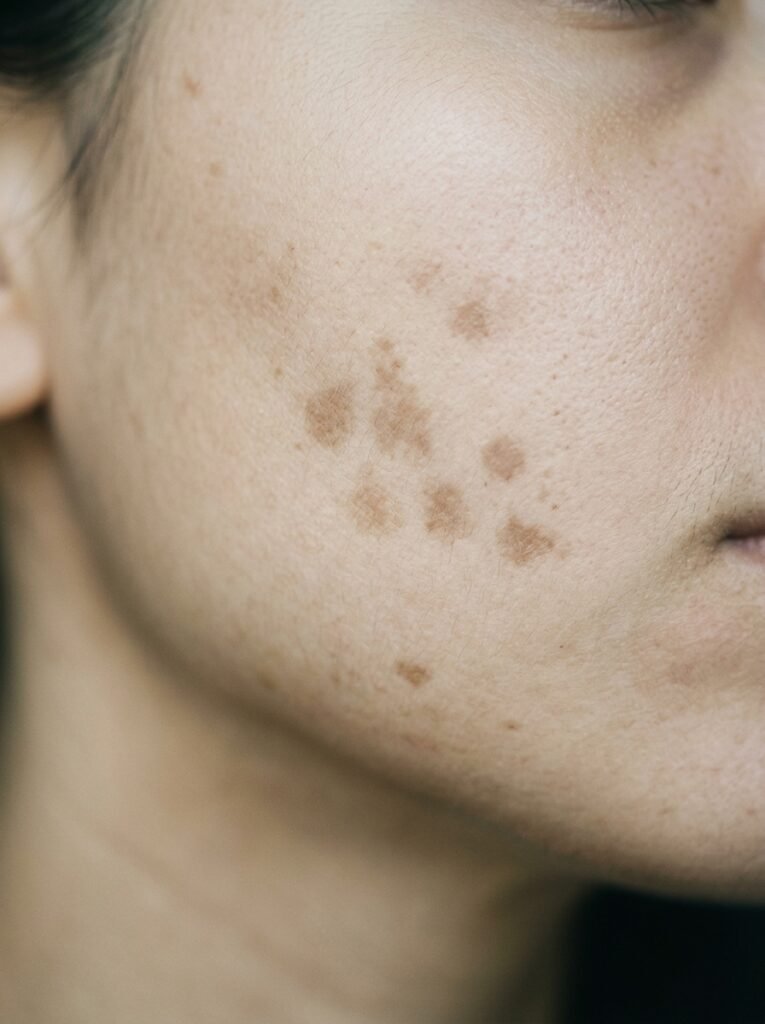
Melasma appears as symmetrical patches, most often across the cheekbones, forehead, upper lip and jawline. It is strongly linked to hormonal shifts and strongly aggravated by light — including visible light from windows and screens, not only ultraviolet. It responds to treatment, then returns with the next summer, the next pregnancy, the next change in medication.
Anyone offering a permanent cure is selling something.
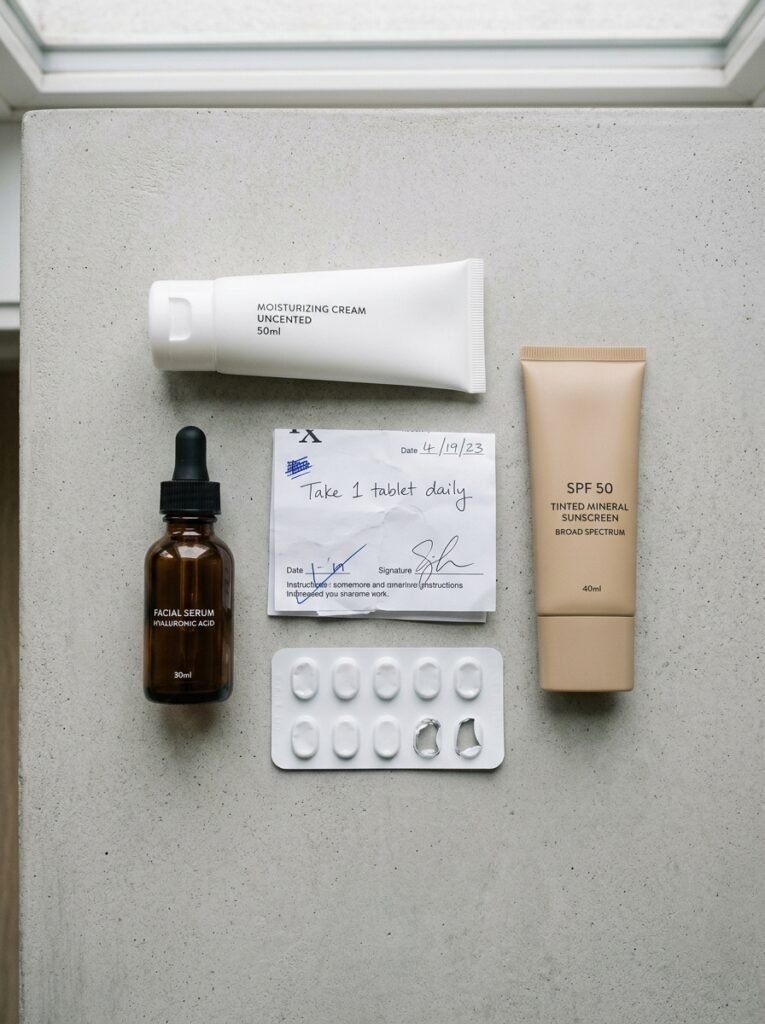
The usual first line is a combination topical approach: a pigment inhibitor, a retinoid and often a mild anti-inflammatory, used in supervised cycles rather than indefinitely. Sun protection is not an accessory to this plan — it is half of it, and tinted formulations containing iron oxides perform better than clear ones because they shield against visible light as well as UV.
Where topicals plateau, dermatologists increasingly reach for tranexamic acid, used topically, taken orally, or injected in small amounts into the affected area. It works on a different part of the pigment pathway than traditional brighteners, which is why it often helps when brighteners alone have stalled. The oral form is prescribed off-label for this purpose and requires a health history review before starting, because it affects clotting behaviour. It is not a self-start medication and should never be sourced without supervision.
| APPROACH | INDICATIVE COST | NOTES |
|---|---|---|
| Consultation and prescription plan | Varies widely by country | The foundation; skip it and everything else underperforms |
| Combination topical therapy | Moderate monthly | Cycled, not continuous |
| Oral or topical tranexamic acid | Usually inexpensive as a generic | Off-label; screening required first |
| Superficial peel series | Low to moderate per session | Adjunct, never a standalone answer |
| Conservative device work | The most expensive line item | High relapse risk; experienced hands only |
| Realistic year one | Plan for maintenance, not a finish line | Ongoing after |
☐ Budget annually, not once
☐ Expect three months before an honest assessment
☐ Treat sunscreen as a permanent, non-negotiable expense
☐ Reassess triggers with your doctor if pigment worsens suddenly
IF YOU ARE OLDER AND TREATING SUN SPOTS
Solar lentigines are the flat tan-to-brown marks that accumulate on cheeks, temples, hands, forearms, chest and shoulders after years of exposure. Of every pigment problem in this guide, this one responds best to technology, for a simple reason: the pigment sits shallow and the cause is largely behind you rather than ongoing.
This is where devices earn their price rather than merely charging it.
| TREATMENT | RELATIVE COST | SESSIONS TYPICALLY NEEDED |
|---|---|---|
| Intense pulsed light | Moderate | 3–5 |
| Targeted pigment laser, spot by spot | Moderate to high per session | 1–3 |
| Non-ablative fractional resurfacing | High | 3–4 |
| Ablative fractional resurfacing | Highest, with genuine downtime | 1–2 |
| Medium-depth chemical peel | Moderate to high | 1–3 |
Recovery is a real cost that price lists omit. Non-ablative work generally means a few days of redness that make-up can cover. Ablative work means a week or more of skin that behaves like a bad sunburn and must be protected obsessively. If you are self-employed or client-facing, put those days in the budget.
☐ Have any changing, irregular, itchy or newly darkening lesion examined before treating it cosmetically — the first job of a dermatologist is to rule out something serious, and in most health systems that portion of the visit is medical rather than aesthetic
☐ Ask who is holding the device: physician, nurse or aesthetician
☐ Ask which device, at which setting, for your skin type
☐ Walk away from any clinic unwilling to answer those questions plainly
IF YOU HAVE DEEPER SKIN
Everything above applies, but the risk calculation inverts. Melanin-rich skin absorbs light energy more readily, so a setting that is routine on pale skin can trigger exactly the pigment you are paying to remove. The resulting darkening can outlast the original problem by a year or more, and it is harder to treat the second time.
The safer sequence is topical first, gentle procedural second, energy-based devices last and cautiously.
There is also an ingredient caution worth understanding. Powerful skin-lightening agents used at high strength for long uninterrupted periods, without supervision, can produce a paradoxical grey-blue darkening that is considerably harder to reverse than what prompted treatment. This is one reason such agents are prescription-controlled in many countries, cycled rather than used continuously, and best avoided in the unregulated creams sold informally in markets and online across parts of Asia, Africa and the Middle East. Some of those products also contain mercury or undeclared steroids. They are a genuine health risk, not merely an ineffective purchase.
☐ Choose a clinician with documented experience treating your skin type
☐ Insist on a test patch before any full-face device treatment
☐ Refuse standardised settings applied without assessment
☐ Buy topicals only through pharmacies or verified suppliers
IF YOU HAVE ALREADY SPENT MONEY AND SEEN NOTHING
The reasons treatment fails are remarkably consistent across every country and price bracket.
Sun protection was treated as optional. Every effective approach is undone by daily light exposure. Without consistent broad-spectrum protection, reapplied properly, the clock quietly resets each week.
The course was abandoned early. Pigment turnover is slow. Twelve weeks is the earliest fair checkpoint, and six weeks is where most people give up.
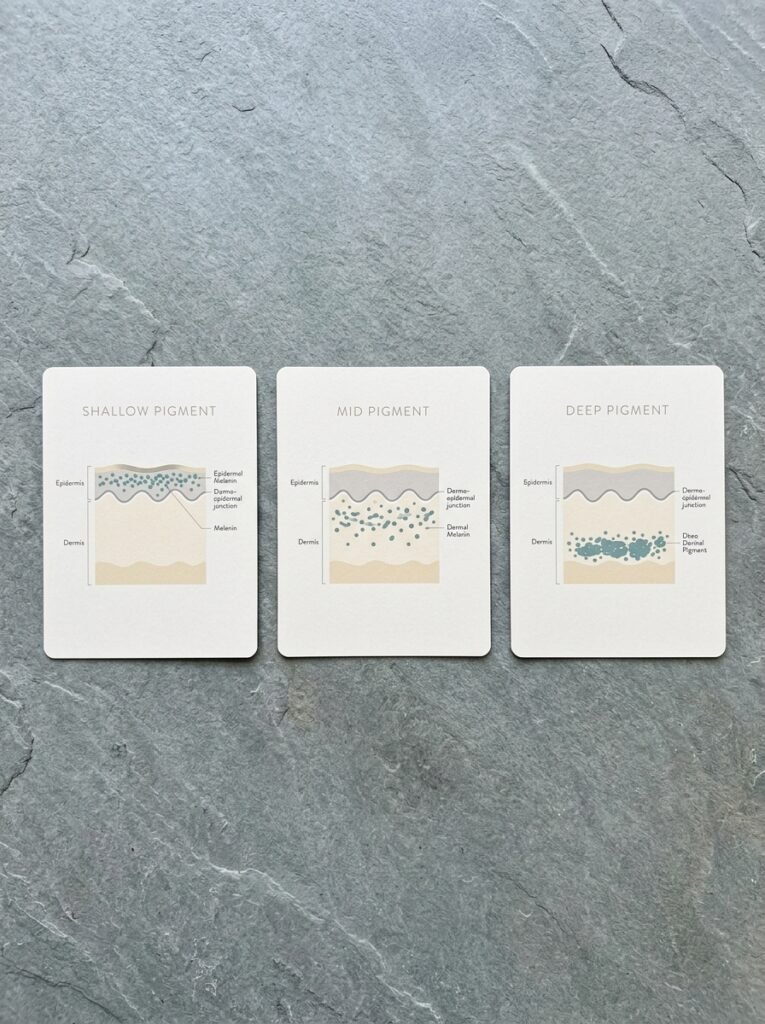
The wrong depth was targeted. Pigment sitting in the upper layers and pigment sitting deeper need different tools. A product that never reaches the depth in question cannot clear it, however good the formula.
The trigger was never removed. Ongoing breakouts, friction from clothing or masks, aggressive scrubbing, waxing, an unaddressed hormonal factor — the tap was still running while you mopped.
The provider sold a machine rather than a diagnosis. A clinic that owns one device tends to discover that every face needs that device.
THE BILLING REALITY NOBODY QUOTES YOU
Here is the part missing from almost every price page in this category, and it applies internationally.
Health systems and insurers draw a line between medical necessity and cosmetic improvement. Pigment disorders sit awkwardly across that line. A visit to establish what a lesion is, rule out anything dangerous, or investigate pigment appearing alongside another symptom is usually treated as medical. The subsequent work to make the skin look even is usually treated as cosmetic, and cosmetic means self-funded — whether you are dealing with a public system in Europe, a private insurer in North America, a mixed system in the Gulf, or largely out-of-pocket private care across much of South Asia, Africa and Latin America.
This creates a quiet unfairness. Conditions that visibly affect confidence, and which fall more heavily on people with more melanin in their skin, tend to be the ones classified as appearance rather than health.
Practically, that means:
☐ The consultation may be covered or subsidised where there is a diagnostic question
☐ The procedure will almost certainly not be
☐ Generic prescriptions are the most likely element to attract partial coverage — ask for generics by name
☐ Health savings accounts, flexible spending accounts or employer medical allowances often accept prescribed treatment where they reject cosmetic work
☐ Ask the clinic how the visit will be coded and billed before the appointment, not afterwards
DO AND DO NOT
| ☑ DO | ☒ DO NOT |
|---|---|
| Get a diagnosis before buying a procedure | Assume all dark patches are the same condition |
| Start with prescribed topicals | Open with the most expensive device available |
| Ask for the full course price in writing | Accept a per-session figure with no session count |
| Wear broad-spectrum protection daily, indoors included | Treat sunscreen as a summer or holiday product |
| Give any plan twelve weeks | Judge results at week four |
| Request a test patch on deeper skin tones | Allow untested full-face settings |
| Buy from pharmacies and licensed clinics | Buy unlabelled lightening creams from informal sellers |
ACTION PLAN
☐ Photograph the affected area today in consistent daylight, same angle, no filter — you will need a baseline you can trust
☐ Write down the trigger and the timeline
☐ Book a dermatologist rather than a salon for the first assessment
☐ Ask three questions: what type of pigment is this, what does the complete course cost, and what happens if it returns
☐ Begin daily sun protection immediately, before any treatment starts
☐ Diarise a twelve-week review
☐ Budget for ongoing maintenance if the answer is melasma
YOUR NEXT STEPS, IN ORDER
- Identify the pigment type using the three questions above. This step alone prevents the most expensive mistakes in the whole category.
- Book one diagnostic consultation and treat it as buying information rather than attending a sales meeting.
- Run the topical route properly for twelve weeks before considering any device.
- Obtain the total course price in writing — sessions, products, reviews and touch-ups included.
- Confirm what your health system or insurer treats as medical before you hand over a card.
- Make daily sun protection permanent, because it is the only line item that protects the value of every other one.
FAQ
HOW LONG DOES HYPERPIGMENTATION TAKE TO FADE WITH TREATMENT?
Shallow post-acne marks often lighten visibly within eight to twelve weeks on prescribed topicals. Sun spots treated with a suitable device can clear in one to three sessions. Melasma improves on a comparable timeline but returns without maintenance and sun protection, so it is measured as ongoing control rather than completion.
IS LASER TREATMENT SAFE FOR DARKER SKIN?
It can be, with conservative settings, appropriate device selection and a clinician experienced in treating that skin type. Because melanin absorbs light energy readily, aggressive treatment can provoke fresh darkening. Most dermatologists exhaust topical and gentle options first and always test a small area before treating a whole face.
CAN I TREAT DARK SPOTS WITHOUT A PRESCRIPTION?
Partly. Over-the-counter niacinamide, azelaic acid, vitamin C and gentle exfoliating acids genuinely help mild cases and maintain results. What they cannot do is diagnose, and since the correct approach depends entirely on which condition you have, self-treatment is where most wasted spending begins.