
Nurse Scrubs Fashion Guide 2026: Stylish & Professional Medical Uniform Trends
In modern healthcare environments, medical uniforms are no longer just practical clothing. Today, nurse scrubs represent a combination of professional identity, comfort, hygiene, and modern workplace fashion. Healthcare professionals spend long hours caring for patients, and their uniforms must support both functionality and comfort while maintaining a clean and professional appearance.
Over the past decade, nurse scrubs have undergone a major transformation. Traditional scrubs were simple, loose-fitting uniforms designed primarily for hygiene and practicality. However, modern scrub designs now incorporate advanced fabrics, ergonomic tailoring, and stylish colors that allow nurses and medical professionals to look polished while remaining comfortable throughout demanding shifts.
One of the most noticeable trends in medical fashion is the growing popularity of colorful scrubs, particularly shades like pink, navy blue, lavender, and teal. The pink scrubs seen in the image above represent a warm, compassionate, and approachable style often associated with caregiving roles.
In 2026, nurse scrubs are designed with several priorities in mind:
- Comfort for long shifts
- Professional appearance
- Durable and breathable fabrics
- Functional pocket designs
- Modern and flattering fits
This comprehensive guide explores the evolution of nurse scrubs, the latest fashion trends in healthcare uniforms, the significance of color choices, and practical tips for choosing the best scrubs for everyday medical work.
The Evolution of Nurse Scrubs
The concept of medical scrubs dates back to the early 20th century when hospitals began focusing more heavily on sterilization and infection control. Early scrubs were simple white uniforms designed to emphasize cleanliness.
However, white uniforms quickly proved impractical. Medical professionals frequently encountered stains and fluids, making it difficult to maintain a spotless appearance. As a result, hospitals transitioned to colored scrubs, particularly green and blue, which helped hide stains and reduce eye strain in operating rooms.
Over time, scrubs became the standard uniform for nurses, surgeons, and healthcare staff. But while early scrubs focused purely on practicality, modern designs now incorporate elements of fashion, ergonomics, and functionality.
Today’s scrubs are designed to support the demanding nature of healthcare work while also allowing medical professionals to express a sense of personal style.
Why Pink Scrubs Are Popular in Healthcare

Pink scrubs have become a popular choice among nurses and healthcare workers for several reasons. Unlike traditional blue or green scrubs, pink creates a warm and friendly atmosphere, which can be comforting for patients.
The color pink is often associated with:
- Compassion
- Kindness
- Caregiving
- Emotional warmth
Because of these associations, pink scrubs are commonly seen in departments where patient comfort is especially important.
Pediatric Care
In pediatric hospitals and clinics, bright and friendly colors help create a welcoming environment for children. Pink scrubs can make healthcare professionals appear more approachable and less intimidating to young patients.
Maternity and Obstetrics
Many nurses working in maternity wards choose pink scrubs because the color reflects themes of new life, nurturing, and care.
Family Clinics
In outpatient clinics and family practices, pink scrubs contribute to a relaxed and comforting atmosphere for patients.
Key Features of Modern Nurse Scrubs
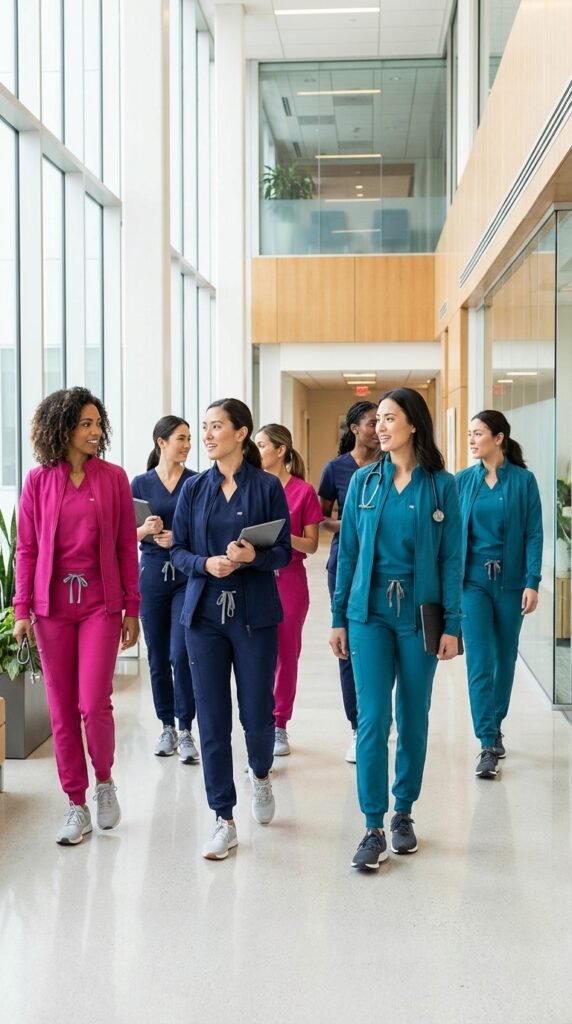
Modern nurse scrubs are carefully designed to support healthcare professionals throughout their workday. The best scrubs combine comfort, durability, flexibility, and practicality.
Breathable Fabric Technology
Healthcare workers often spend long hours moving between patient rooms, assisting procedures, and handling emergencies. Scrubs must be made from breathable fabrics that allow airflow and prevent overheating.
Most modern scrubs use a blend of materials such as:
- Polyester
- Cotton
- Spandex
These fabrics provide durability while maintaining flexibility and comfort.
Stretch and Mobility
Modern scrubs frequently include stretch technology, allowing nurses to move freely without restriction. Stretch fabrics are particularly useful during activities such as bending, lifting patients, or performing medical procedures.
Functional Pockets
Scrubs typically include several pockets designed to hold essential tools. Nurses often carry items such as:
- Pens
- Medical gloves
- Small notepads
- Hand sanitizer
- Medical instruments
Well-designed pockets make it easier for healthcare professionals to keep their tools organized and accessible.
Durable Construction
Medical uniforms must withstand frequent washing and sterilization. High-quality scrubs maintain their shape and color even after repeated washing cycles.
The Role of Color in Medical Uniforms
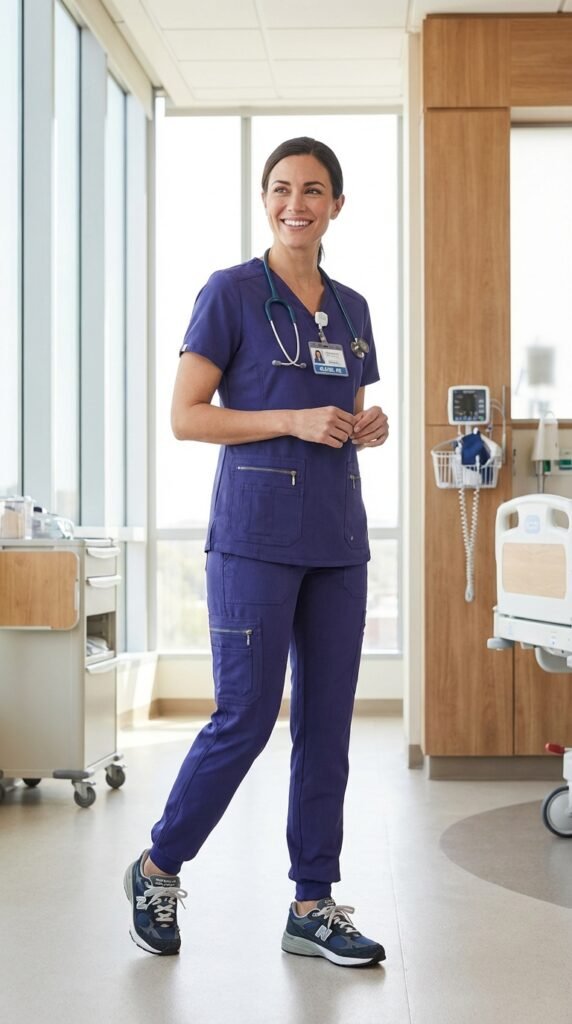
Color plays an important role in healthcare environments. Many hospitals use different scrub colors to identify specific departments or roles.
Blue Scrubs
Blue is the most commonly used scrub color. It represents trust, professionalism, and calmness.
Green Scrubs
Green scrubs are often worn in surgical settings because the color helps reduce eye fatigue during long operations.
Pink Scrubs
Pink scrubs represent compassion and care. They are frequently worn in departments focused on emotional support and patient interaction.
Black Scrubs
Black scrubs offer a modern and stylish appearance. They are increasingly popular in private clinics and specialized medical practices.
Purple and Teal Scrubs
These colors are becoming more common in modern hospitals, offering a stylish alternative to traditional uniforms.
Modern Scrub Fashion Trends in 2026
Healthcare fashion continues to evolve, and modern scrubs are now designed with both practicality and aesthetics in mind.
Tailored Scrub Designs
Traditional scrubs were often loose and boxy. Today’s scrubs feature more tailored silhouettes, providing a polished and professional appearance.
Tailored scrubs allow healthcare workers to maintain a neat look while still ensuring comfort and mobility.
Sustainable Medical Clothing
Environmental awareness has influenced many industries, including healthcare fashion. Some manufacturers now produce scrubs using recycled materials and eco-friendly fabrics.
Sustainable scrubs reduce environmental impact while maintaining durability and comfort.
Antimicrobial Fabrics
New textile technologies have introduced antimicrobial fabrics that help reduce bacterial growth on clothing. These fabrics provide an additional layer of hygiene for healthcare environments.
Lightweight Performance Fabrics
Advanced materials allow scrubs to remain lightweight while still offering durability and stretch.
Also Read: 35 Elegant Tattoo Ideas for Women – Meaning & Best Placement Guide
Choosing the Best Scrubs for Healthcare Work
Selecting the right scrubs is important for both comfort and professional appearance.
Consider Fabric Quality
High-quality fabric ensures that scrubs remain comfortable throughout long shifts. Breathable materials help prevent overheating.
Choose the Right Fit
Scrubs should allow freedom of movement without being too loose or restrictive. Many modern scrubs offer athletic or tailored fits.
Look for Practical Features
Features such as multiple pockets, reinforced seams, and stretch panels can make a significant difference during daily work routines.
Follow Workplace Guidelines
Some hospitals require specific scrub colors or styles depending on department or role.
The Psychological Impact of Medical Uniforms
Medical uniforms influence how patients perceive healthcare professionals. A clean and well-fitted uniform can build trust and confidence.
Patients often feel more comfortable interacting with healthcare workers who appear:
- Professional
- Approachable
- Well-organized
Bright or friendly colors, such as pink, can also help create a calming environment, especially for patients who may feel anxious about medical procedures.
Nurse Scrubs and Professional Identity
For many healthcare professionals, scrubs represent more than just work clothing. They symbolize dedication to patient care and commitment to the medical profession.
Wearing scrubs can create a sense of unity among healthcare teams while reinforcing professional standards.
Scrubs also help distinguish healthcare workers from visitors and patients, making it easier to identify staff members in busy hospital environments.
Caring for Medical Scrubs
Proper maintenance ensures that scrubs remain hygienic and professional.
Important care tips include:
- Wash scrubs after each shift
- Use hot water to remove bacteria
- Avoid mixing scrubs with regular clothing
- Use mild detergent to protect fabric quality
- Dry scrubs completely before wearing
Regular washing helps maintain hygiene and prevents the spread of infections.
The Future of Medical Uniform Fashion
Healthcare clothing will likely continue evolving as technology and fashion trends develop.
Future scrub designs may include:
- Smart fabrics that regulate temperature
- Improved antimicrobial materials
- Greater sustainability in textile production
- Enhanced ergonomic designs
These innovations will help healthcare professionals remain comfortable and protected while performing their critical roles.
Conclusion
Nurse scrubs have evolved from simple medical uniforms into a blend of functionality, comfort, and modern fashion. Today’s scrubs are designed to support healthcare professionals during demanding shifts while maintaining a professional and polished appearance.
Colors like pink add warmth and compassion to clinical environments, helping patients feel more comfortable and supported.
As healthcare continues to advance, medical uniforms will continue adapting to meet the needs of both professionals and patients. With improved fabrics, modern designs, and innovative technologies, nurse scrubs will remain an essential part of the healthcare profession for years to come.