Lab Grown vs Natural Diamonds: Price And Resale Compared
Almost everyone approaches this decision the same way, and almost everyone gets it backwards. They put two price tags beside each other, see that one is a small fraction of the other, and treat that single gap as the answer.
It isn’t the answer. It is one number out of three, and the other two only reveal themselves years later — when the ring is being insured, inherited, upgraded or sold.
Quick Answer: Lab grown and natural diamonds are the same material, but not the same asset. A lab-grown stone typically costs a small fraction of a natural one of matching size and quality, yet returns very little when resold. A natural stone costs far more upfront and gives back a meaningfully larger share of it. One wins on price, the other on retention.
What Lab Grown Vs Natural Diamonds Really Means
Start with what is not different, because that part is usually oversold in both directions.
Chemically, these are the same substance: carbon arranged in the same crystal structure, with the same hardness, the same refractive behaviour and the same way of throwing light around a room. A lab-grown diamond is not an imitation. It is not cubic zirconia or moissanite. Under normal viewing conditions, nobody — including a jeweler without laboratory equipment — can separate the two by eye.
The difference is origin, and more importantly, quantity.
Natural diamonds formed deep in the earth over timescales nobody can influence, and they are recovered from a limited set of mines that are gradually depleting. Lab-grown diamonds are produced in reactors, on a schedule, in quantities that respond directly to how much anyone is willing to buy.
That one asymmetry drives every number that follows in this article. Scarcity supports price. Manufacturing capacity erodes it. Everything else — marketing, ethics, sentiment, resale policy — sits on top of that foundation.
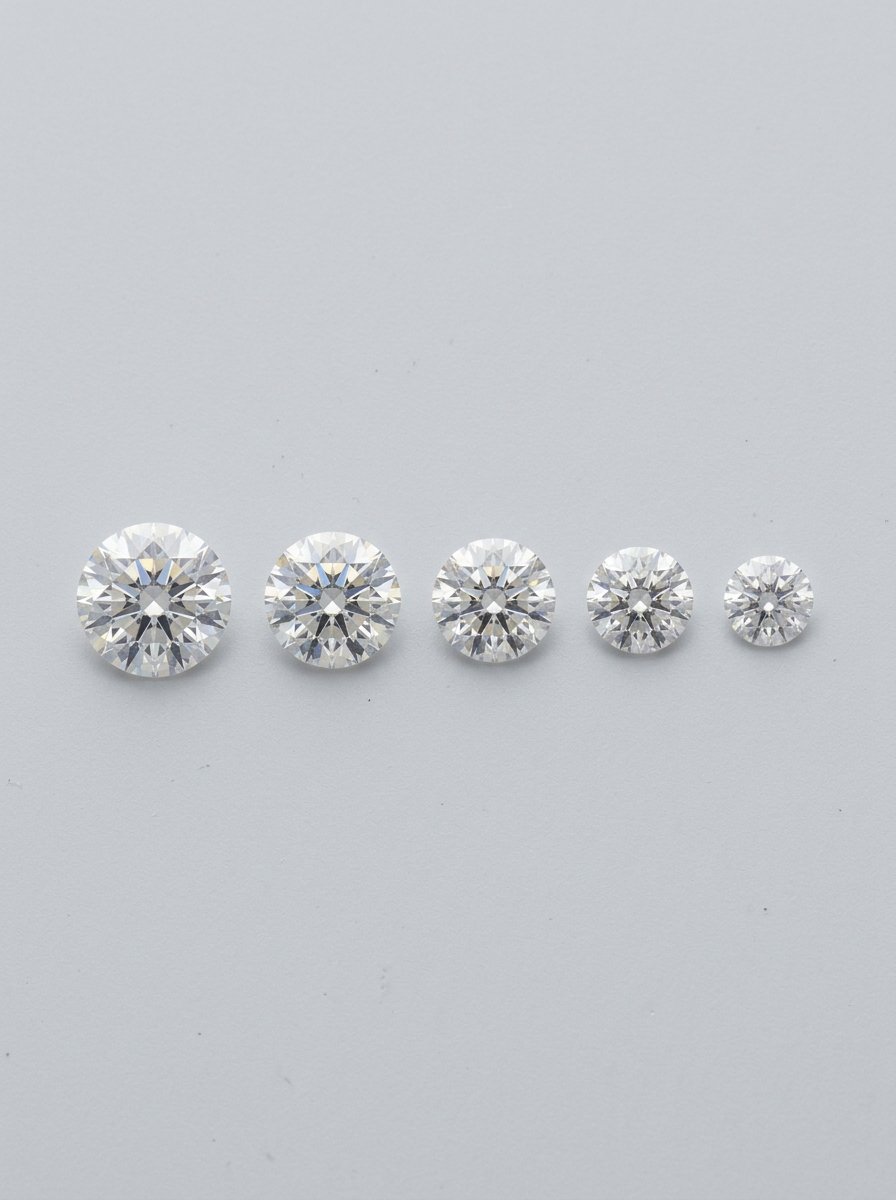
How The Two Markets Drifted Apart
The gap between these two stones did not open suddenly. It widened in recognisable phases, and each phase left a permanent mark on what buyers pay and what sellers recover.
Phase one — the novelty years. Lab-grown diamonds arrive as a premium curiosity. Production is slow, yields are inconsistent, and prices sit only modestly below natural equivalents. Early buyers pay close to mined prices for the privilege of being first.
Phase two — the capacity build. Growing technology matures. Reactors get larger, cycles get shorter, failure rates fall, and new production facilities open across several countries at once. Supply expands far faster than any marketing campaign can expand demand.
Phase three — the price unwind. Wholesale prices fall, then fall again, then keep falling. Retail lags behind wholesale for a while — shops are still selling inventory bought at older costs — but eventually the shelf price follows the factory price down. Buyers who purchased during phase one watch their stone’s replacement cost collapse beneath them.
Phase four — commoditisation. Lab-grown becomes ordinary. It stops being a statement and starts being a category, the way a flat-screen television did. Prices approach the cost of actually making the stone, and the steep fall flattens into a slow drift.
Phase five — divergence. Natural diamonds, meanwhile, go through their own correction smaller commercial-grade stones suffer most, larger and higher-grade stones hold up better while mine closures and deliberate production restraint slowly tighten supply again.
Those two trajectories are still running in opposite directions, and that is the entire story of resale.
Price Today: What Each Stone Actually Costs
Here is how the two compare for a comparable one-carat round brilliant in good commercial quality. Figures are approximate reference ranges in US dollars; the proportions hold in most markets, though local duties, taxes and retail margins shift the absolute numbers.
| Lab Grown | Natural | |
|---|---|---|
| Typical 1ct retail | Low hundreds to around a thousand | Several thousand |
| Relative cost | Roughly 80–90% below natural | The benchmark |
| Direction of travel | Flattening near production cost | Stabilising after a broad correction |
| Supply | Expandable on demand | Finite and slowly shrinking |
| What the price is based on | Manufacturing cost plus margin | Scarcity, grading and a mature trade benchmark |
| Size you can afford | Substantially larger for the same budget | Smaller for the same budget |
Two practical consequences follow from that table.
The first is obvious: the same budget buys a visibly bigger stone in lab-grown. A shopper working to a fixed number can move up a full carat weight, or upgrade colour and clarity considerably, simply by changing category.
The second is less obvious but more useful. Because lab-grown prices sit close to the cost of production, the room for further dramatic falls is limited. Waiting another year in the hope of a second collapse is no longer a rational strategy for good certified stones — the savings available now are most of the savings that were ever going to exist.
Natural pricing works on a different logic entirely. Small, mass-market goods compete directly with synthetics and have taken the heaviest pressure. Larger, higher-grade stones — the ones that were always scarce — have behaved much more steadily, because nothing manufactured competes with genuine rarity in the eyes of the buyers who care about it.
Resale Value Compared: What You Get Back
This is the section retailers summarise in one cheerful sentence and then move past. Read it slowly, because it is where most of the real money is decided.
| Natural Diamond | Lab Grown Diamond | |
|---|---|---|
| Typical return on original retail | A meaningful minority — often between a fifth and a half | A small minority — frequently in the low tens of percent |
| Best realistic case | Large, high-grade, well-certified stones sold to the right buyer | A brand’s own buyback or upgrade programme, on its own terms |
| Worst realistic case | A low cash offer from a quick-sale buyer | A polite refusal — many dealers will not take them at all |
| Secondary market | Mature, international, with established dealers and auction routes | Thin, young and inconsistent |
| Pricing reference | A recognised trade benchmark dealers actually use | No universal benchmark |
| Pressure on your specific stone | Supply is tightening over time | New equivalents keep getting cheaper than yours |
Notice what the right-hand column is really saying. A lab-grown stone does not lose value because there is anything wrong with it. It loses value because a brand-new one, freshly grown and freshly certified, keeps getting cheaper. Nobody buys used at a premium to new.
A natural stone competes against a supply that cannot be increased by building another factory. That does not make it an investment — more on that shortly — but it does put a different floor under it.
The Double Loss That Catches Buyers Out
Here is the part that surprises people even when they have read a dozen buying guides.
Resale is not one discount. It is two, applied one after the other.
The first discount is market movement. Whatever has happened to prices in your category since you bought, you inherit. If equivalent stones are cheaper today than the day you paid, your starting point has already moved against you before anyone has made an offer.
The second discount is the channel. You bought at retail. You are selling into wholesale. Between those two prices sits everything a shop had to cover — premises, staff, stock financing, marketing, warranty, returns and profit. That spread does not come back to you. It never did, on any piece of fine jewelry, in any country.
Stack those two together and the arithmetic explains almost every disappointed seller. It also explains why the difference between the two categories is not really about percentages — it is about which discount dominates. For a natural stone, the channel discount usually does most of the damage. For a lab-grown stone, market movement piles on top of it.
That single confusion — appraisal treated as resale value — causes more anger at the point of sale than any other factor in this entire subject
The Certification Question That Quietly Affects Resale
Paperwork sounds like a footnote. At resale it is nothing of the sort, because a dealer buying your stone is pricing risk as much as carbon.
For natural diamonds, a report from a long-established, internationally recognised laboratory does specific work: it confirms origin, fixes the grades that determine price on the trade benchmark, and removes the need for the buyer to re-verify everything themselves. A stone with that documentation is a known quantity. A stone without it is a question mark, and question marks get discounted.
For lab-grown diamonds, the documentation landscape has been less settled, and it has been shifting. Laboratories have moved between approaches — full grading using the same vocabulary as natural stones, broader descriptive categories, and identification-only reporting — partly because the overwhelming majority of manufactured stones cluster in a very narrow band of high colour and high clarity. When nearly everything produced is excellent, fine-grained grading stops distinguishing anything useful.
The practical implication for a buyer is simple. Check which laboratory issued the report and what it actually states before you pay, not years later. Keep the report with the receipt, and keep both with the ring. Whatever the stone, documentation you can produce on request is worth real money at the moment of sale, and documentation you cannot find is worth nothing at all.
Where Buyers Actually Get Burned
Five recurring traps, roughly in order of how often they bite.
Treating a buyback promise as a market price. Generous-sounding buyback or upgrade offers are store policies with conditions attached — eligibility rules, time limits, and usually a requirement that you spend the proceeds in the same shop. That is a loyalty mechanism, not a valuation.
Assuming the stone carries all the value. Often it doesn’t. A substantial platinum or gold mount has independent metal value regardless of what sits in it, and on an inexpensive centre stone the metal can be the larger half of any offer.
Buying the certificate instead of the stone. Two diamonds with identical paperwork can look noticeably different, because cut quality and light performance are only partly captured on a report. Look at stones in person where you can.
Losing the documents. Reports and receipts go missing during house moves, divorces and estates — exactly the moments when people end up selling. Photograph them and store copies somewhere permanent.
Buying lab-grown as a financial decision. This is the big one. Someone who spent heavily on a lab-grown ring years ago, believing they were buying a store of value, now owns a piece whose resale figure is close to negligible. The stone is exactly as beautiful as it was. Only the story attached to it was wrong.
Outlook: Where Both Markets Go From Here
Nobody can forecast this precisely, and anyone who tells you otherwise is selling something. But the structural forces are readable.
Lab-grown looks close to a floor rather than in free-fall. Once a manufactured product prices near its cost of production, further collapse requires a genuine technological leap, not just more competition. Expect slow drift and occasional discounting rather than another dramatic unwind. Expect the category to keep growing on volume rather than on price.
Natural is separating into two markets, not one. Small commercial goods that compete head-on with synthetics face ongoing pressure. Large, high-grade and genuinely rare stones face much less, because their buyers are not cross-shopping against a factory product. Treat “natural diamond prices” as two different conversations depending on size and grade.
Supply on the mined side keeps tightening. Major deposits age out, extraction gets more expensive as mines go deeper, and new discoveries of meaningful scale are rare and slow to develop. That is a long-term support under natural pricing, independent of any given year’s demand.
Consumer behaviour has already shifted, permanently. A very large share of engagement rings now hold a manufactured centre stone, and that share was won on a simple, honest proposition: more visible stone for the same money. That preference is not going to reverse because of a marketing campaign.
Currency, duty and tariff movements matter more than most guides admit. For international buyers, exchange rates and import charges can easily swamp the underlying price movement in either category. Where you buy sometimes matters as much as what you buy.
Which Stone Fits Which Buyer
Choose lab-grown if the piece is being worn rather than traded. Your budget stretches dramatically further, the quality available is genuinely excellent, and depreciation on something you never intend to sell is an abstraction. This is also the sensible choice for earrings, tennis bracelets, pendants and anything where size does the work.
Choose natural if you expect the piece to be inherited, insured at serious value, or traded up later, or if the idea of finite origin carries weight for you personally. If you go this way, put the money into the stone’s grade and size rather than into an elaborate setting — mounts depreciate hardest of all.
Do both if your life has two kinds of jewelry in it. A lab-grown stone in a well-made mount for everyday wear and travel, and one natural piece kept for the long term, is a genuinely rational split rather than a compromise.
And regardless of which you choose: buy the best cut you can afford. Cut quality determines how a diamond actually behaves in real light, and it is the one variable that never stops paying you back.
Key Takeaways
- Lab-grown and natural diamonds are the same material; they are not the same asset.
- Lab-grown typically costs a small fraction of natural for matching size and quality.
- Natural stones return a meaningfully larger share of original retail at resale than lab-grown stones do.
- Resale losses stack twice: market movement plus the retail-to-wholesale spread.
- An insurance appraisal is a replacement estimate, not a cash value.
- Neither stone is an investment. Buy the one that fits how you will actually live with it.
What To Do Next
- Decide the exit before you decide the stone. Write down honestly whether you expect to sell or trade this piece. If the answer is no, price becomes the dominant variable and lab-grown wins cleanly.
- Price the identical specification in both categories. Same carat weight, colour, clarity and cut grade, from at least two independent sellers each. The gap you see in front of you is your real decision, not the gap in any article.
- Check the laboratory and the report type before paying. Confirm what the document actually certifies, and that the stone carries a matching inscription where applicable.
- Get the buyback, upgrade or return policy in writing. Read the eligibility conditions and the valuation basis, not the headline percentage.
- Insure the piece properly and store the paperwork with it. Report, receipt and appraisal together, with digital copies kept separately.
- If you are selling today, collect at least three independent offers — an established estate dealer, a specialist pre-owned buyer, and one online route — before accepting any of them. The spread between offers is routinely wider than people expect.
FAQ
Are lab grown diamonds worth anything when you sell them?
They have some value, but expect a modest fraction of what you paid. The reason is not quality — it is that a brand-new equivalent keeps getting cheaper, so no buyer pays a premium for a used one. Brand-specific buyback or upgrade programmes can beat the open market, but only on that brand’s terms.
Why do natural diamonds hold value better if the stones are identical?
Because supply is not identical. Natural stones come from a finite and gradually depleting source, trade against an established benchmark, and move through a mature international secondary market. Manufactured stones have none of those three supports, so their resale floor keeps drifting downward.
Is now a good time to buy a lab grown diamond?
On price, yes. Most of the fall has already happened and good certified stones sit close to production cost, so holding off in the hope of another collapse is unlikely to reward you. Buy it as jewelry, not as a hedge.
Will natural diamond prices keep falling?
Small, mass-market goods remain under pressure from synthetics. Large and high-grade stones have held up far better, and tightening mine supply supports them over time. Nothing here is guaranteed — demand, currency and trade policy all move the result.
Does the certificate really change what I get resale?
Yes, more than most buyers expect. A dealer is pricing both the stone and the risk of being wrong about it. Recognised documentation removes that risk, and its absence is discounted accordingly.